THE CLASSIC COLLECTION✦An outlaw’s diary: the CommuneCLASSIC FREE BOOKS
An outlaw’s diary: the Commune
Cécile Tormay
THE CLASSIC COLLECTION · 1877
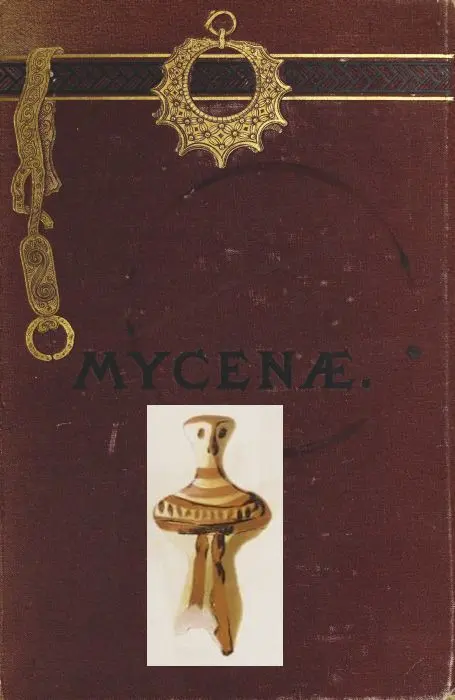
"Mycenæ: A Narrative of Researches and Discoveries at Mycenæ and Tiryns" by Dr. Henry Schliemann is an archaeological account written in the late 19th century. The work documents Schliemann's excavations and findings in the ancient sites of Mycenæ and Tiryns, exploring the connections between these archaeological discoveries and the narratives found in Homeric texts. The book is likely to appeal to readers interested in archaeology, classical studies, and the historical significance of ancient Greek civilization. The opening of the text sets the stage for an in-depth exploration of Mycenæ’s archaeology, revealing the riches and historical context surrounding the site. In this initial portion, readers are introduced to Schliemann’s motivations for conducting the excavations, which stem from a desire to uncover the truth behind ancient Greek mythology and history. The preface by W.E. Gladstone emphasizes the importance of Schliemann's discoveries, hinting at the potential connections between the archaeological findings and the Homeric epics. As Schliemann presents his early observations, he lays the groundwork for a narrative that will intertwine scientific inquiry with classical literature, inviting the audience to engage with both the artifacts and the stories of the past.
Introduction adapted from the source catalogue; source summaries may be automatically generated.
Free to read · English · 123,175 words · No account needed
MAKE TIME FOR A GOOD BOOK
On by default. Untick to stop anonymous reading totals. Each page counts after 10 seconds in view. How this works.
Anonymous counting is on unless you have switched it off.
[274] See 'Troy and its Remains,' p. 310, No. 222, where "rings" should rather have been "tubes" or "tubular rings."
[275] Ibid. p. 285, No. 199.
[276] See Vignette to this chapter.
[277] See Plan B B.
[278] All these are engraved in their actual size.
[279] See No. 142, p. 91.
[280] See Iliad, XXII. 111, ἀσπὶς ὀμφαλόεσσα; comp. 'Troy and its Remains,' p. 324.
[281] See Iliad, III. 357; VII. 250; and in many other
passages.
[282] See Iliad, XIII. 715; XIV. 428; and in other passages.
[283] See for example Il. XI. 32:--
ἀν δ᾽ ἕλετ᾽ ἀμφιβρότην, πολυδαίδαλον ἀσπίδα θοῦριν.
"Then he took the man-covering, artistically made, powerful shield."
See also all the wonders which Hephæstus wrought on the shield of Achilles, Il. XVIII. 468-608.
[284] See, for example, Il. XX. 275, and XVIII. 480.
[285] See p. 133.
[286] κορυθαίολος ῞Ἑκτωρ. Comp. 'Troy and its Remains,'
p. 281.
[287] Il. XXII. 326.
[288] More properly the tree cricket (τέττιξ, Lat. cicada, It. cigaia, Fr. cigale), of which the Athenians wore golden images in their hair, to denote their autochthonic origin. Hence it was probably the common badge of the cognate Achæan and old Ionian races.
[289] Herodotus, III. 13, 14.
Milton alludes to this legend (Par. Lost, Bk. II.):--
"As when a gryphon through the wilderness
With winged course o'er hill or moory dale
Pursues the Arimaspian, who by stealth
Had from his wakeful custody purloined
The guarded gold."
[291] Apud Philostrat. Vit. Apoll. Tyan. III. 48, p. 134.
[292] 'Vasengemälde.']
[293] Like Nos. 262, 264, 265, 266, 272, 273, 274, 275, 276, 277, 279, 280, 303, 305, 306, and 316.
[294] Iliad, XVII. 51 and 52:--
αἵματί οἱ δεύοντο κόμαι Χαρίτεσσιν
ὁμοῖαι,
πλοχμοί θ᾿, οἳ χρυσῷ τε καὶι ἀργύρω
ἐσφήκωντο.
]
[295] Il. XXII. 209-213:--
ἀλλ᾿, ὅτε δὴ τὸ τεταρτον ἐπὶ κρουνοὺς ἀφίκοντο, καὶ τότε δὴ χρύσεια πατὴρ ἐτιταινε τάλαντα· ἐν δ᾿ ἐτίθει δύο κῆρε τανηλεγέεος θανάτοιο, τὴν μὲν ᾿Αχιλλῆος, τὴν δ᾿ ῞Ἑκτορος ἱπποδάμοιο· ἕλκε δὲ μέσσα λαβών· ῥέπε δ᾿ ῞Ἑκτορος αἴσιμον ἦμαρ, ᾤχετο δ᾿ εἰς ᾿Αΐδαο· λίπεν δέ ἑ Φοῖβος ᾿Απόλλων.
[296] II. 16, § 6. See the passage fully quoted in Chapter III.
p. 59.
[297] Odyss. XV. 460:--
χρύσεον ὅρμον ἔχων, μετὰ δ᾿
ἠλέκτροισιν ἔερτο.
"Bringing a golden necklace set with amber."
And XVIII. 296:--
ὅρμον δ᾿ Εὐρυμάχῳ πολυδαίδαλον
αὐτίκ' ἔνεικεν
χρύσεον, ἠλέκτροισιν ἐερμένον,
ἠέλιον ὥς.
"He brought immediately to Eurymachus an artistic golden necklace, set
with amber like the sun."
In both cases the plural agrees exactly with the sense of amber-beads set in a gold mounting.
The third passage, Odyss. IV. 73--
χρυσοῦ τ᾿ ἠλέκτρου τε καὶ ἀργύρου ἠδ᾿ ἐλέφαντος--
occurs in the description of the palace of Menelaus; and here the yellow gold and amber seem placed in poetic parallelism with the white silver and ivory.
[298] Odyss. VIII. 443-445:--
Αὐτὸς νῦν ἴδε πῶμα, θοῶς δ᾽ ἐπὶ δεσμὸν ἴηλον, μήτις τοι καθ᾽ ὁδὸν δηλήσεται, ὁππότ᾽ ἂν αὖτε εὕδῃσθα γλυκὺν ὑπνον, ἰὼν ἐν νηῒ μελαίνῃ.
[299] Ib. 446-448:--
Αὐτὰρ ἐπεὶ τόγ᾽ ἄκουσε πολύτλᾳς δῖος ᾽Οδυσσεύς, αὐτίκ᾽ ἐπήρτυε πῶμα, θοῶς δ᾽ ἐπὶ δεσμὸν ἴηλεν ποικίλον, ὅν ποτέ μιν δέεδαε φρεσὶ πότνια Κίρκη.
In Od. II. 354, Telemachus, preparing for his voyage to Sparta, bids his nurse Euryclea to fill twelve amphoræ with wine and fit them all with lids, but these would need to be very close-fitting for liquids (cf. p. 256):
Δώδεκα δ᾽ ἔμπλησον, καὶ πώμασιν
ἄρσον ἃπαντας.
[300] See my 'Troy and its Remains,' p. 286, No. 200, p. 310, Nos. 222 and 223, and Plate XVII. Nos. 243 and 244.
Your reading position is saved on this browser. Take it to another device with a library code. Reading pages adapt to text, rather than matching a printed edition.
BEHIND THE BOOK
This eBook is for the use of anyone anywhere in the United States and most other parts of the world at no cost and with almost no restrictions whatsoever. You may copy it, give it away or re-use it under the terms of the Project Gutenberg License included with this eBook or online at www.gutenberg.org. If you are not located in the United States, you will have to check the laws of the country where you are located before using this eBook. Read the source licence.
The original source file, including credits and licence, is retained by this library. Request an original-format copy at no charge. Please include the book title and Project Gutenberg identifier #56940.
KEEP YOUR CURIOSITY GOING
Cécile Tormay

Moritz Busch
John L. Ransom
Frances Wright
Cécile Tormay

Mabel Potter Daggett