THE CLASSIC COLLECTION✦An outlaw’s diary: the CommuneCLASSIC FREE BOOKS
An outlaw’s diary: the Commune
Cécile Tormay
THE CLASSIC COLLECTION · 1877
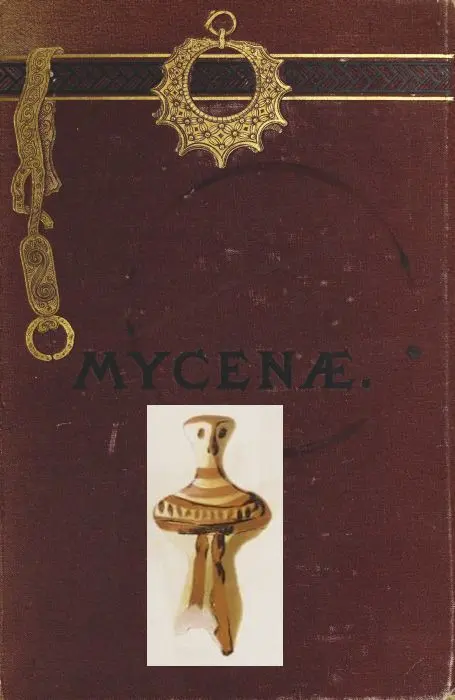
"Mycenæ: A Narrative of Researches and Discoveries at Mycenæ and Tiryns" by Dr. Henry Schliemann is an archaeological account written in the late 19th century. The work documents Schliemann's excavations and findings in the ancient sites of Mycenæ and Tiryns, exploring the connections between these archaeological discoveries and the narratives found in Homeric texts. The book is likely to appeal to readers interested in archaeology, classical studies, and the historical significance of ancient Greek civilization. The opening of the text sets the stage for an in-depth exploration of Mycenæ’s archaeology, revealing the riches and historical context surrounding the site. In this initial portion, readers are introduced to Schliemann’s motivations for conducting the excavations, which stem from a desire to uncover the truth behind ancient Greek mythology and history. The preface by W.E. Gladstone emphasizes the importance of Schliemann's discoveries, hinting at the potential connections between the archaeological findings and the Homeric epics. As Schliemann presents his early observations, he lays the groundwork for a narrative that will intertwine scientific inquiry with classical literature, inviting the audience to engage with both the artifacts and the stories of the past.
Introduction adapted from the source catalogue; source summaries may be automatically generated.
Free to read · English · 123,175 words · No account needed
MAKE TIME FOR A GOOD BOOK
On by default. Untick to stop anonymous reading totals. Each page counts after 10 seconds in view. How this works.
Anonymous counting is on unless you have switched it off.
[227] See the Frontispiece, Plate V.
[228] See Plan E, which shows the Plan and Sections of this
Treasury.
[229] See the examples grouped on the two Plates, Nos. 192-204.
[230] See No. 154, p. 98.
[231] See the Plan of the Lions' Gate, No. 22, p. 34. Comp. 'Troy and its Remains,' pp. 303, 321.
[232] Chapter IV. p. 99.
[233] See Plates VI. and VII.
[234] See Plan C and Plates VI., VII.
[235] See the cut No. 190a, p. 117.
[236] The Dithyramb was an ancient Bacchanalian performance, as early at least as Archilochus, who says "he knows how to lead off the dithyramb, the beautiful song of Dionysus, when his mind is inflamed with wine" (Frag. ap. Athen. XIV. p. 628). It seems to have been a hymn sung by one or more members of a κῶμος, or irregular band of revellers, to the music of the flute. Arion, at Corinth, first gave a regular choral or antistrophic form to the dithyramb (Herodot. I. 24; Pindar, Olymp. XIII. 18-25). The choruses, which ordinarily consisted of fifty men or youths, danced in a ring round the altar of Dionysus. Hence they were termed cyclic choruses (κίκλιοι χοροί), and dithyrambic poets were understood by the term κυκλιοδιδάσκαλοι.
[237] Il. I. 58, 68, 101; II. 53, 96, 99.
[238] Oed. Tyr. 161: ῎Αρτεμιν ἃ κυκλόεντ' ἀγορᾶς θρόνον εὐκλέα θάσσει.
"Artemis who sits on the Agora's glorious circular seat."
[239] This rock has now partially fallen, in consequence of the excavation of the third and fourth tombs, which it overhangs.
[240] Orest. 919.
[241] See Appendix A.
[242] Thucyd. III. 74: τὰς οἰκίας τὰς ἐν
κύκλω τῆς ἀγορᾶς.
[243] Paus. I. 43, § 4: βουλεντήριον ἐνταῦθα ᾠκυδόμησαν, ἵνα σφίσιν ὁ ταφος των ἡρώων ἐντὸς τοῦ βουλεντηρίου γένηται.
[244] Paus. I. 43, § 8: Κοροίβῳ δί ἐστι τάφος ἐν τῇ Μεγαρέων ἀγορᾷ.
[245] Paus. II. 15, § 4: ἐνταῦθά ἐστι μὶν ᾽Οφέλτου τάφος περὶ δὲ αὐτὸν θρίγκος λίθων, καὶ ἐντὸς του περιβίλου βωμοί· ἔστι δὶ χῶμα γῆς Λυκούργου μνῆμα τοῦ ᾽Οφόλτου πατρός.
[246] Paus. II. 15, § 2; Apollod. I. 9, § 14; III. 6, § 4; Hyg. Fab. 74; Stat. Theb. V. 296.
[247] Translation of the Odes of Pindar by F. A. Paley, M.A.
[248] Paus. V. 8, § 3; VIII. 26, § 2; Strabo, VIII. 355.
[249] See the coloured Plate C, fig. k.
[250] See No. 115.
[251] See No. 107.
[252] See No. 126, p. 76.
[253] See No. 175, p. 112.
[254] Iliad, XVIII. 478-608.
[255] Od. XIX. 224-231.
[256] Il. XI. 632-635.
[257] Like those shown under No. 126, p. 76.
[258] See Appendix B, for an ingenious suggestion as to the
nature of these objects.
[259] Literally, 'a spear casting a very long shadow.'
[260] See for example, Il. XVII. 297:--
ἐγκέφαλος δὲ παρ' αὺλὸν ἀνέδραμεν
ἐξ ὠτειλῆς.
"And the brain ran out from the wound on the tube of the lance."
[261] Il. III. 361-362:--
᾽Ατρείδης δὲ ἐρυσσάμενος ξίφος ἀργυρόηλον, πλῆξεν ἀνασχόμενος κόρυθος φάλον.
"Drawing his silver-studded sword and lifting up his arm, Atreides struck the φάλος off the helmet."
[262] The following passage of the Iliad, XIX. 379-383, can
leave no doubt on this point:--
ὥς ἀπ᾽ ᾽Αχιλλῆος σάκεος σέλας
αἰθέρ᾽ ἵκανε
καλοῦ, δαιδαλέου· περὶ δὲ τρυϕάλειαν
ἀείρας
κρατὶ θέτο βριαρήν· ἡ δ᾽, ἀστὴρ ὣς
ἀπέλαμπεν
ἵππουρις τρυϕάλεια· περισσείοντο δ᾽
ἔθειραι
χρύσεαι, ἃς ῞Ἡϕαιστος ἵει λόϕον
ἀμϕὶ θαμειάς.
"So shone up to the sky the glance of the beautiful artistic shield of Achilles. Lifting then up the powerful helmet, he put it on his head, and the plumed helmet glanced like a star, and the hairs of gold waved, which Hephæstus had thickly set round the cone (λόφον)."
See the description of these parts of the Homeric helmets in 'Troy and its Remains,' pp. 279-281, and 334.
[263] For example, Il. I. 450:--
τοῖσιν δὲ Χρύσης μεγάλ᾽ εὔχετο χεῖρας ἀνασχών.
Your reading position is saved on this browser. Take it to another device with a library code. Reading pages adapt to text, rather than matching a printed edition.
BEHIND THE BOOK
This eBook is for the use of anyone anywhere in the United States and most other parts of the world at no cost and with almost no restrictions whatsoever. You may copy it, give it away or re-use it under the terms of the Project Gutenberg License included with this eBook or online at www.gutenberg.org. If you are not located in the United States, you will have to check the laws of the country where you are located before using this eBook. Read the source licence.
The original source file, including credits and licence, is retained by this library. Request an original-format copy at no charge. Please include the book title and Project Gutenberg identifier #56940.
KEEP YOUR CURIOSITY GOING
Cécile Tormay

Moritz Busch
John L. Ransom
Frances Wright
Cécile Tormay

Mabel Potter Daggett