THE CLASSIC COLLECTION✦An outlaw’s diary: the CommuneCLASSIC FREE BOOKS
An outlaw’s diary: the Commune
Cécile Tormay
THE CLASSIC COLLECTION · 1877
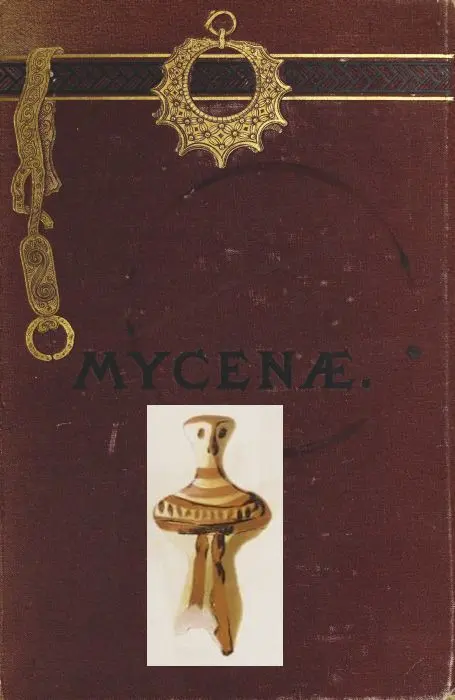
"Mycenæ: A Narrative of Researches and Discoveries at Mycenæ and Tiryns" by Dr. Henry Schliemann is an archaeological account written in the late 19th century. The work documents Schliemann's excavations and findings in the ancient sites of Mycenæ and Tiryns, exploring the connections between these archaeological discoveries and the narratives found in Homeric texts. The book is likely to appeal to readers interested in archaeology, classical studies, and the historical significance of ancient Greek civilization. The opening of the text sets the stage for an in-depth exploration of Mycenæ’s archaeology, revealing the riches and historical context surrounding the site. In this initial portion, readers are introduced to Schliemann’s motivations for conducting the excavations, which stem from a desire to uncover the truth behind ancient Greek mythology and history. The preface by W.E. Gladstone emphasizes the importance of Schliemann's discoveries, hinting at the potential connections between the archaeological findings and the Homeric epics. As Schliemann presents his early observations, he lays the groundwork for a narrative that will intertwine scientific inquiry with classical literature, inviting the audience to engage with both the artifacts and the stories of the past.
Introduction adapted from the source catalogue; source summaries may be automatically generated.
Free to read · English · 123,175 words · No account needed
MAKE TIME FOR A GOOD BOOK
On by default. Untick to stop anonymous reading totals. Each page counts after 10 seconds in view. How this works.
Anonymous counting is on unless you have switched it off.
[Sidenote: THE QUARRY AT CHARVATI.]
The great quarry, whence all the stones for the Cyclopean walls, the Treasuries, and other buildings, were cut, is on the site of and around the village of Charvati, a little over a mile from this place; but the rock has in no instance been cut away deeper than the surface. I give a view of this village, in which the greater part of the ancient quarry is visible.[226] The name Charvati is no doubt derived from the Arabic word خراب (ruins), which has passed over into the Turkish language.
Mrs. Schliemann and I superintend the excavations from morning till dusk, and we suffer severely from the scorching sun and incessant tempest, which blows the dust into the eyes and inflames them; but in spite of these annoyances, nothing more interesting can be imagined than the excavation of a prehistoric city of immortal glory, where nearly every object, even to the fragments of pottery, reveals a new page of history.
[199] The Greek drachma is worth about 8½d. English.
[200] This most curious enclosure will be more fully described,
and the important question of its use discussed, in the following
Chapter.
[201] See note on p. 83.
[202] See 'Troy and its Remains,' p. 36, fig. 30.
[203] The frieze, No. 153, is described, and its broad face shown on p. 140, No. 216; the fragment No. 154 is described on p. 121.
[204] See 'Troy and its Remains,' Plates xxvii-xxxi.
[205] See supplementary volume to Stuart's 'Athens.'
[206] See No. 94.
[207] See No. 106.
[208] See No. 100.
[209] See No. 101.
[210] See Nos. 90-93.
[211] See Nos. 159, 160, and the coloured Plate D, figs. n, o,
p.
[212] See 'Troy and its Remains,' p. 294.
[213] I call particular attention to the Egyptian sepulchral paintings published by Mr. G. A. Hoskins in his 'Travels in Ethiopia and Upper Egypt,' where we see among the offerings some vases from which similar heads look out.
[214] See p. 76.
[215] See p. 75.
[216] See under No. 120, p. 74.
[217] See under No. 120, p. 74.
[218] Ibid.
[219] Also engraved under No. 120. I here again call particular attention to the fact, that the depth in which each object has been found is always marked in metres below each object in the engravings.
[220] See the Coloured Plate B, fig. g.
[221] See Nos. 83, 84, 88, pp. 70, 71.
[222] See 'Troy and its Remains,' p. 158.
[223] Hist. Animal. IX. 40.
[224] See Od. III. 41, 46, 50 and 63, and XXII. 9, 10, 86.
[225] Δειπνοσοφισταί, 783.
[226] See Vignette to Chapter V. p. 118.
Your reading position is saved on this browser. Take it to another device with a library code. Reading pages adapt to text, rather than matching a printed edition.
BEHIND THE BOOK
This eBook is for the use of anyone anywhere in the United States and most other parts of the world at no cost and with almost no restrictions whatsoever. You may copy it, give it away or re-use it under the terms of the Project Gutenberg License included with this eBook or online at www.gutenberg.org. If you are not located in the United States, you will have to check the laws of the country where you are located before using this eBook. Read the source licence.
The original source file, including credits and licence, is retained by this library. Request an original-format copy at no charge. Please include the book title and Project Gutenberg identifier #56940.
KEEP YOUR CURIOSITY GOING
Cécile Tormay

Moritz Busch
John L. Ransom
Frances Wright
Cécile Tormay

Mabel Potter Daggett