THE CLASSIC COLLECTION✦An outlaw’s diary: the CommuneCLASSIC FREE BOOKS
An outlaw’s diary: the Commune
Cécile Tormay
THE CLASSIC COLLECTION · 1877
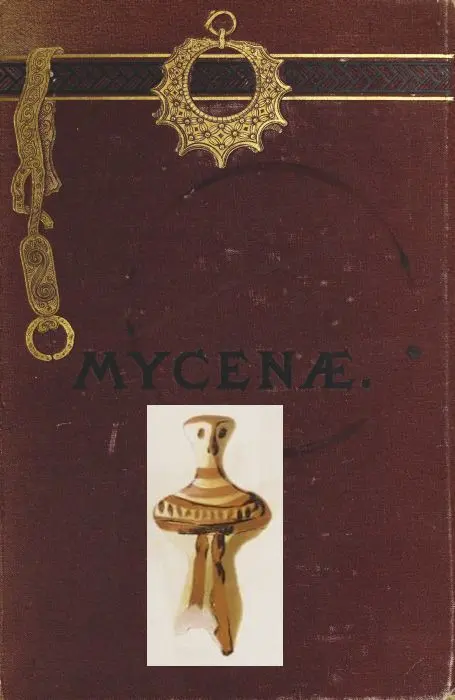
"Mycenæ: A Narrative of Researches and Discoveries at Mycenæ and Tiryns" by Dr. Henry Schliemann is an archaeological account written in the late 19th century. The work documents Schliemann's excavations and findings in the ancient sites of Mycenæ and Tiryns, exploring the connections between these archaeological discoveries and the narratives found in Homeric texts. The book is likely to appeal to readers interested in archaeology, classical studies, and the historical significance of ancient Greek civilization. The opening of the text sets the stage for an in-depth exploration of Mycenæ’s archaeology, revealing the riches and historical context surrounding the site. In this initial portion, readers are introduced to Schliemann’s motivations for conducting the excavations, which stem from a desire to uncover the truth behind ancient Greek mythology and history. The preface by W.E. Gladstone emphasizes the importance of Schliemann's discoveries, hinting at the potential connections between the archaeological findings and the Homeric epics. As Schliemann presents his early observations, he lays the groundwork for a narrative that will intertwine scientific inquiry with classical literature, inviting the audience to engage with both the artifacts and the stories of the past.
Introduction adapted from the source catalogue; source summaries may be automatically generated.
Free to read · English · 123,175 words · No account needed
MAKE TIME FOR A GOOD BOOK
On by default. Untick to stop anonymous reading totals. Each page counts after 10 seconds in view. How this works.
Anonymous counting is on unless you have switched it off.
In the large second trench I have brought to light a second wall of smaller stones, 12 feet high, which runs parallel with the great circuit wall, and thus forms a curve of about the third part of a circle. It enters the adjoining field, which is now being excavated, and its direction parallel with the great circuit wall seems to have been unintentional. It is not, however, vertical, but its western face slopes at an angle of 75 degrees with the horizon, like the great tower of Ilium. It deserves attention that here and there we see in this wall wrought flat slabs, which give the impression that the wall belongs to a later period than the Cyclopean circuit wall. On this wall are two parallel rows of large, closely-joined slabs of a calcareous stone, which show the same inclination as the wall, and appear to form, with the part in the adjoining field, a full circle. If so, the wall, on which these rows of slabs stand, can only have been built for the purpose of supporting them in this lower part of the Acropolis, and of raising them to the level of their prolongation on the much higher neighbouring ground. It deserves particular attention that on the inner side of the supposed circle, namely, on the side towards which the parallel rows of slabs incline, the vacant space has evidently been filled up with débris to the very top of the wall immediately after its completion.[200]
[Sidenote: THE THIRD SCULPTURED TOMBSTONE.]
I frequently found here, at a depth of from three to four feet, ashes of burnt animal matter, also masses of bones of animals, but no bones which I can identify as human, for no skull has turned up. The space between the two slanting parallel rows of slabs was filled with débris, mixed with innumerable fragments of beautiful archaic pottery, and a great many Hera-idols, but no bones were found there. Within the curve, and very near to the two parallel rows of slabs, I brought to light two more sculptured tombstones of a hard calcareous stone (see Nos. 141, 142), one of which is in the same line with the two sculptured slabs which I have already described, and only 1 ft. 5 in. south of them. It is 3 ft. 8¾ in. broad at the base, and 3 ft. 7½ in. at top; 6 in. thick, and 4 ft. 2 in. long; and thus the line of the three tombstones together is 13 ft. 8 in. long. This newly discovered third tombstone (No. 141) shows, like the two others, on its western side, a sculpture in bas-relief, which is divided by a horizontal fillet into two compartments, and is encompassed on all sides by two parallel fillets. Of the upper part of the stone a piece, apparently about one foot high, is missing. In the upper compartment is represented a warrior, whose head and neck are not now visible on account of the breaking of the stone. He is represented standing on a chariot drawn apparently by only one horse[201], the outstretched hind and fore legs and the uplifted tail of which seem to indicate that he is running with great velocity, just as on the two tombstones already described; the fore and hind legs of the horse are not separated, but appear as one broad leg. In this case the reins with which the warrior guides the horse are well indicated by one broad band; also the horse's tail is less bushy and better proportioned, but the rest of the animal's body is a perfect copy of that of the horse on the preceding bas-relief. The chariot-box is here exceedingly low, and very small when compared with that of the chariot on the other tombstone, but it is not less remarkable, because it is surrounded by a band or fillet (ἄντυξ), which is double on the lower part. Just behind this chariot-box is represented an enormously broad two-edged knife, the handle of which terminates in a very thick knob. As such a knife can never have existed, I presume that the artist intended to represent here a two-edged sword with a thick knob at the end of the handle, but that for want of space he made it very short, without however diminishing its breadth, for which there was room enough. The one wheel which is visible is much like that of the chariots on the other tombstones, for it has also only four spokes, forming a cross round the axle. The adversary on foot, who is visible on the right side, and whose upper part is likewise missing owing to the breaking of the stone, does not stand on the same level as the horse and the chariot, but he appears as if hovering in the air, on a level with the warrior in the chariot. He assaults the latter with a long lance, on which can be seen an object of a peculiar form, which much resembles one of the plain Trojan idols,[202] and must have served to attach the lance to the shoulder.
Your reading position is saved on this browser. Take it to another device with a library code. Reading pages adapt to text, rather than matching a printed edition.
BEHIND THE BOOK
This eBook is for the use of anyone anywhere in the United States and most other parts of the world at no cost and with almost no restrictions whatsoever. You may copy it, give it away or re-use it under the terms of the Project Gutenberg License included with this eBook or online at www.gutenberg.org. If you are not located in the United States, you will have to check the laws of the country where you are located before using this eBook. Read the source licence.
The original source file, including credits and licence, is retained by this library. Request an original-format copy at no charge. Please include the book title and Project Gutenberg identifier #56940.
KEEP YOUR CURIOSITY GOING
Cécile Tormay

Moritz Busch
John L. Ransom
Frances Wright
Cécile Tormay

Mabel Potter Daggett