Death to the Inquisitive! A story of sinful love
Lurana Sheldon
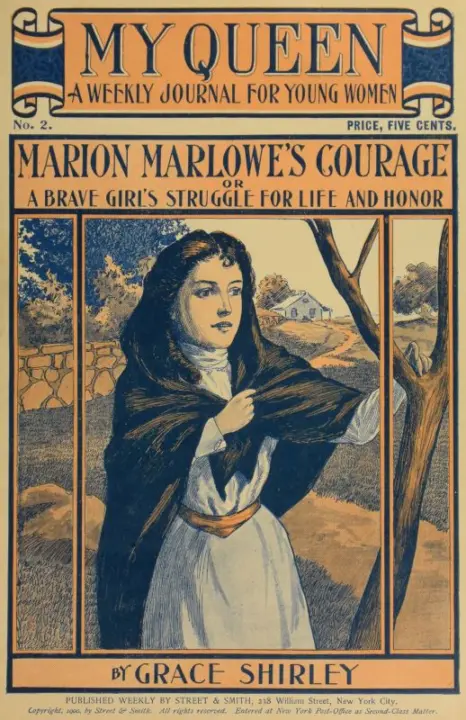
THE CLASSIC COLLECTION · 1900
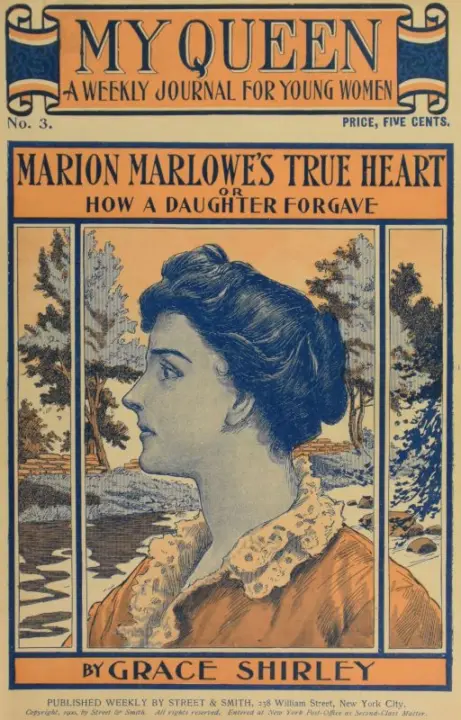
"My Queen: A Weekly Journal for Young Women. Issue 2, October 6, 1900" by Sheldon is a weekly journal written in the late 19th century. The journal features a story titled "Marion Marlowe’s Courage," chronicling the adventures of two brave twin sisters, Marion and Dollie Marlowe, as they navigate life's challenges in a big city. The narrative captures their struggles for survival after a harrowing experience with a sinister abductor, showcasing their resilience and the bonds of sisterhood as they face various adversaries, including a hostile landlady and difficulties in securing employment. At the start of the story, we meet Marion and Dollie, recently moved to the city and currently living in a cheap boarding house. Their situation is dire as they are low on funds, and on top of that, they have recently escaped from a traumatic encounter involving their abductor, Professor Dabroski. Despite the obstacles they face, Marion remains optimistic about finding work, showcasing her determination and courage, while Dollie grapples with her feelings of guilt over the burden of their troubles. Tensions arise quickly as they confront their landlady about their living situation, highlighting the prejudice and challenges they encounter in a city that appears indifferent to the plight of young women like them. As the sisters seek to redefine their lives amidst these hardships, the beginning sets the stage for themes of bravery, friendship, and a quest for self-empowerment.
Introduction adapted from the source catalogue; source summaries may be automatically generated.
Free to read · English · 26,522 words · No account needed
MAKE TIME FOR A GOOD BOOK
On by default. Untick to stop anonymous reading totals. Each page counts after 10 seconds in view. How this works.
Anonymous counting is on unless you have switched it off.
As she reached Union Square she started through the park, hoping that a glimpse of the grass and trees would rest her a little.
It was the middle of September, and the fountain, was still playing. There were people on all the benches and the walks were swarming with children.
Suddenly Marion saw a sight that made her blood boil with anger. She stood still staring for a moment, hardly able to believe it.
Some big boys had found a poor little yellow dog, and were amusing themselves by throwing it into the basin of the fountain and then letting it swim out, only to compel it to repeat the operation.
The dog was trembling with fear and looked utterly wretched, and Marion noticed that it was lame and limping.
In an instant she was in the very midst of the group of urchins, her fair face ablaze with indignation.
“Shame on you, boys, for tormenting the poor dog,” she said, sternly. “Can’t you see that it is lame, and sick, and frightened? How would you like to be thrown into the fountain yourselves? Do let the poor thing go and don’t be so cruel.”
“Aw, come off your perch,” said one of the biggest boys, saucily, as he made a grab for the dog, just as it clambered up over the basin.
“Don’t you dare do that again,” cried Marion, who was now furious.
The boy grinned in her face as he caught the dog and threw it with all his might into the very centre of the fountain.
What followed was a surprise to every occupant of the benches, and as for the boys, their eyes almost popped out of their heads in wonder.
As quick as a flash Marion caught the big boy by the collar. Her grip was like iron, for she was in deadly earnest.
The next second she had lifted him completely off his feet, and with a terrific effort, flung him head first into the water.
Then catching up the poor little dog, all dripping, in her arms, she started for the street, as if nothing had happened.
A roar of delight went up from every spectator of the scene, and as for the boys, they jeered and laughed at their companion, shouting their approval of Marion’s skill in the regular street gamin manner.
“That was well done, miss,” said a big policeman, who had overtaken Marion as she was leaving the park. “I was up at the other end, or I’d have put a stop to their capers, but you did just right.” He was shaking with laughter.
Your reading position is saved on this browser. Take it to another device with a library code. Reading pages adapt to text, rather than matching a printed edition.
Lurana Sheldon
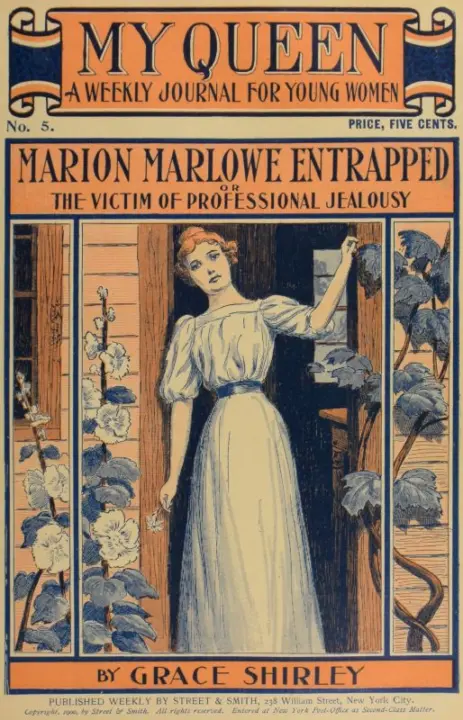
Lurana Sheldon
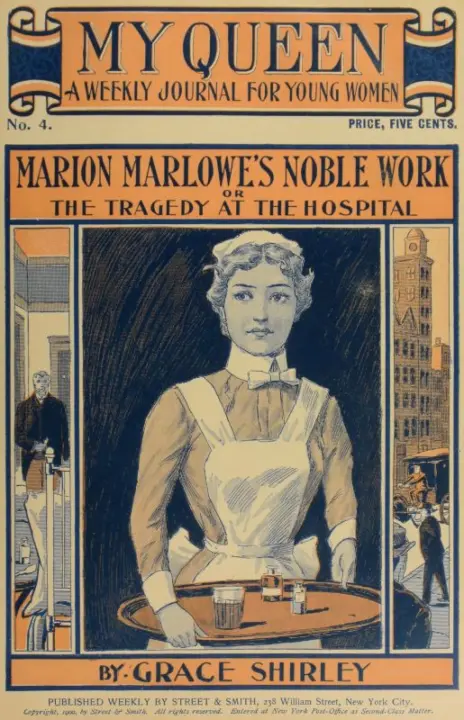
Lurana Sheldon
Lurana Sheldon
BEHIND THE BOOK
This eBook is for the use of anyone anywhere in the United States and most other parts of the world at no cost and with almost no restrictions whatsoever. You may copy it, give it away or re-use it under the terms of the Project Gutenberg License included with this eBook or online at www.gutenberg.org. If you are not located in the United States, you will have to check the laws of the country where you are located before using this eBook. Read the source licence.
The original source file, including credits and licence, is retained by this library. Request an original-format copy at no charge. Please include the book title and Project Gutenberg identifier #57274.
KEEP YOUR CURIOSITY GOING
Coulson Kernahan

Maurice Baring
Frances Wright
Cécile Tormay

Frederic Jesup Stimson

W. H. P. (William Henry Pope) Jarvis