The Treasure of Hidden Valley
Willis George Emerson
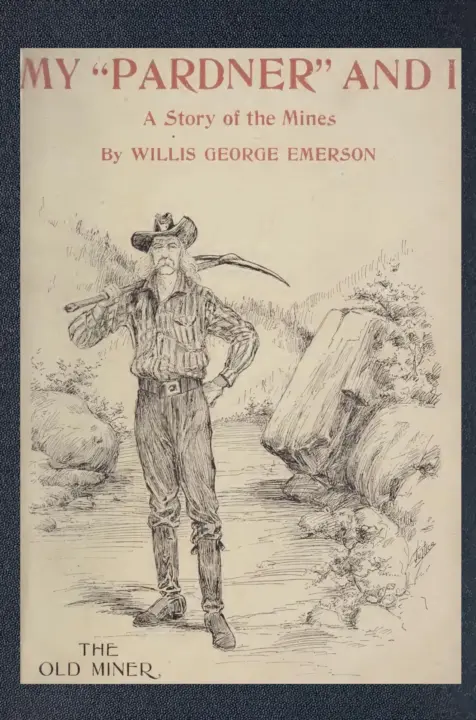
THE CLASSIC COLLECTION · 1899
"My 'Pardner' and I (Gray Rocks): A Story of the Middle-West" by Willis George Emerson is a fictional novel written in the late 19th century. The story centers around Vance Gilder, a young journalist from New York City, who discovers that he is the partial owner of a gold mine named Gray Rocks in Idaho, a property once owned by his late father. The narrative explores themes of ambition, the pursuit of wealth, and the contrasts between urban and rugged frontier life. The opening of the story introduces Vance Gilder, who is established as a cultured and ambitious individual with dreams of becoming a great journalist. He is presented with a letter from Louise Bonifield, whose father, Ben Bonifield, owns the Gray Rocks mine. In a charming encounter at his Manhattan apartment, Vance learns of his father’s legacy, which sparks curiosity about the mine's potential and his connection to the Bonfield family. As the story unfolds, the reader is invited into Vance’s world, where his aspirations clash with the realities of mining life and the complexities of relationships formed in the rugged West.
Introduction adapted from the source catalogue; source summaries may be automatically generated.
Free to read · English · 59,243 words · No account needed
MAKE TIME FOR A GOOD BOOK
On by default. Untick to stop anonymous reading totals. Each page counts after 10 seconds in view. How this works.
Anonymous counting is on unless you have switched it off.
“It is our intention,” said Winthrop, “to claim Mr. Gilder as a western man before another year; and if Waterville continues to grow, as we expect it will, we may persuade him to edit our first daily paper.”
Soon after, they rose to go. “I shall hope,” said Miss Virginia, “that I will be honored by a call from you whenever you are in Waterville.”
“Thank you,” replied Vance, “it will afford me great pleasure.”
Winthrop remained behind a few moments, while Vance walked up and down the sidewalk. The sun was [126] well toward the western horizon. A bluish haze lay against the mountains in the distance. It was an Indian summer afternoon, full of quiet rest, with a gentle, invigorating mountain breeze as a constant tonic.
Presently Winthrop joined him, and they hurried down to the depot, for it was nearing train time, and they had arranged to travel together to Butte City.
“How are you impressed with Miss Bonifield?” asked Winthrop.
“Quite favorably,” replied Vance. “She is, however, an entirely different type from her sister, Miss Louise; indeed, I can discover no family resemblance. Miss Louise is quite fair, while Miss Virginia is a decided brunette.”
Soon after, the train came in, and they secured comfortable seats in a Pullman. As the train started, Vance looked out of the window at the turbulent waters in the river, and asked Winthrop where the foundry, and sash, blind and door factory would be located.
“We have not decided as yet,” replied Winthrop. “That will be an easy matter to arrange when the party or parties are ready to commence building.”
“I presume you are selling a good many lots?” said Vance.
“Well, yes,” replied Winthrop, hesitatingly. “We are interesting a good many people; and it takes people to build a city. Where a man’s possessions are, his heart is generally not far away.”
“I should judge from your complimentary remarks about Miss Virginia Bonifield, and the delightful expression of your face when we called this afternoon, that your heart abides quite permanently at Waterville.” [127] Winthrop seemed confused and looked out of the window. Presently lie said:
“Miss Bonifield is one of the most practical young ladies it has ever been my good fortune to meet. She is a most exemplary young lady, and the good people of Waterville hold her in high esteem. This is her second year in the public school at that place.”
“I judge from her remarks,” said Vance, “that her faith is very limited in her father’s mine.”
“Yes,” replied ‘Winthrop, “I consider her the most practical member of the Bonifield family.”
Your reading position is saved on this browser. Take it to another device with a library code. Reading pages adapt to text, rather than matching a printed edition.
Willis George Emerson
Willis George Emerson
Willis George Emerson
Willis George Emerson
BEHIND THE BOOK
This eBook is for the use of anyone anywhere in the United States and most other parts of the world at no cost and with almost no restrictions whatsoever. You may copy it, give it away or re-use it under the terms of the Project Gutenberg License included with this eBook or online at www.gutenberg.org. If you are not located in the United States, you will have to check the laws of the country where you are located before using this eBook. Read the source licence.
The original source file, including credits and licence, is retained by this library. Request an original-format copy at no charge. Please include the book title and Project Gutenberg identifier #52458.
KEEP YOUR CURIOSITY GOING
Coulson Kernahan

Maurice Baring
Frances Wright
Cécile Tormay

Frederic Jesup Stimson

W. H. P. (William Henry Pope) Jarvis