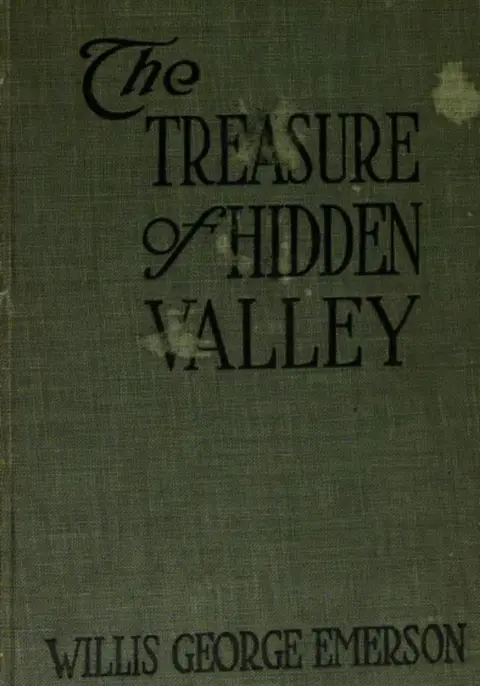
The Treasure of Hidden Valley
Willis George Emerson
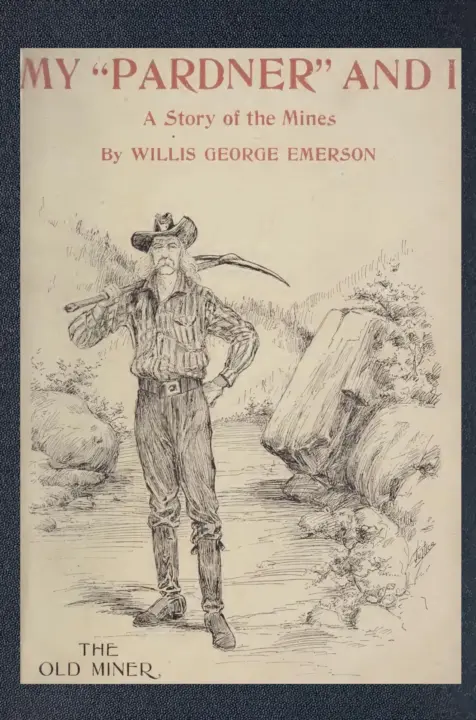
THE CLASSIC COLLECTION · 1899
"My 'Pardner' and I (Gray Rocks): A Story of the Middle-West" by Willis George Emerson is a fictional novel written in the late 19th century. The story centers around Vance Gilder, a young journalist from New York City, who discovers that he is the partial owner of a gold mine named Gray Rocks in Idaho, a property once owned by his late father. The narrative explores themes of ambition, the pursuit of wealth, and the contrasts between urban and rugged frontier life. The opening of the story introduces Vance Gilder, who is established as a cultured and ambitious individual with dreams of becoming a great journalist. He is presented with a letter from Louise Bonifield, whose father, Ben Bonifield, owns the Gray Rocks mine. In a charming encounter at his Manhattan apartment, Vance learns of his father’s legacy, which sparks curiosity about the mine's potential and his connection to the Bonfield family. As the story unfolds, the reader is invited into Vance’s world, where his aspirations clash with the realities of mining life and the complexities of relationships formed in the rugged West.
Introduction adapted from the source catalogue; source summaries may be automatically generated.
Free to read · English · 59,243 words · No account needed
MAKE TIME FOR A GOOD BOOK
On by default. Untick to stop anonymous reading totals. Each page counts after 10 seconds in view. How this works.
Anonymous counting is on unless you have switched it off.
Work on the Peacock was shut down the following [234] morning at Boast’s request, and the men assembled at the company’s office. Boast, addressing the miners, said:
“You, doubtless, have read the editorial in yesterday’s Prospector, written by a stranger and interloper in our midst, Mr. Vance Gilder, who foully accuses me of murdering Rufus Grim.
I am now going down to the office of the Prospector, and shall demand an amende honorable. So many of you as see fit may accompany me.”
“Ay, ay!” the crowd shouted, “we are ready!” Indeed, the citizens of Gold Bluff almost to a man, sided with Boast, and said Vance was showing a cowardly venom at J. Arthur Boast’s unexpected success and good fortune, that was neither dignified nor just. Boast led the way to the Prospector office, and was followed by a throng of determined miners and angry citizens, who were in a frame of mind that boded no good for Vance Gilder.
Louise Bonifield had just come over to the Prospector office with a message from her father, and met Arthur Boast at the office door. Louise tripped lightly into the office and saluted Vance with a cheery smile and good morning, while Boast paused in the doorway.
“Good morning, Mr. Gilder,” said he, savagely.
“Good morning,” replied Vance.
“Who wrote this editorial?” asked Boast, striking vigorously a copy of the Prospector which he held in his hand. “I tell you,” continued Boast, “I never murdered Rufus Grim, and any man that says I did is a liar, abase scoundrel, and a contemptible whelp!”
[235] “That’s right! Ay, ay!” exclaimed the mob that was standing behind Boast, ready at a moment’s notice to loot the printing office.
Vance was cool and collected. He noticed that Boast spoke in his old-time thin, piping voice, and his eyes were restless and glittered like a fiend’s. The element of manhood and of the philosopher had wholly disappeared.
Louise stepped quickly forward before Vance could make a reply, and laying her hand on Boast’s arm, said: “Arthur, you know I have always been your friend. I am sure Mr. Gilder has never accused you of murdering Mr. Grim. What do you mean?”
“But he has accused me,” retorted Boast. “Read this!”
Vance stepped hurriedly from behind the case, and drawing Louise gently back, stood face to face with Arthur Boast. He was calm and determined. “Where,” said he, “where have I accused you of murdering Rufus Grim? Point out the sentence in the article where your name even appears?”
“Well, you haven’t used my name, but you might as well have done
so.”
Your reading position is saved on this browser. Take it to another device with a library code. Reading pages adapt to text, rather than matching a printed edition.
Willis George Emerson
Willis George Emerson
Willis George Emerson
Willis George Emerson
BEHIND THE BOOK
This eBook is for the use of anyone anywhere in the United States and most other parts of the world at no cost and with almost no restrictions whatsoever. You may copy it, give it away or re-use it under the terms of the Project Gutenberg License included with this eBook or online at www.gutenberg.org. If you are not located in the United States, you will have to check the laws of the country where you are located before using this eBook. Read the source licence.
The original source file, including credits and licence, is retained by this library. Request an original-format copy at no charge. Please include the book title and Project Gutenberg identifier #52458.
KEEP YOUR CURIOSITY GOING
Coulson Kernahan

Maurice Baring
Frances Wright
Cécile Tormay

Frederic Jesup Stimson

W. H. P. (William Henry Pope) Jarvis