THE CLASSIC COLLECTION✦A dead man’s diaryCLASSIC FREE BOOKS
A dead man’s diary
Coulson Kernahan
THE CLASSIC COLLECTION · 1899
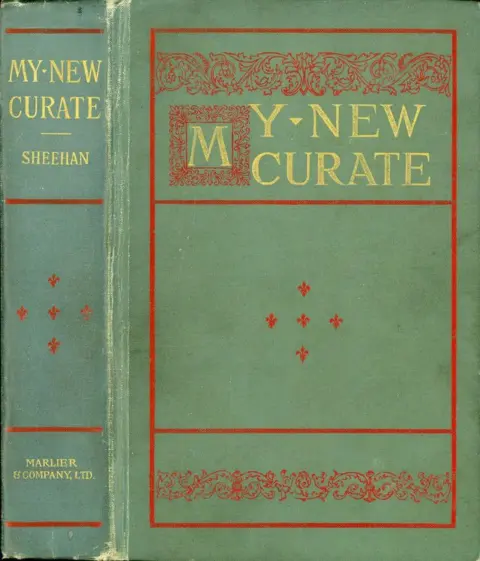
"My New Curate" by Patrick Augustine Sheehan is a novel written in the early 20th century. The story centers around Father Dan, a parish priest in an Irish village, and his experiences as he receives a new curate, Father Letheby, whose modern and energetic approach to ministry contrasts sharply with Father Dan's more traditional and resigned existence. The narrative explores themes of faith, the hardships of rural life, and the relationship between clergy and their parishioners. At the start of the book, the reader is introduced to the emotional departure of Father Dan’s old curate, Father Laverty, who leaves the parish for a new assignment. The accompanying sadness sets the tone for Father Dan's reflections on his life and the challenges that lie ahead with a new, unknown curate. Father Letheby arrives with enthusiasm and a passion to invigorate the parish, and his modern ideas quickly clash with the established leniency of the local community. This friction in expectations creates an engaging dynamic, hinting at the transformation both priests may undergo as they navigate their differences and the realities of their shared responsibilities.
Introduction adapted from the source catalogue; source summaries may be automatically generated.
Free to read · English · 107,499 words · No account needed
MAKE TIME FOR A GOOD BOOK
On by default. Untick to stop anonymous reading totals. Each page counts after 10 seconds in view. How this works.
Anonymous counting is on unless you have switched it off.
"Spare me that," I said. "And don't say a word about the famine years. That episode, and the grandeur of the Irish priests, is written in Heaven. We want a Manzoni to tell it,--that is, if we would not prefer to leave it unrecorded, except in the great book,--which is God's memory."
He softened a little at this.
"Now," said I, "you are a wise man. What do you want me to do?"
"I want you to pitch into that young fellow," he said, "to cuff him and make him keep his place."
"Very good. But be particular. Tell me, what am I to say?"
"Say? Tell him you'll stand no innovations in your parish. Nil innovetur, nisi quod prius traditum est. Tell him that he must go along with all the other priests of the diocese and conform to the general regulations,--Quod semper, quod ubique, quod ab omnibus. Tell him that young men must know their place; and then take up the Selva, or the Fathers, and prove it to him."
"God bless you!" said I, thankfully and humbly. "You have taken a load off my heart. Now, let me see would this do."
I took down from the dusty shelves a favorite little volume,--a kind of Anthology of the early Fathers, and I opened it.
"We'll try the sortes Virgilianæ" I said, and read slowly and with
emphasis:--
"At nunc, etiam sacerdotes Dei, omissis Evangeliis et Prophetis, vidimus comœdias legere, amatoria Bucolicorum versuum verba cantare, tenere Virgilium, et id quod in pueris necessitatis est, crimen in se facere voluptatis."
"That's not bad," said my hearer, critically, whilst I held the book open with horror and amazement. "That applies to him, I'm sure. But what's the matter, Father Dan? You are not ill?"
"No," said I, "I'm not; but I'm slightly disconcerted. That anathema strikes me between the two eyes. What else have I been doing for fifty years but thumbing Horace and Virgil?"
"Oh, never mind," he said, airily. "Who wrote that? That's extreme, you
know."
"An altogether wise and holy man, called St. Jerome," I said.
"Ah, well, he was a crank. I don't mean that. That sounds disrespectful. But he was a reformer, you know."
"A kind of innovator, like this young man of mine?" I said.
"Ah, well, try some sensible saint. Try now St. Bernard. He was a wise,
gentle adviser."
I turned to St. Bernard, and read:--
"Lingua magniloqua--manus otiosa!
Sermo multus--fructus nullus!
Vultus gravis--actus levis!
Ingens auctoritas--nutans stabilitas!"
That hit my friend between the eyes. The auguries were inauspicious. He
took up his hat.
Your reading position is saved on this browser. Take it to another device with a library code. Reading pages adapt to text, rather than matching a printed edition.
BEHIND THE BOOK
This eBook is for the use of anyone anywhere in the United States and most other parts of the world at no cost and with almost no restrictions whatsoever. You may copy it, give it away or re-use it under the terms of the Project Gutenberg License included with this eBook or online at www.gutenberg.org. If you are not located in the United States, you will have to check the laws of the country where you are located before using this eBook. Read the source licence.
The original source file, including credits and licence, is retained by this library. Request an original-format copy at no charge. Please include the book title and Project Gutenberg identifier #20295.
KEEP YOUR CURIOSITY GOING
Coulson Kernahan

Maurice Baring
Frances Wright
Cécile Tormay

Frederic Jesup Stimson

W. H. P. (William Henry Pope) Jarvis