THE CLASSIC COLLECTION✦A dead man’s diaryCLASSIC FREE BOOKS
A dead man’s diary
Coulson Kernahan
THE CLASSIC COLLECTION · 1899
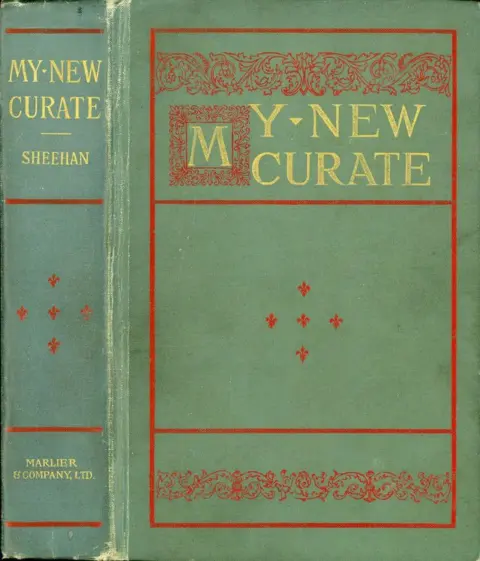
"My New Curate" by Patrick Augustine Sheehan is a novel written in the early 20th century. The story centers around Father Dan, a parish priest in an Irish village, and his experiences as he receives a new curate, Father Letheby, whose modern and energetic approach to ministry contrasts sharply with Father Dan's more traditional and resigned existence. The narrative explores themes of faith, the hardships of rural life, and the relationship between clergy and their parishioners. At the start of the book, the reader is introduced to the emotional departure of Father Dan’s old curate, Father Laverty, who leaves the parish for a new assignment. The accompanying sadness sets the tone for Father Dan's reflections on his life and the challenges that lie ahead with a new, unknown curate. Father Letheby arrives with enthusiasm and a passion to invigorate the parish, and his modern ideas quickly clash with the established leniency of the local community. This friction in expectations creates an engaging dynamic, hinting at the transformation both priests may undergo as they navigate their differences and the realities of their shared responsibilities.
Introduction adapted from the source catalogue; source summaries may be automatically generated.
Free to read · English · 107,499 words · No account needed
MAKE TIME FOR A GOOD BOOK
On by default. Untick to stop anonymous reading totals. Each page counts after 10 seconds in view. How this works.
Anonymous counting is on unless you have switched it off.
It would appear, then, that Father Letheby had visited the sacristy, and taken a most minute inventory of its treasures, and had, with all the zeal of a new reformer, found matters in a very bad state. Now, he was not one to smile benignantly at such irregularities and then throw the burden of correcting them on his pastor. He was outspoken and honest. He tore open drawers, and drew out their slimy, mildewed contents, sniffed ominously at the stuffy atmosphere, flung aside with gestures of contempt some of Mrs. Darcy's dearest treasures, such as a magnificent reredos of blue paper with gold stars; held up gingerly, and with curled lip, corporals and purificators, and wound up the awful inspection with the sentence:--
"I never saw such abominable filth in my life."
Now, you may accuse us in Ireland of anything you please from coining to parricide, but if you don't want to see blazing eyes and hear vigorous language don't say, Dirt. Mrs. Darcy bore the fierce scrutiny of her menage without shrinking, but when he mentioned the ugly word, all her fury shot forth, and it was all the more terrible, because veiled under a show of studied politeness.
"Dirt!" she said. "I'd be plazed to see your reverence show one speck of
dirt in the place."
"Good heavens, woman!" he said, "what do you mean? There is dirt everywhere, in the air, under my feet, in the grate, on the altar. It would take the Atlantic to purify the place."
"You're the first gentleman that ever complained of the place," said Mrs. Darcy. "Of coorse, there aren't carpets, and bearskins, and cowhides, which are now the fashion, I believe. An' dere isn't a looking-glass, nor a pianney; but would your reverence again show me the dirt. A poor woman's charackter is all she has."
"I didn't mean to impute anything to your character," he said, mildly, "but if you can't see that this place is frightfully dirty, I suppose I can't prove it. Look at that!"
He pointed to a grewsome heap of cinders, half-burnt papers, brown ashes, etc., that choked up the grate.
"Yerra. Glory be to God!" said Mrs. Darcy, appealing to an imaginary audience, "he calls the sweepings of the altar, and the clane ashes, dirt. Yerra, what next?"
"This next," he said, determinedly; "come here." He took her out and pointed to the altar cloth. It was wrinkled and grimy, God forgive me! and there were stars of all sizes and colors darkening it.
"Isn't that a disgrace to the Church?" he said, sternly.
Your reading position is saved on this browser. Take it to another device with a library code. Reading pages adapt to text, rather than matching a printed edition.
BEHIND THE BOOK
This eBook is for the use of anyone anywhere in the United States and most other parts of the world at no cost and with almost no restrictions whatsoever. You may copy it, give it away or re-use it under the terms of the Project Gutenberg License included with this eBook or online at www.gutenberg.org. If you are not located in the United States, you will have to check the laws of the country where you are located before using this eBook. Read the source licence.
The original source file, including credits and licence, is retained by this library. Request an original-format copy at no charge. Please include the book title and Project Gutenberg identifier #20295.
KEEP YOUR CURIOSITY GOING
Coulson Kernahan

Maurice Baring
Frances Wright
Cécile Tormay

Frederic Jesup Stimson

W. H. P. (William Henry Pope) Jarvis