THE CLASSIC COLLECTION✦A dead man’s diaryCLASSIC FREE BOOKS
A dead man’s diary
Coulson Kernahan
THE CLASSIC COLLECTION · 1899
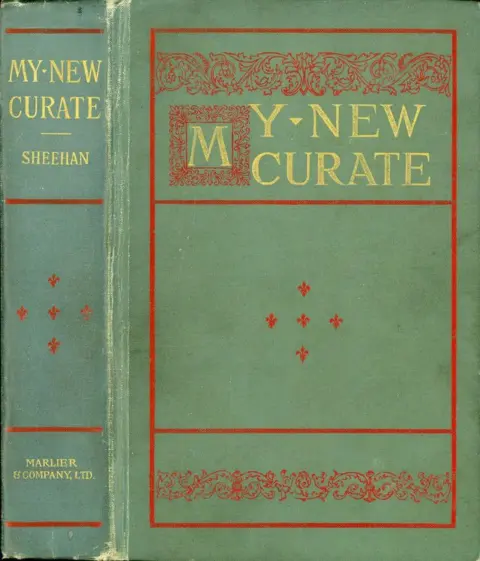
"My New Curate" by Patrick Augustine Sheehan is a novel written in the early 20th century. The story centers around Father Dan, a parish priest in an Irish village, and his experiences as he receives a new curate, Father Letheby, whose modern and energetic approach to ministry contrasts sharply with Father Dan's more traditional and resigned existence. The narrative explores themes of faith, the hardships of rural life, and the relationship between clergy and their parishioners. At the start of the book, the reader is introduced to the emotional departure of Father Dan’s old curate, Father Laverty, who leaves the parish for a new assignment. The accompanying sadness sets the tone for Father Dan's reflections on his life and the challenges that lie ahead with a new, unknown curate. Father Letheby arrives with enthusiasm and a passion to invigorate the parish, and his modern ideas quickly clash with the established leniency of the local community. This friction in expectations creates an engaging dynamic, hinting at the transformation both priests may undergo as they navigate their differences and the realities of their shared responsibilities.
Introduction adapted from the source catalogue; source summaries may be automatically generated.
Free to read · English · 107,499 words · No account needed
MAKE TIME FOR A GOOD BOOK
On by default. Untick to stop anonymous reading totals. Each page counts after 10 seconds in view. How this works.
Anonymous counting is on unless you have switched it off.
"My Lord," I interposed charitably, "I don't want to interfere with this interesting examination, but my sense of classical perfection and propriety is offended by this word in the syllabus of to-day's Conference. There is no such word in the Latin language as 'Primigeniis,'--'De Primigeniis textibus Sacræ Scripturæ--'"
"Now, Father Dan, this won't do," shouted the chairman. "I see what you're up to. There must be no interruptions here. Very good, Father Michael, very good indeed! Now, we'll take another. Father Dan, if you interrupt again, I'll put you into the hat. Well, number eighteen! Let me see. Ah, yes. Father Irwin!"
Poor Father Michael looked unhappy and discomfited. It is a funny paradox that that good and holy priest, who, his parishioners declared, "said Mass like an angel," so that not one of his congregation could read a line of their prayer-books, so absorbed were they in watching him, couldn't explain in totidem verbis the Rubrics he was daily and accurately practising.
Which, perhaps, exemplifies a maxim of the Chinese philosopher:--
"One who talks does not know.
One who knows does not talk.
Therefore the sage keeps his mouth shut,
And his sense-gates closed."
Before Father Irwin was questioned, however, there was a delightful
interlude.
Some one asked whether it was lawful for any one, not a bishop, to wear a zucchetto during the celebration of Mass. As usual, there was a pleasant diversity of opinion, some contending that the privilege was reserved to the episcopate, inasmuch as the great rubricists only contemplated bishops in laying down the rules for the removal and assumption of the zucchetto; others again maintained that any priest might wear one; and others limited the honor to regulars, who habitually wore the tonsure. The chairman, however, stopped the discussion peremptorily, and again asked (this time a very aged priest) the question he had put to Father Delany. The old man answered promptly:--
"The zucchetto, or pileolus, is removed at the end of the last secret prayer, and resumed after the ablutions."
"Quite right," said the chairman.
"By the way," said the old man, "you pronounce that word pileōlus.
The word is pileŏlus."
"The word is pileōlus," said the chairman, whose throne wasn't exactly lined with velvet this day.
"Pardon me. The word is pileŏlus. You find it as such in the
scansions of Horace."
"This is your province, Father Dan," said the bishop. "There's no one in the diocese so well qualified to adjudicate here--"
"'Vixere fortes ante Agamemnona
Multi--'
my Lord!" said I. I was drawing the bishop out. "There were ironical
cheers at 'Agamemnona.'"
"'Mutato nomine, de te
Fabula narratur,'"
Your reading position is saved on this browser. Take it to another device with a library code. Reading pages adapt to text, rather than matching a printed edition.
BEHIND THE BOOK
This eBook is for the use of anyone anywhere in the United States and most other parts of the world at no cost and with almost no restrictions whatsoever. You may copy it, give it away or re-use it under the terms of the Project Gutenberg License included with this eBook or online at www.gutenberg.org. If you are not located in the United States, you will have to check the laws of the country where you are located before using this eBook. Read the source licence.
The original source file, including credits and licence, is retained by this library. Request an original-format copy at no charge. Please include the book title and Project Gutenberg identifier #20295.
KEEP YOUR CURIOSITY GOING
Coulson Kernahan

Maurice Baring
Frances Wright
Cécile Tormay

Frederic Jesup Stimson

W. H. P. (William Henry Pope) Jarvis