THE CLASSIC COLLECTION✦A dead man’s diaryCLASSIC FREE BOOKS
A dead man’s diary
Coulson Kernahan
THE CLASSIC COLLECTION · 1899
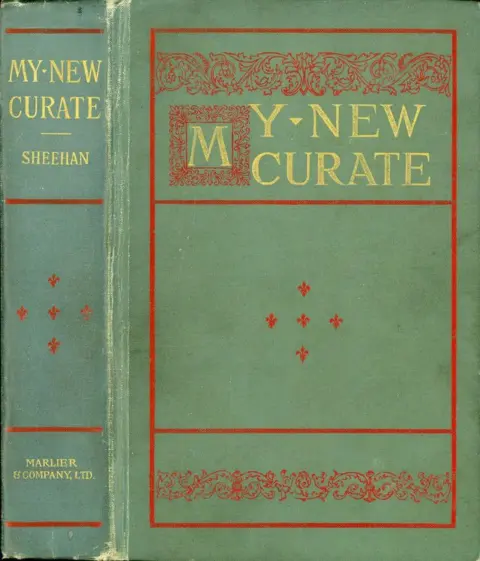
"My New Curate" by Patrick Augustine Sheehan is a novel written in the early 20th century. The story centers around Father Dan, a parish priest in an Irish village, and his experiences as he receives a new curate, Father Letheby, whose modern and energetic approach to ministry contrasts sharply with Father Dan's more traditional and resigned existence. The narrative explores themes of faith, the hardships of rural life, and the relationship between clergy and their parishioners. At the start of the book, the reader is introduced to the emotional departure of Father Dan’s old curate, Father Laverty, who leaves the parish for a new assignment. The accompanying sadness sets the tone for Father Dan's reflections on his life and the challenges that lie ahead with a new, unknown curate. Father Letheby arrives with enthusiasm and a passion to invigorate the parish, and his modern ideas quickly clash with the established leniency of the local community. This friction in expectations creates an engaging dynamic, hinting at the transformation both priests may undergo as they navigate their differences and the realities of their shared responsibilities.
Introduction adapted from the source catalogue; source summaries may be automatically generated.
Free to read · English · 107,499 words · No account needed
MAKE TIME FOR A GOOD BOOK
On by default. Untick to stop anonymous reading totals. Each page counts after 10 seconds in view. How this works.
Anonymous counting is on unless you have switched it off.
There was a quiet smile around Father Letheby's mouth during this philippic. Then he said, smoothing out the paper:--
"There is a little clause here at the end, which I think, Father Dan,
just affects you."
"Affects me? If there is, it didn't catch my eye. Show it to me."
I took the paper, and there, sure enough, was a little paragraph:--
"6° The privilege, in virtue of which parish priests of a certain standing on the mission are exempted from the obligations of the Conference, will be continued."
I read that over three times to make quite sure of it, my curate looking
down smilingly at me.
"If you are not of a certain standing, Father Dan, I'd like to know
who is."
"True for you," I replied musingly. "I believe I am called the Patriarch
of the Conference."
Visions of an old man, leaning back in his chair, whilst he was proof-protected against theological bullets, swam before me; and I began to feel like a man on a safe eminence, overlooking the battlefield, or a Spanish lady at a bullfight.
"'Pon my word," I said, at length, "I'm beginning to think there is something in it, after all. The Holy Ghost has something to say to our good and holy prelates. There is no doubt there was a great waste of time at these Conferences, and young men got into idle habits and neglected their theology; and, you know, that's a serious matter. In fact, it reaches sometimes to a mortal sin. We must all study now. And you see how practical the bishop is. There's Rubrics. Now, there's no doubt at all that a good many of us don't respect the ceremonies of the Mass. Go to Lisdoonvarna, and every fellow appears to have his own idea of--"
"Pardon me, sir," said Father Letheby, "I cannot quite follow you there. I must say I never saw the Rubrics half so well carried out in England as here at home. In fact, this complaint appears to be one of these satires on racial characteristics that are only half true, and take all their force from traditional misrepresentations."
Isn't that fine language? You see, he's taking a leaf or two out of my
book.
"Well, but you can't deny that this question of Scriptural exegesis is one of these dominant questions that must arrest the attention of all who are interested in ecclesiastical or hieratical studies," said I, trying to keep pace with him.
"Quite true," he said; "and yet I should like to see these new-fangled theories about Scriptural inspiration, plenary or otherwise, lifted from the shaking quagmires of conjecture onto the solid ground of demonstration."
Your reading position is saved on this browser. Take it to another device with a library code. Reading pages adapt to text, rather than matching a printed edition.
BEHIND THE BOOK
This eBook is for the use of anyone anywhere in the United States and most other parts of the world at no cost and with almost no restrictions whatsoever. You may copy it, give it away or re-use it under the terms of the Project Gutenberg License included with this eBook or online at www.gutenberg.org. If you are not located in the United States, you will have to check the laws of the country where you are located before using this eBook. Read the source licence.
The original source file, including credits and licence, is retained by this library. Request an original-format copy at no charge. Please include the book title and Project Gutenberg identifier #20295.
KEEP YOUR CURIOSITY GOING
Coulson Kernahan

Maurice Baring
Frances Wright
Cécile Tormay

Frederic Jesup Stimson

W. H. P. (William Henry Pope) Jarvis