THE CLASSIC COLLECTION✦A dead man’s diaryCLASSIC FREE BOOKS
A dead man’s diary
Coulson Kernahan
THE CLASSIC COLLECTION · 1899
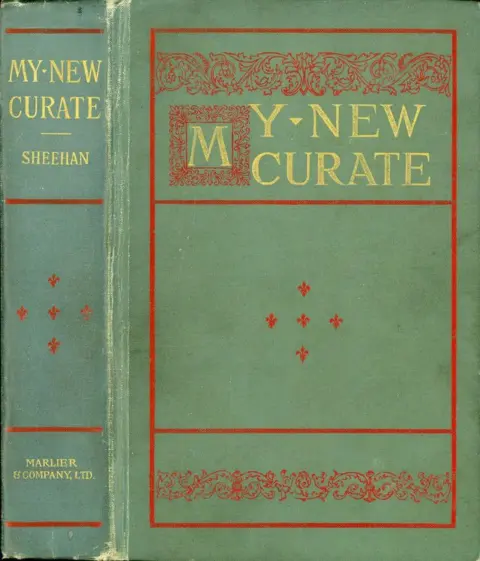
"My New Curate" by Patrick Augustine Sheehan is a novel written in the early 20th century. The story centers around Father Dan, a parish priest in an Irish village, and his experiences as he receives a new curate, Father Letheby, whose modern and energetic approach to ministry contrasts sharply with Father Dan's more traditional and resigned existence. The narrative explores themes of faith, the hardships of rural life, and the relationship between clergy and their parishioners. At the start of the book, the reader is introduced to the emotional departure of Father Dan’s old curate, Father Laverty, who leaves the parish for a new assignment. The accompanying sadness sets the tone for Father Dan's reflections on his life and the challenges that lie ahead with a new, unknown curate. Father Letheby arrives with enthusiasm and a passion to invigorate the parish, and his modern ideas quickly clash with the established leniency of the local community. This friction in expectations creates an engaging dynamic, hinting at the transformation both priests may undergo as they navigate their differences and the realities of their shared responsibilities.
Introduction adapted from the source catalogue; source summaries may be automatically generated.
Free to read · English · 107,499 words · No account needed
MAKE TIME FOR A GOOD BOOK
On by default. Untick to stop anonymous reading totals. Each page counts after 10 seconds in view. How this works.
Anonymous counting is on unless you have switched it off.
"You don't mean to say that you have accepted that awful place?" said
one.
"You'll have nothing but fish to eat," said another. "The butcher's van goes there but once a week."
"And no society but fishermen," said a third. "And they speak nothing but Irish, and you know you cannot bless yourself in Irish."
"Well," I replied, "my Job's comforters, I have accepted Kilronan, and am going there. If all things go well, and you are good boys, I may ask for some of you as curate--"
"You'll be glad to get a curacy yourself in six months," they shouted in
chorus.
And so I came to Kilronan, and here have I been since. The years have rolled by swiftly. Life is a coach, whose wheels move slowly and painfully at the start; but, once set moving, particularly when going down the deep decline of life, the years move so swiftly you cannot see the spokes in the wheels, which are the days we number so sadly. What glorious resolutions I made the first months of my residence here! How I would read and write and burn the midnight oil, and astonish the world, and grow from dignity to dignity into an honored old age! Alas! circumstances are too much for us all, and here I am, in my seventieth year, poor old Daddy Dan, with no great earthly trouble, indeed, and some few consolations,--my breviary and the grand psalms of hope,--my daily Mass and its hidden and unutterable sweetness,--the love of little children and their daily smiles,--the prayers of my old women, and, I think, the reverence of the men. But there comes a little sting sometimes, when I see young priests, who served my Masses long ago, standing in cathedral stalls in all the glory of purple and ermine, and when I see great parishes passing into the hands of mere boys, and poor old Daddy Dan passed over in silence. I know, if I were really good and resigned, I would bless God for it all, and I do. But human nature will revolt sometimes, and people will say, "What a shame, Father Dan; why haven't you the red buttons as well as so and so," or, "What ails the Bishop, passing over one of the most learned men in the diocese for a parcel of gossoons!" I suppose it was my own fault. I remember what magnificent ideas I had. I would build factories, I would ferr the streets, I would establish a fishing station and make Kilronan the favorite bathing resort on the western coast; I would write books and be, all round, a model of push, energy, and enterprise. And I did try. I might as well have tried to remove yonder mountain with a pitchfork, or stop the roll of the Atlantic with a rope of sand. Nothing on earth can cure the inertia of Ireland. It weighs down like the weeping clouds on the damp heavy earth, and there's no lifting it, nor disburthening of the souls of men of this intolerable weight. I was met on every side with a stare of curiosity, as if I were propounding something immoral or heretical. People looked at me, put their hands in their pockets, whistled dubiously, and went slowly away. Oh, it was weary, weary work! The blood was stagnant in the veins of the people and their feet were shod with lead. They walked slowly, spoke with difficulty, stared all day at leaden clouds or pale sunlight, stood at the corners of the village for hours looking into vacuity, and the dear little children became old the moment they left school, and lost the smiles and the sunlight of childhood. It was a land of the lotos. The people were narcotized. Was it the sea air? I think I read somewhere in an old philosopher, called Berkeley, that the damp salt air of the sea has a curious phlegmatic effect on the blood, and will coagulate it and produce gout and sundry disorders. However that be, there was a weary weight on everything around Kilronan. The cattle slept in the fields, the fishermen slept in their coracles. It was a land of sleep and dreams.
Your reading position is saved on this browser. Take it to another device with a library code. Reading pages adapt to text, rather than matching a printed edition.
BEHIND THE BOOK
This eBook is for the use of anyone anywhere in the United States and most other parts of the world at no cost and with almost no restrictions whatsoever. You may copy it, give it away or re-use it under the terms of the Project Gutenberg License included with this eBook or online at www.gutenberg.org. If you are not located in the United States, you will have to check the laws of the country where you are located before using this eBook. Read the source licence.
The original source file, including credits and licence, is retained by this library. Request an original-format copy at no charge. Please include the book title and Project Gutenberg identifier #20295.
KEEP YOUR CURIOSITY GOING
Coulson Kernahan

Maurice Baring
Frances Wright
Cécile Tormay

Frederic Jesup Stimson

W. H. P. (William Henry Pope) Jarvis