
Love and liberty
Alexandre Dumas
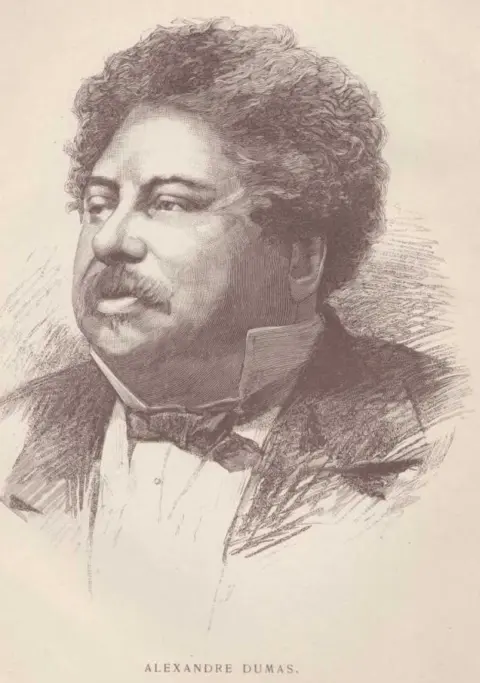
THE CLASSIC COLLECTION · 1838
"Murat" by Alexandre Dumas is a historical fiction novel written in the early 20th century. This captivating narrative revolves around Joachim Murat, a key figure in the Napoleonic era, and explores themes of loyalty, betrayal, and the quest for identity amidst political turmoil. Dumas takes us through Murat's dramatic life, particularly focusing on his exile and final attempts to reclaim his lost kingdom. The story begins just after the Battle of Waterloo when Murat finds himself cast out from power and struggling for survival. As he navigates his precarious position, he seeks refuge in places like Corsica with the help of loyal followers. As the plot unfolds, we witness his desperate maneuvers to return to Naples, the complexities of his past allegiances, and the tragic circumstances leading to his eventual capture and execution in Pizzo. Through this gripping portrayal, Dumas sheds light on Murat's internal conflicts and the historical context that shaped his fate, ultimately presenting a poignant reminder of the fleeting nature of power and glory.
Introduction adapted from the source catalogue; source summaries may be automatically generated.
Free to read · English · 14,649 words · No account needed
MAKE TIME FOR A GOOD BOOK
On by default. Untick to stop anonymous reading totals. Each page counts after 10 seconds in view. How this works.
Anonymous counting is on unless you have switched it off.
Francesco Papavassi, registrar.
The commission assembled that night.
On the 13th October, at six o'clock in the morning, Captain Stratti came into the king's prison; he was sound asleep. Stratti was going away again, when he stumbled against a chair; the noise awoke Murat.
"What do you want with me, captain?" asked the king.
Stratti tried to speak, but his voice failed him.
"Ah ha!" said Murat, "you must have had news from Naples."
"Yes, sire," muttered Stratti.
"What are they?" said Murat.
"Your trial, sire."
"And by whose order will sentence be pronounced, if you please? Where will they find peers to judge me? If they consider me as a king, I must have a tribunal of kings; if I am a marshal of France, I must have a court of marshals; if I am a general, and that is the least I can be, I must have a jury of generals."
"Sire, you are declared a public enemy, and as such you are liable to be judged by court-martial: that is the law which you instituted yourself for rebels."
"That law was made for brigands, and not for crowned heads, sir," said Murat scornfully. "I am ready; let them butcher me if they like. I did not think King Ferdinand capable of such an action."
"Sire, will you not hear the names of your judges?"
"Yes, sir, I will. It must be a curious list. Read it: I am listening."
Captain Stratti read out the names that we have enumerated. Murat listened with a disdainful smile.
"Ah," he said, as the captain finished, "it seems that every precaution
has been taken."
"How, sire?"
"Yes. Don't you know that all these men, with the exception of Francesco Froio, the reporter; owe their promotion to me? They will be afraid of being accused of sparing me out of gratitude, and save one voice, perhaps, the sentence will be unanimous."
"Sire, suppose you were to appear before the court, to plead your own
cause?"
"Silence, sir, silence!" said Murat. "I could, not officially recognise the judges you have named without tearing too many pages of history. Such tribunal is quite incompetent; I should be disgraced if I appeared before it. I know I could not save my life, let me at least preserve my royal dignity."
At this moment Lieutenant Francesco Froio came in to interrogate the prisoner, asking his name, his age, and his nationality. Hearing these questions, Murat rose with an expression of sublime dignity.
"I am Joachim Napoleon, King of the Two Sicilies," he answered, "and I
order you to leave me."
The registrar obeyed.
Your reading position is saved on this browser. Take it to another device with a library code. Reading pages adapt to text, rather than matching a printed edition.
Alexandre Dumas
Alexandre Dumas & Auguste Maquet
Alexandre Dumas
Alexandre Dumas
BEHIND THE BOOK
This eBook is for the use of anyone anywhere in the United States and most other parts of the world at no cost and with almost no restrictions whatsoever. You may copy it, give it away or re-use it under the terms of the Project Gutenberg License included with this eBook or online at www.gutenberg.org. If you are not located in the United States, you will have to check the laws of the country where you are located before using this eBook. Read the source licence.
The original source file, including credits and licence, is retained by this library. Request an original-format copy at no charge. Please include the book title and Project Gutenberg identifier #2755.
KEEP YOUR CURIOSITY GOING
Cécile Tormay

Moritz Busch
Coulson Kernahan
John L. Ransom

Maurice Baring
Frances Wright