
Love and liberty
Alexandre Dumas
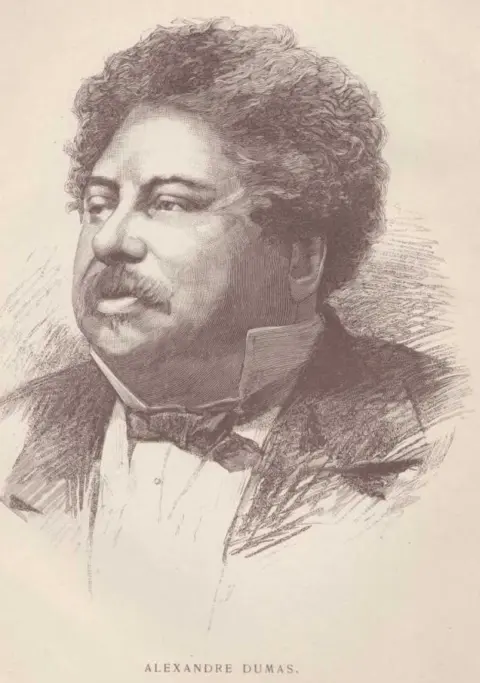
THE CLASSIC COLLECTION · 1838
"Murat" by Alexandre Dumas is a historical fiction novel written in the early 20th century. This captivating narrative revolves around Joachim Murat, a key figure in the Napoleonic era, and explores themes of loyalty, betrayal, and the quest for identity amidst political turmoil. Dumas takes us through Murat's dramatic life, particularly focusing on his exile and final attempts to reclaim his lost kingdom. The story begins just after the Battle of Waterloo when Murat finds himself cast out from power and struggling for survival. As he navigates his precarious position, he seeks refuge in places like Corsica with the help of loyal followers. As the plot unfolds, we witness his desperate maneuvers to return to Naples, the complexities of his past allegiances, and the tragic circumstances leading to his eventual capture and execution in Pizzo. Through this gripping portrayal, Dumas sheds light on Murat's internal conflicts and the historical context that shaped his fate, ultimately presenting a poignant reminder of the fleeting nature of power and glory.
Introduction adapted from the source catalogue; source summaries may be automatically generated.
Free to read · English · 14,649 words · No account needed
MAKE TIME FOR A GOOD BOOK
On by default. Untick to stop anonymous reading totals. Each page counts after 10 seconds in view. How this works.
Anonymous counting is on unless you have switched it off.
The general had had dinner served in an adjacent room. Murat followed him and sat down to table, but he could not eat. The sight which he had just witnessed had made him heartbroken, and yet without a line on his brow that man had been through the battles of Aboukir, Eylau, and Moscow! After dinner, Murat went into his room again, gave his various letters to General Nunziante, and begged to be left alone. The general went away.
Murat paced round his room several times, walking with long steps, and pausing from time to time before the window, but without opening it.
At last he overcame a deep reluctance, put his hand on the bolt and drew the lattice towards him.
It was a calm, clear night: one could see the whole shore. He looked for Campana's grave. Two dogs scratching the sand showed him the spot.
The king shut the window violently, and without undressing threw himself onto his bed. At last, fearing that his agitation would be attributed to personal alarm, he undressed and went to bed, to sleep, or seem to sleep all night.
On the morning of the 9th the tailors whom Murat had asked for arrived. He ordered a great many clothes, taking the trouble to explain all the details suggested by his fastidious taste. He was thus employed when General Nunziante came in. He listened sadly to the king's commands. He had just received telegraphic despatches ordering him to try the King of Naples by court-martial as a public enemy. But he found the king so confident, so tranquil, almost cheerful indeed, that he had not the heart to announce his trial to him, and took upon himself to delay the opening of operation until he received written instructions. These arrived on the evening of the 12th. They were couched in the following terms:
NAPLES, October 9, 1815
"Ferdinand, by the grace of God, etc . . . . wills and decrees
the following:
"Art. 1. General Murat is to be tried by court-martial, the members whereof are to be nominated by our Minister of War.
"Art. 2. Only half an hour is to be accorded to the condemned for the exercises of religion.
"(Signed) FERDINAND."
Another despatch from the minister contained the names of the members of the commission. They were:--
Giuseppe Fosculo, adjutant, commander-in-chief of the staff, president.
Laffaello Scalfaro, chief of the legion of Lower Calabria.
Latereo Natali, lieutenant-colonel of the Royal Marines.
Gennaro Lanzetta, lieutenant-colonel of the Engineers.
W. T. captain of Artillery.
Francois de Venge, ditto.
Francesco Martellari, lieutenant of Artillery.
Francesco Froio, lieutenant in the 3rd regiment of the line.
Giovanni delta Camera, Public Prosecutor to the Criminal Courts of Lower
Calabria.
Your reading position is saved on this browser. Take it to another device with a library code. Reading pages adapt to text, rather than matching a printed edition.
Alexandre Dumas
Alexandre Dumas & Auguste Maquet
Alexandre Dumas
Alexandre Dumas
BEHIND THE BOOK
This eBook is for the use of anyone anywhere in the United States and most other parts of the world at no cost and with almost no restrictions whatsoever. You may copy it, give it away or re-use it under the terms of the Project Gutenberg License included with this eBook or online at www.gutenberg.org. If you are not located in the United States, you will have to check the laws of the country where you are located before using this eBook. Read the source licence.
The original source file, including credits and licence, is retained by this library. Request an original-format copy at no charge. Please include the book title and Project Gutenberg identifier #2755.
KEEP YOUR CURIOSITY GOING
Cécile Tormay

Moritz Busch
Coulson Kernahan
John L. Ransom

Maurice Baring
Frances Wright