
The fourth plague
Edgar Wallace
THE CLASSIC COLLECTION · 1920
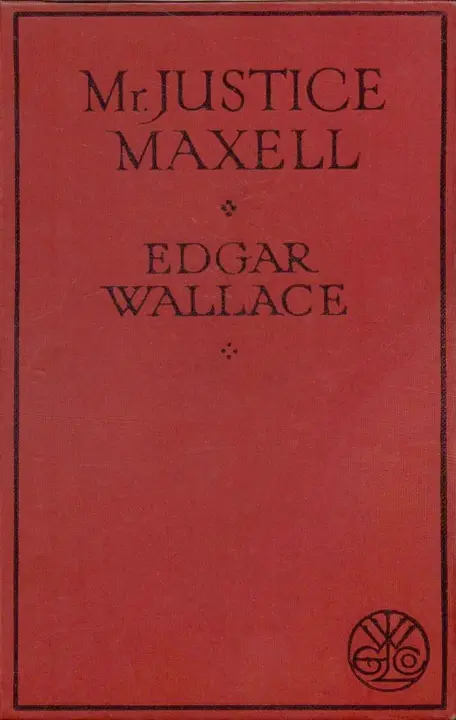
"Mr. Justice Maxell" by Edgar Wallace is a novel written in the early 20th century. The story introduces John Maxell, a King’s Counsel, who arrives in Tangier, Morocco, where the narrative quickly reveals a mix of personal ambition and financial entanglements involving dangerous enterprises and intriguing characters. The central theme revolves around the various nuances of trust and deception, primarily seen through the interactions between Maxell and his friend Cartwright, who is embroiled in suspicious schemes involving gold mining and an actress named Sadie O’Grady. The opening of the novel sets a vivid scene in Tangier, capturing the ambiance through detailed descriptions of setting and sounds. Maxell is depicted as a man grappling with unease both regarding his financial status and the ambitions of his old school friend, Cartwright, who is keen on uncovering a possible gold reef. As the dialogue unfolds, it hints at past connections, revealing undercurrents of tension between loyalty, greed, and moral dilemmas. The chapter concludes with a sense of impending drama, particularly surrounding O’Grady, whose life takes an unexpected turn as Cartwright’s motives become increasingly questionable. This establishes a foundation for exploring themes of ethics, ambition, and the consequences of one's choices throughout the narrative.
Introduction adapted from the source catalogue; source summaries may be automatically generated.
Free to read · English · 54,262 words · No account needed
MAKE TIME FOR A GOOD BOOK
On by default. Untick to stop anonymous reading totals. Each page counts after 10 seconds in view. How this works.
Anonymous counting is on unless you have switched it off.
The sun had risen before the preliminary interrogation and the search of the house and grounds had been concluded. Blewitt the detective, who had taken charge of the case, came into the dining-room, where a worried servant was serving coffee for the investigators, and dropped down on to a chair.
“There’s one clue and there’s one clue alone,” he said, and drew from his pocket a soft hat. “Do you recognise this, Anderson?”
Timothy nodded.
“Yes,” he said, “that was worn last night by the man I spoke to you
about.”
“Cartwright?” said the detective.
“I could swear to it,” said Timothy. “Where did you find it?”
“Outside,” said the detective; “and that is all we have to go on. There is no sign of any body. My first theory stands.”
“You believe that the murderer carried Sir John and Lady Maxell into the car and drove away with them?” said Timothy; “but that pre-supposes that the chauffeur was in the plot.”
“He may have been and he may have been terrorised,” said the detective. “Even a taxi-driver will be obliging if you stick a gun in his stomach.”
“But wouldn’t Miss Maxell have heard——” began Timothy.
“Miss Maxell heard,” said the detective, “but was afraid to look out. She also heard two shots. My theory is that Sir John and Lady Maxell were killed, that the murderer first locked both the bedrooms, went through Sir John’s papers, presumably to discover something incriminating himself, and to destroy such documents.”
“But why not leave the bodies?” said Timothy.
“Because without the bodies no indictment of murder could hold against
him.”
Timothy Anderson turned as the girl came in. She was looking very tired, but she was calmer than she had been earlier in the morning.
“Is there any news?” she asked, and Timothy shook his head.
“We have searched every inch of the ground,” he said.
“Do you think——” She hesitated to ask the question.
“I am afraid,” replied Timothy gently, “that there is very little hope.”
“But have you searched everywhere?” insisted the girl.
“Everywhere,” replied Timothy.
Soon after, Timothy took the girl away to an hotel for breakfast and to arrange for a room, and the house was left in charge of the police. Later came the famous detective Gilborne, who made an independent search, but he, like his predecessors, failed to discover any further evidence, because he also knew nothing of the disused well, which lay hidden under a rubbish heap.
Your reading position is saved on this browser. Take it to another device with a library code. Reading pages adapt to text, rather than matching a printed edition.
Edgar Wallace
Edgar Wallace
Edgar Wallace
Edgar Wallace
BEHIND THE BOOK
This eBook is for the use of anyone anywhere in the United States and most other parts of the world at no cost and with almost no restrictions whatsoever. You may copy it, give it away or re-use it under the terms of the Project Gutenberg License included with this eBook or online at www.gutenberg.org. If you are not located in the United States, you will have to check the laws of the country where you are located before using this eBook. Read the source licence.
The original source file, including credits and licence, is retained by this library. Request an original-format copy at no charge. Please include the book title and Project Gutenberg identifier #60527.
KEEP YOUR CURIOSITY GOING
Coulson Kernahan

Maurice Baring
Frances Wright
Cécile Tormay

Frederic Jesup Stimson

W. H. P. (William Henry Pope) Jarvis