
The fourth plague
Edgar Wallace
THE CLASSIC COLLECTION · 1920
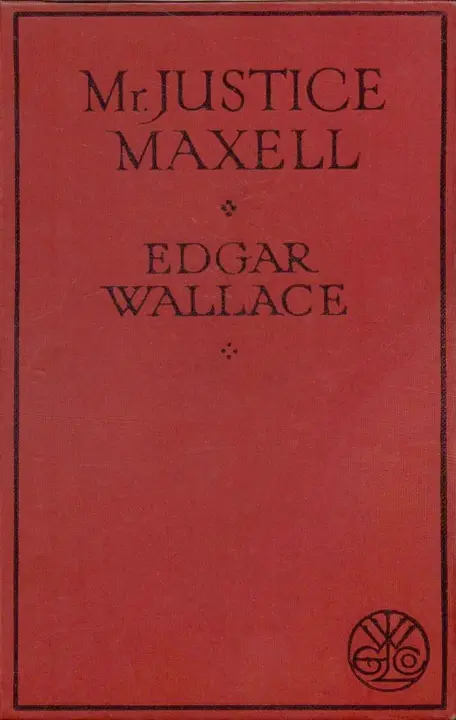
"Mr. Justice Maxell" by Edgar Wallace is a novel written in the early 20th century. The story introduces John Maxell, a King’s Counsel, who arrives in Tangier, Morocco, where the narrative quickly reveals a mix of personal ambition and financial entanglements involving dangerous enterprises and intriguing characters. The central theme revolves around the various nuances of trust and deception, primarily seen through the interactions between Maxell and his friend Cartwright, who is embroiled in suspicious schemes involving gold mining and an actress named Sadie O’Grady. The opening of the novel sets a vivid scene in Tangier, capturing the ambiance through detailed descriptions of setting and sounds. Maxell is depicted as a man grappling with unease both regarding his financial status and the ambitions of his old school friend, Cartwright, who is keen on uncovering a possible gold reef. As the dialogue unfolds, it hints at past connections, revealing undercurrents of tension between loyalty, greed, and moral dilemmas. The chapter concludes with a sense of impending drama, particularly surrounding O’Grady, whose life takes an unexpected turn as Cartwright’s motives become increasingly questionable. This establishes a foundation for exploring themes of ethics, ambition, and the consequences of one's choices throughout the narrative.
Introduction adapted from the source catalogue; source summaries may be automatically generated.
Free to read · English · 54,262 words · No account needed
MAKE TIME FOR A GOOD BOOK
On by default. Untick to stop anonymous reading totals. Each page counts after 10 seconds in view. How this works.
Anonymous counting is on unless you have switched it off.
THE train was crowded, but he secured a corner seat in one of the cell-like compartments. It was empty when he entered, but immediately after, to his surprise, Brown and Chelwyn followed him in and deposited their goods upon three seats that they might in the manner of all experienced travellers, occupy breathing space for three at the cost of two tickets.
They took no notice of Timothy until the train drew out and he wondered what their game was. It was hardly likely that they would start any rough work with him after their experience of the morning and less likely because these boat trains were well policed.
Clear of the Riverside Station the smooth Englishman leant forward.
“I hope, Mr. Anderson,” he said, “that you will forget and forgive.”
“Surely,” said Timothy, “I have nothing to forgive.”
“My friend,” said Mr. Brown with a smile, “is very precipitate—which means hasty,” he explained.
“Thank you,” said Timothy, “I thought it meant crooked.”
A spasm contorted the features of Mr. Chelwyn, but he said nothing. As for Brown, he laughed. He laughed heartily but spuriously.
“That’s not a bad joke,” he said, “but to tell you the truth, we mistook you for—one of us, and my friend and I thought it would be a good joke to get the better of you.”
“And was it?” asked Timothy.
“It was and it wasn’t,” said Mr. Brown, not easily nonplussed. “Of course, we intended restoring the money to you before you left the ship.”
“Naturally,” said Timothy. “I never thought you would do anything else.”
“Only you know you rather spoilt our little esprit.”
“If the conversation is to develop in a foreign language,” said Timothy, “I would only remark: Honi soit qui mal y pense,” and the polite Mr. Brown laughed again.
“You do not mind if my friend and I have a little quiet game by ourselves, if,” he said humorously, “we swindle one another.”
“Not at all,” said Timothy. “I have no objection to watching, but if,” he said cheerfully, “you should suddenly draw my attention whilst your friend’s head is turned, to the ease with which I could win a hundred pounds by picking the lady, or discovering the little pea under the little shell, or show me a way of getting rich from any of the other devices which the children of the public schools find so alluring at the country fair, I shall be under the painful necessity of slapping you violently on the wrist.”
Your reading position is saved on this browser. Take it to another device with a library code. Reading pages adapt to text, rather than matching a printed edition.
Edgar Wallace
Edgar Wallace
Edgar Wallace
Edgar Wallace
BEHIND THE BOOK
This eBook is for the use of anyone anywhere in the United States and most other parts of the world at no cost and with almost no restrictions whatsoever. You may copy it, give it away or re-use it under the terms of the Project Gutenberg License included with this eBook or online at www.gutenberg.org. If you are not located in the United States, you will have to check the laws of the country where you are located before using this eBook. Read the source licence.
The original source file, including credits and licence, is retained by this library. Request an original-format copy at no charge. Please include the book title and Project Gutenberg identifier #60527.
KEEP YOUR CURIOSITY GOING
Coulson Kernahan

Maurice Baring
Frances Wright
Cécile Tormay

Frederic Jesup Stimson

W. H. P. (William Henry Pope) Jarvis