
The fourth plague
Edgar Wallace
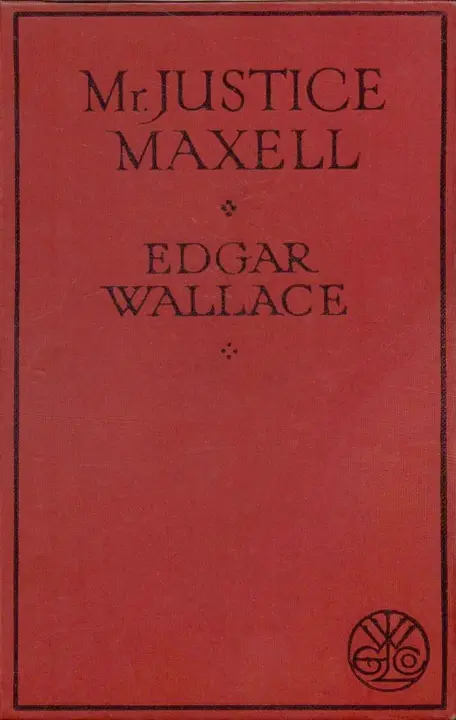
THE CLASSIC COLLECTION · 1920
"Mr. Justice Maxell" by Edgar Wallace is a novel written in the early 20th century. The story introduces John Maxell, a King’s Counsel, who arrives in Tangier, Morocco, where the narrative quickly reveals a mix of personal ambition and financial entanglements involving dangerous enterprises and intriguing characters. The central theme revolves around the various nuances of trust and deception, primarily seen through the interactions between Maxell and his friend Cartwright, who is embroiled in suspicious schemes involving gold mining and an actress named Sadie O’Grady. The opening of the novel sets a vivid scene in Tangier, capturing the ambiance through detailed descriptions of setting and sounds. Maxell is depicted as a man grappling with unease both regarding his financial status and the ambitions of his old school friend, Cartwright, who is keen on uncovering a possible gold reef. As the dialogue unfolds, it hints at past connections, revealing undercurrents of tension between loyalty, greed, and moral dilemmas. The chapter concludes with a sense of impending drama, particularly surrounding O’Grady, whose life takes an unexpected turn as Cartwright’s motives become increasingly questionable. This establishes a foundation for exploring themes of ethics, ambition, and the consequences of one's choices throughout the narrative.
Introduction adapted from the source catalogue; source summaries may be automatically generated.
Free to read · English · 54,262 words · No account needed
MAKE TIME FOR A GOOD BOOK
On by default. Untick to stop anonymous reading totals. Each page counts after 10 seconds in view. How this works.
Anonymous counting is on unless you have switched it off.
“Sir,” he said in English, “you see my unhappy position. The señor is the son of my proprietor and it will be bad for me if you stay. I ask you as a friend and caballero to go at once and spare me misfortune.”
Cartwright looked at the girl.
“Must you go on again in this infernal place?” he asked.
She nodded, laughter and admiration in her eyes.
“What happens if you chuck this infernal job?”
“I’m fired,” said the girl. “I’ve a ten weeks’ contract with these
people.”
“What do you get?”
“Two hundred and fifty pesetas a week,” she said contemptuously. “It’s a wonderful salary, isn’t it?”
He nodded.
“How many more weeks have you to go before your contract is finished?”
“Another four,” she said, “we’re playing in Cadiz next week, in Seville the week after, then Malaga, then Granada.”
“Do you like it?”
“Like it!” the scorn in her voice was her answer.
“The dresses belong to the troupe, I guess,” he said. “Get into your street clothes and I’ll wait for you.”
“What are you going to do?” she asked, eyeing him narrowly.
“I’ll make good your lost contract,” he said.
“Why?”
He shrugged his shoulders.
“I don’t like to see an English girl——”
“Irish,” she corrected.
“I mean Irish,” he laughed. “I don’t like to see an Irish girl doing this kind of thing with a lot of horrible half-breeds. You’ve talent enough for London or Paris. What about Paris? I know any number of people there.”
“Could you get me a good engagement?” she asked eagerly.
He nodded.
“What’s your name, anyway?” she demanded.
“Never mind about my name. Smith, Brown, Jones, Robinson—anything you
like.”
It was the agitated little manager who interfered.
“Sir,” he said, “you must not persuade this lady to leave the theatre. I have her under heavy penalties. I can bring her before the judge——”
“Now just forget that!” said Cartwright, “there is no judge in Tangier. She is a British subject, and the most you can do is to take her before the British Consul.”
“When she returns to Spain——” said the little man growing apoplectic.
“She will not return to Spain. She will go to Gibraltar if she goes anywhere,” said Cartwright, “and from Gibraltar she will be on the sea until she reaches a British port.”
“I will go to the Spanish Consul,” screamed the little manager, clawing the air. “I will not be robbed. You shall not interfere with my business, you——”
Your reading position is saved on this browser. Take it to another device with a library code. Reading pages adapt to text, rather than matching a printed edition.
Edgar Wallace
Edgar Wallace
Edgar Wallace
Edgar Wallace
BEHIND THE BOOK
This eBook is for the use of anyone anywhere in the United States and most other parts of the world at no cost and with almost no restrictions whatsoever. You may copy it, give it away or re-use it under the terms of the Project Gutenberg License included with this eBook or online at www.gutenberg.org. If you are not located in the United States, you will have to check the laws of the country where you are located before using this eBook. Read the source licence.
The original source file, including credits and licence, is retained by this library. Request an original-format copy at no charge. Please include the book title and Project Gutenberg identifier #60527.
KEEP YOUR CURIOSITY GOING
Coulson Kernahan

Maurice Baring
Frances Wright
Cécile Tormay

Frederic Jesup Stimson

W. H. P. (William Henry Pope) Jarvis