
The fourth plague
Edgar Wallace
THE CLASSIC COLLECTION · 1920
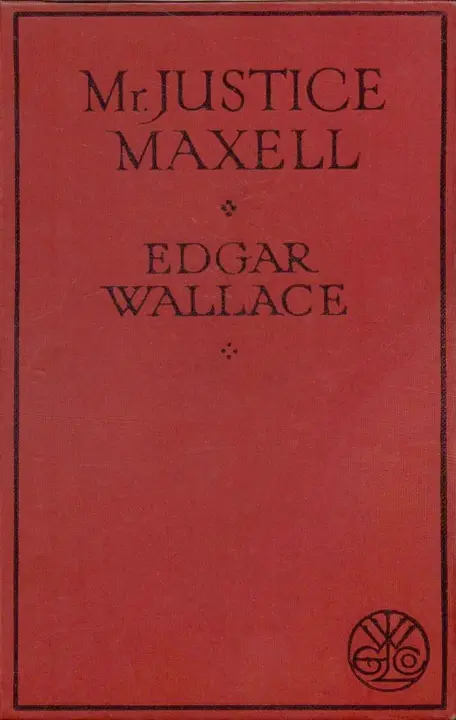
"Mr. Justice Maxell" by Edgar Wallace is a novel written in the early 20th century. The story introduces John Maxell, a King’s Counsel, who arrives in Tangier, Morocco, where the narrative quickly reveals a mix of personal ambition and financial entanglements involving dangerous enterprises and intriguing characters. The central theme revolves around the various nuances of trust and deception, primarily seen through the interactions between Maxell and his friend Cartwright, who is embroiled in suspicious schemes involving gold mining and an actress named Sadie O’Grady. The opening of the novel sets a vivid scene in Tangier, capturing the ambiance through detailed descriptions of setting and sounds. Maxell is depicted as a man grappling with unease both regarding his financial status and the ambitions of his old school friend, Cartwright, who is keen on uncovering a possible gold reef. As the dialogue unfolds, it hints at past connections, revealing undercurrents of tension between loyalty, greed, and moral dilemmas. The chapter concludes with a sense of impending drama, particularly surrounding O’Grady, whose life takes an unexpected turn as Cartwright’s motives become increasingly questionable. This establishes a foundation for exploring themes of ethics, ambition, and the consequences of one's choices throughout the narrative.
Introduction adapted from the source catalogue; source summaries may be automatically generated.
Free to read · English · 54,262 words · No account needed
MAKE TIME FOR A GOOD BOOK
On by default. Untick to stop anonymous reading totals. Each page counts after 10 seconds in view. How this works.
Anonymous counting is on unless you have switched it off.
Timothy told her most of what the proprietor of the Parade Drug Store had told him. The girl thought it was a joke, because that was exactly the way Timothy presented the matter.
“But you won’t be going away soon?” she asked.
“Not till I go abroad,” replied Timothy calmly.
“Are you going abroad too?” she asked in surprise.
He nodded.
“I’m going to Paris and Monte Carlo—especially to Monte Carlo,” he said, “and afterwards I may run across to Algeria or to Egypt.”
She looked at him with a new respect. She was less impressed by the great possessions which his plans betrayed than by his confident independence, and dimly she wondered why he was working at a drug-store for low wages and wondered, too, whether he was——
“What are you blushing about?” asked Timothy curiously.
“I wasn’t blushing,” she protested; “I was just wondering whether I could ever afford a trip like that.”
“Of course you can,” said the young man scornfully. “If I can afford it, you can, can’t you? If I go abroad and stay at the best hotels, and go joy rides in the Alps and plan all this when I haven’t got fifteen shillings over my rent——”
“You haven’t fifteen shillings over your rent!” she repeated, aghast. “But how can you go abroad without money?”
Timothy was genuinely astounded that she could ask so absurd a question.
“Why, I’d take a chance on that,” he said. “A little thing like money doesn’t really count.”
“I think you’re very silly,” she said. “Oh, there was something I wanted to tell you, Mr. Anderson.”
“You may call me Timothy,” he said.
“I don’t want to call you Timothy,” she replied.
He shook his head with a pained expression.
“It’ll be ever so much more sociable if you call me Timothy and I call
you Mary.”
“We can be very sociable without that familiarity,” she said severely. “I was just going to tell you something.”
They sat on the grass together, on the shadow fringe of a big oak and the spring sunshine wove its restless arabesques on her lap.
“Do you know,” she said after a pause, “that last night I had two queer experiences and I was scared; oh, scared to death!”
“Eating things at night,” said Timothy oracularly, “especially before you go to bed——”
“I wasn’t dreaming,” she said indignantly, “nor was it a nightmare. I won’t tell you if you’re so horrid.”
“I’m only speaking as an ex-chemist and druggist,” said Timothy gravely; “but please forgive me. Tell me what it is, Mary.”
“Miss Maxell,” she said.
Your reading position is saved on this browser. Take it to another device with a library code. Reading pages adapt to text, rather than matching a printed edition.
Edgar Wallace
Edgar Wallace
Edgar Wallace
Edgar Wallace
BEHIND THE BOOK
This eBook is for the use of anyone anywhere in the United States and most other parts of the world at no cost and with almost no restrictions whatsoever. You may copy it, give it away or re-use it under the terms of the Project Gutenberg License included with this eBook or online at www.gutenberg.org. If you are not located in the United States, you will have to check the laws of the country where you are located before using this eBook. Read the source licence.
The original source file, including credits and licence, is retained by this library. Request an original-format copy at no charge. Please include the book title and Project Gutenberg identifier #60527.
KEEP YOUR CURIOSITY GOING
Coulson Kernahan

Maurice Baring
Frances Wright
Cécile Tormay

Frederic Jesup Stimson

W. H. P. (William Henry Pope) Jarvis