
The fourth plague
Edgar Wallace
THE CLASSIC COLLECTION · 1920
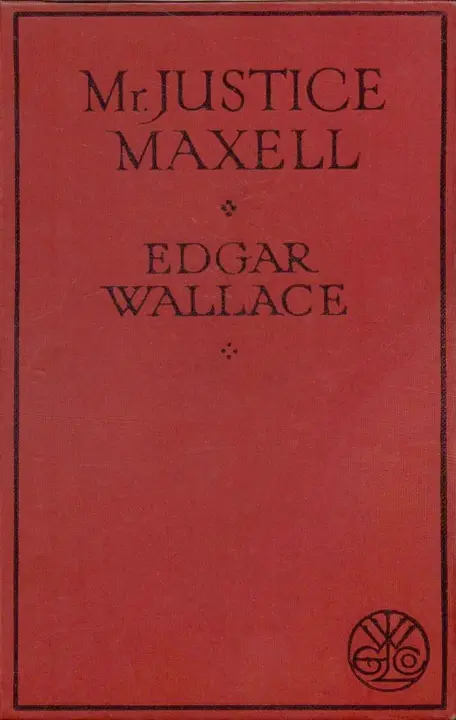
"Mr. Justice Maxell" by Edgar Wallace is a novel written in the early 20th century. The story introduces John Maxell, a King’s Counsel, who arrives in Tangier, Morocco, where the narrative quickly reveals a mix of personal ambition and financial entanglements involving dangerous enterprises and intriguing characters. The central theme revolves around the various nuances of trust and deception, primarily seen through the interactions between Maxell and his friend Cartwright, who is embroiled in suspicious schemes involving gold mining and an actress named Sadie O’Grady. The opening of the novel sets a vivid scene in Tangier, capturing the ambiance through detailed descriptions of setting and sounds. Maxell is depicted as a man grappling with unease both regarding his financial status and the ambitions of his old school friend, Cartwright, who is keen on uncovering a possible gold reef. As the dialogue unfolds, it hints at past connections, revealing undercurrents of tension between loyalty, greed, and moral dilemmas. The chapter concludes with a sense of impending drama, particularly surrounding O’Grady, whose life takes an unexpected turn as Cartwright’s motives become increasingly questionable. This establishes a foundation for exploring themes of ethics, ambition, and the consequences of one's choices throughout the narrative.
Introduction adapted from the source catalogue; source summaries may be automatically generated.
Free to read · English · 54,262 words · No account needed
MAKE TIME FOR A GOOD BOOK
On by default. Untick to stop anonymous reading totals. Each page counts after 10 seconds in view. How this works.
Anonymous counting is on unless you have switched it off.
“Morocco,” said the girl. “Sir John was born in Morocco and lived there until he went to school. He speaks Arabic like a native. Did you know that?”
“Morocco,” said Lady Maxell. “That’s strange. Morocco!”
“Do you know it?” asked the girl.
“I’ve been there—once,” replied the other shortly. “Did Sir John go
often?”
“Before he married, yes,” said Mary. “He had large interests there at one time, I think.”
Sir John came back at that moment, and Mary noticed that his first
glance was at the table.
“Well, they’ve found nothing,” he said, “neither footprints nor the empty shell. They’re making a search of the grounds to-morrow. Lebbitter wanted to post a man to protect the house in view of the other matter.”
“What other matter?” asked his wife quickly.
“It is nothing,” he said, “nothing really which concerns you. Of course, I would not allow the police to do that. It would make the house more conspicuous than it is at present.”
He looked at the two.
“Now,” he said bluntly, “I think you had better go off to bed. I have still a lot of work to do.”
His wife obeyed without a word, and the girl was following her, when he
called her back.
“Mary,” he said, laying his hand upon her shoulder, “I’m afraid I’m not the best man that ever lived, but I’ve tried to make you happy, my dear, in my own way. You’ve been as a daughter to me.”
She looked up at him with shining eyes. She could not trust herself to
speak.
“Things haven’t gone as well as they might during the past year,” he said. “I made a colossal blunder, but I made it with my eyes open. It hasn’t been pleasant for either of us, but there’s no sense in regretting what you cannot mend. Mary, they tell me that you’ve been seeing a lot of this young man Anderson?”
She was annoyed to find herself going red when there was really no reason for it. She need not ask who “they” were, she could guess.
“I’ve been making inquiries about that boy,” said Sir John slowly, “and I can tell you this, he is straight. Perhaps he has led an unconventional life, but all that he told Sadie was true. He’s clean, and, Mary, that counts for something in this world.”
He seemed at a loss how to proceed.
“Anything might happen,” he went on. “Although I’m not an old man, I have enemies. . . .”
“You don’t mean——”
Your reading position is saved on this browser. Take it to another device with a library code. Reading pages adapt to text, rather than matching a printed edition.
Edgar Wallace
Edgar Wallace
Edgar Wallace
Edgar Wallace
BEHIND THE BOOK
This eBook is for the use of anyone anywhere in the United States and most other parts of the world at no cost and with almost no restrictions whatsoever. You may copy it, give it away or re-use it under the terms of the Project Gutenberg License included with this eBook or online at www.gutenberg.org. If you are not located in the United States, you will have to check the laws of the country where you are located before using this eBook. Read the source licence.
The original source file, including credits and licence, is retained by this library. Request an original-format copy at no charge. Please include the book title and Project Gutenberg identifier #60527.
KEEP YOUR CURIOSITY GOING
Coulson Kernahan

Maurice Baring
Frances Wright
Cécile Tormay

Frederic Jesup Stimson

W. H. P. (William Henry Pope) Jarvis