
The fourth plague
Edgar Wallace
THE CLASSIC COLLECTION · 1920
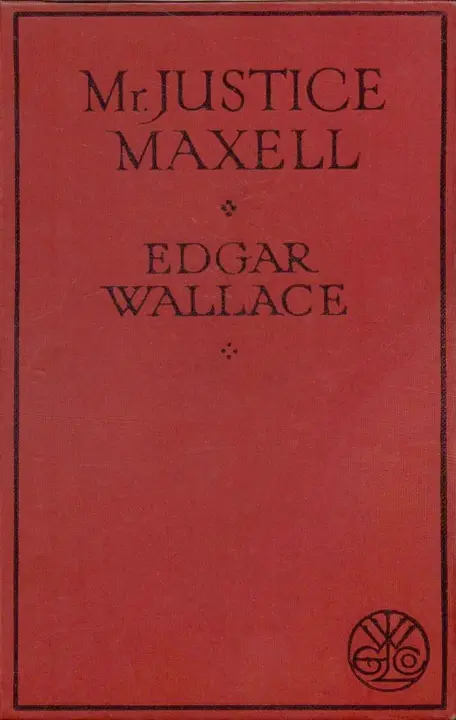
"Mr. Justice Maxell" by Edgar Wallace is a novel written in the early 20th century. The story introduces John Maxell, a King’s Counsel, who arrives in Tangier, Morocco, where the narrative quickly reveals a mix of personal ambition and financial entanglements involving dangerous enterprises and intriguing characters. The central theme revolves around the various nuances of trust and deception, primarily seen through the interactions between Maxell and his friend Cartwright, who is embroiled in suspicious schemes involving gold mining and an actress named Sadie O’Grady. The opening of the novel sets a vivid scene in Tangier, capturing the ambiance through detailed descriptions of setting and sounds. Maxell is depicted as a man grappling with unease both regarding his financial status and the ambitions of his old school friend, Cartwright, who is keen on uncovering a possible gold reef. As the dialogue unfolds, it hints at past connections, revealing undercurrents of tension between loyalty, greed, and moral dilemmas. The chapter concludes with a sense of impending drama, particularly surrounding O’Grady, whose life takes an unexpected turn as Cartwright’s motives become increasingly questionable. This establishes a foundation for exploring themes of ethics, ambition, and the consequences of one's choices throughout the narrative.
Introduction adapted from the source catalogue; source summaries may be automatically generated.
Free to read · English · 54,262 words · No account needed
MAKE TIME FOR A GOOD BOOK
On by default. Untick to stop anonymous reading totals. Each page counts after 10 seconds in view. How this works.
Anonymous counting is on unless you have switched it off.
“Not exactly money, sir, but I’m going to try to start in London and I thought, maybe, you might give me a letter of introduction to somebody.”
“Ah, well,” said Maxell, brightening up, “I think I can do that for you. What did you think of doing in London?”
“I thought of getting some sort of secretarial job,” he said. “Not that I know much about it!”
Sir John pinched his lower lip.
“I know a man who may help you,” he said. “We were in the House of Commons together and he would give you a place in one of his offices, but unfortunately for you he has made a great deal of money and spends most of his time at Newmarket.”
“Newmarket sounds good to me,” said Timothy “Why, I’d take a chance there. Perhaps he’d try me out in that office?”
The Judge permitted himself to smile.
“In Newmarket,” he said, “our friend does very little more, I fear, than waste his time and money on the race-course. He has half a dozen horses—I had a letter from him this morning.”
He walked back to his table, searched in the litter, and presently amongst the papers pulled out a letter.
“As a matter of fact, I had some business with him and I wrote to him for information. The only thing he tells me is”—this with a gesture of despair—“that Skyball and Polly Chaw—those are the names of race-horses, I presume—will win the two big handicaps next week and that he has a flyer named Swift Kate that can beat anything—I am quoting his words—on legs over six furlongs.”
He looked up over his glasses at Timothy, and on that young man’s face
was a seraphic smile.
“Newmarket sounds real nice to me,” glowed Timothy.
Remembering the injunctions of the servant, he was taking his adieu, when his host asked, in a lower voice than that in which the conversation had been carried on:
“I suppose you have not heard from your cousin?”
Timothy looked at him in astonishment. Had Sir John asked after the Grand Llama of Tibet he would have been as well prepared to answer.
“Why, no, sir—no—er—is he alive?”
Sir John Maxell looked at him sharply.
“Alive? Of course. I thought you might have heard from him.”
Timothy shook his head.
“No, sir,” he said, “he disappeared. I only met him once when I was a kid. Was he a friend—er—an acquaintance of yours?”
Sir John was drumming his fingers on the desk and his mind was far away.
Your reading position is saved on this browser. Take it to another device with a library code. Reading pages adapt to text, rather than matching a printed edition.
Edgar Wallace
Edgar Wallace
Edgar Wallace
Edgar Wallace
BEHIND THE BOOK
This eBook is for the use of anyone anywhere in the United States and most other parts of the world at no cost and with almost no restrictions whatsoever. You may copy it, give it away or re-use it under the terms of the Project Gutenberg License included with this eBook or online at www.gutenberg.org. If you are not located in the United States, you will have to check the laws of the country where you are located before using this eBook. Read the source licence.
The original source file, including credits and licence, is retained by this library. Request an original-format copy at no charge. Please include the book title and Project Gutenberg identifier #60527.
KEEP YOUR CURIOSITY GOING
Coulson Kernahan

Maurice Baring
Frances Wright
Cécile Tormay

Frederic Jesup Stimson

W. H. P. (William Henry Pope) Jarvis