
The fourth plague
Edgar Wallace
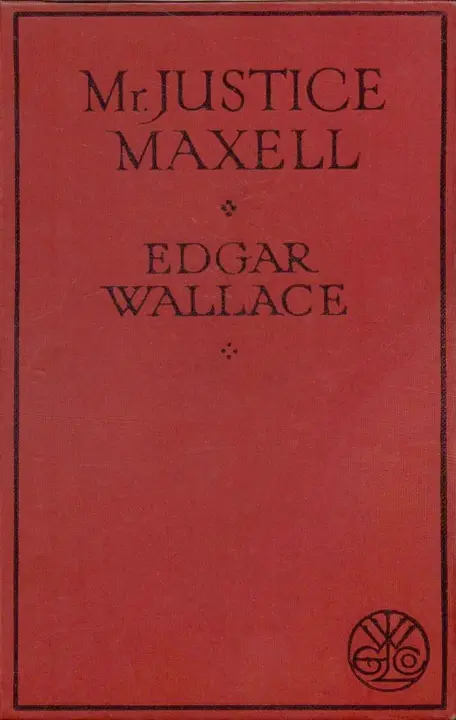
THE CLASSIC COLLECTION · 1920
"Mr. Justice Maxell" by Edgar Wallace is a novel written in the early 20th century. The story introduces John Maxell, a King’s Counsel, who arrives in Tangier, Morocco, where the narrative quickly reveals a mix of personal ambition and financial entanglements involving dangerous enterprises and intriguing characters. The central theme revolves around the various nuances of trust and deception, primarily seen through the interactions between Maxell and his friend Cartwright, who is embroiled in suspicious schemes involving gold mining and an actress named Sadie O’Grady. The opening of the novel sets a vivid scene in Tangier, capturing the ambiance through detailed descriptions of setting and sounds. Maxell is depicted as a man grappling with unease both regarding his financial status and the ambitions of his old school friend, Cartwright, who is keen on uncovering a possible gold reef. As the dialogue unfolds, it hints at past connections, revealing undercurrents of tension between loyalty, greed, and moral dilemmas. The chapter concludes with a sense of impending drama, particularly surrounding O’Grady, whose life takes an unexpected turn as Cartwright’s motives become increasingly questionable. This establishes a foundation for exploring themes of ethics, ambition, and the consequences of one's choices throughout the narrative.
Introduction adapted from the source catalogue; source summaries may be automatically generated.
Free to read · English · 54,262 words · No account needed
MAKE TIME FOR A GOOD BOOK
On by default. Untick to stop anonymous reading totals. Each page counts after 10 seconds in view. How this works.
Anonymous counting is on unless you have switched it off.
“English,” said Cartwright, turning to the programme.
“She may even be Irish,” said Maxell dryly.
The wheezy little orchestra played a few bars and the girl came on. She was pretty—there was no doubt about that—and of a prettiness which satisfied both men. She was also British or American, for the song she sang was in a French with which both men were familiar.
“It is horrible to see an English girl in a place like this and in such company,” said Maxell.
Cartwright nodded.
“I wonder where she’s staying,” he asked, half to himself, and a contemptuous little smile curled Maxell’s lips.
“Are you going to rescue her from her infamous surroundings?” he asked, and Cartwright snapped round on him.
“I wish to heaven you wouldn’t be sarcastic, Maxell. That’s twice this
evening——”
“Sorry,” said the other, snicking off the ash of his cigar. “I am in a cynical mood to-night.”
He raised his hands to applaud the girl as she bowed herself from the stage, and glanced round the house. Three boxes away was a small party of men, whom he judged were the sons of prosperous members of the Spanish colony. Their fingers flashed with diamonds, their cigarettes burnt from jewelled holders. Cartwright followed the direction of the other’s eyes.
“She’s made a hit, that Miss O’Grady,” he said. “These fellows will be tumbling over one another to present her with verbal bouquets. I wonder where she lives!” he said again.
Presently the young men rose in a body and left the box, and Cartwright
grinned.
“Do you mind hanging on here whilst I go outside?”
“Not a bit,” said the other. “Where are you off to? To find out where
she lives?”
“There you go again,” grumbled Cartwright. “I think Tangier makes you
liverish.”
When he had got to the promenade, the men had disappeared, but a question directed to the head attendant revealed, as he had expected, the objective of the little party at the stage door.
The stage door was reached from the outside of the theatre and involved a journey over rubble and brick heaps. Presently he came to an open doorway, where sat a solitary half-caste smoking a pipe and reading an old Heraldo.
“Oh, hombre,” said Cartwright in Spanish, “have you seen my three friends come in here?”
“Yes, Señor,” nodded the man; “they have just entered.”
He indicated the direction, which lay through a dark and smelly passage.
Your reading position is saved on this browser. Take it to another device with a library code. Reading pages adapt to text, rather than matching a printed edition.
Edgar Wallace
Edgar Wallace
Edgar Wallace
Edgar Wallace
BEHIND THE BOOK
This eBook is for the use of anyone anywhere in the United States and most other parts of the world at no cost and with almost no restrictions whatsoever. You may copy it, give it away or re-use it under the terms of the Project Gutenberg License included with this eBook or online at www.gutenberg.org. If you are not located in the United States, you will have to check the laws of the country where you are located before using this eBook. Read the source licence.
The original source file, including credits and licence, is retained by this library. Request an original-format copy at no charge. Please include the book title and Project Gutenberg identifier #60527.
KEEP YOUR CURIOSITY GOING
Coulson Kernahan

Maurice Baring
Frances Wright
Cécile Tormay

Frederic Jesup Stimson

W. H. P. (William Henry Pope) Jarvis