
The fourth plague
Edgar Wallace
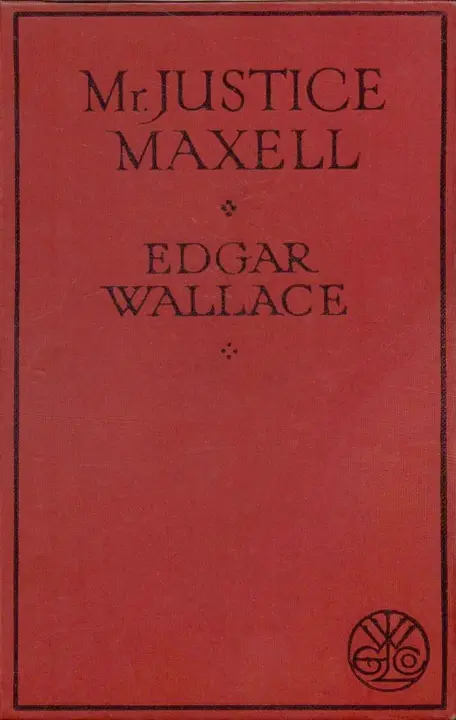
THE CLASSIC COLLECTION · 1920
"Mr. Justice Maxell" by Edgar Wallace is a novel written in the early 20th century. The story introduces John Maxell, a King’s Counsel, who arrives in Tangier, Morocco, where the narrative quickly reveals a mix of personal ambition and financial entanglements involving dangerous enterprises and intriguing characters. The central theme revolves around the various nuances of trust and deception, primarily seen through the interactions between Maxell and his friend Cartwright, who is embroiled in suspicious schemes involving gold mining and an actress named Sadie O’Grady. The opening of the novel sets a vivid scene in Tangier, capturing the ambiance through detailed descriptions of setting and sounds. Maxell is depicted as a man grappling with unease both regarding his financial status and the ambitions of his old school friend, Cartwright, who is keen on uncovering a possible gold reef. As the dialogue unfolds, it hints at past connections, revealing undercurrents of tension between loyalty, greed, and moral dilemmas. The chapter concludes with a sense of impending drama, particularly surrounding O’Grady, whose life takes an unexpected turn as Cartwright’s motives become increasingly questionable. This establishes a foundation for exploring themes of ethics, ambition, and the consequences of one's choices throughout the narrative.
Introduction adapted from the source catalogue; source summaries may be automatically generated.
Free to read · English · 54,262 words · No account needed
MAKE TIME FOR A GOOD BOOK
On by default. Untick to stop anonymous reading totals. Each page counts after 10 seconds in view. How this works.
Anonymous counting is on unless you have switched it off.
“Have you his letter?”
She nodded and produced the epistle.
It was polite but warm. It had some reference to her “gracious talent,” to her “unexampled beauty” which had “brought pleasure to one who was no longer influenced by the commonplace,” and it finished up by expressing the hope that they two would meet in the early future, and that before leaving for Paris she would honour him by being his guest for a few days.
Ellsberger handed the letter back.
“Write him,” he said, “and, Sadie, consider yourself engaged for another week—write to him in my time. He’s fallen for all that Press stuff, and maybe, if he’s got that passionate admiration for your genius he’ll—say, you don’t want to stay in the picture business and finish by marrying that kind of trouble, do you?”
He pointed through the wide windows to a youth who was coming across from the studio to the office, swinging a cane vigorously.
“Observe the lavender socks and the wrist watch,” he chuckled. “But don’t make any mistake about Timothy Anderson. He’s the toughest amateur at his weight in this or any other state and a good boy, but he’s the kind of fellow that women like you marry—get acquainted with the Judge.”
With only a preliminary knock, which he did not wait to hear answered, the young man had swung through the door, hat in hand.
“How do, Miss O’Grady?” he said. “I saw your picture—fine! Good acting, but a perfectly rotten play. I suppose you wrote it, Ellsberger?”
“I wrote it,” admitted that gentleman gloomily.
“It bears the impression of your genius, old bird.”
Timothy Anderson shook his head reproachfully.
“It only wanted you as the leading man, and it would have been dead before we put the titles in,” said Ellsberger with a grin.
“I’m out of the movies for good,” said Timothy Anderson, sitting himself on a table. “It is a demoralising occupation—which reminds me.”
He slipped from the table, thrust his hand into his pocket, and
producing a roll of notes:
“I owe you twenty-five pounds, Ellsberger,” he said. “Thank you very much. You saved me from ruin and starvation.”
He counted the money across, and Mr. Ellsberger was undoubtedly surprised and made no attempt to conceal the fact. So surprised was he that he could be jocose.
“Fixed a big contract with Mary Pickford?” he asked.
“N-no,” said Timothy, “but I struck a roulette game—and took a chance.”
“Took a chance again, eh?” said Ellsberger. “One of these days you’ll take a chance and never get better of it.”
Your reading position is saved on this browser. Take it to another device with a library code. Reading pages adapt to text, rather than matching a printed edition.
Edgar Wallace
Edgar Wallace
Edgar Wallace
Edgar Wallace
BEHIND THE BOOK
This eBook is for the use of anyone anywhere in the United States and most other parts of the world at no cost and with almost no restrictions whatsoever. You may copy it, give it away or re-use it under the terms of the Project Gutenberg License included with this eBook or online at www.gutenberg.org. If you are not located in the United States, you will have to check the laws of the country where you are located before using this eBook. Read the source licence.
The original source file, including credits and licence, is retained by this library. Request an original-format copy at no charge. Please include the book title and Project Gutenberg identifier #60527.
KEEP YOUR CURIOSITY GOING
Coulson Kernahan

Maurice Baring
Frances Wright
Cécile Tormay

Frederic Jesup Stimson

W. H. P. (William Henry Pope) Jarvis