
The fourth plague
Edgar Wallace
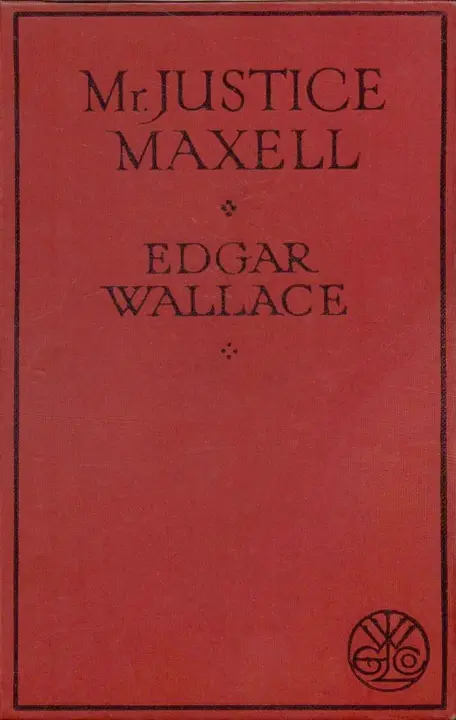
THE CLASSIC COLLECTION · 1920
"Mr. Justice Maxell" by Edgar Wallace is a novel written in the early 20th century. The story introduces John Maxell, a King’s Counsel, who arrives in Tangier, Morocco, where the narrative quickly reveals a mix of personal ambition and financial entanglements involving dangerous enterprises and intriguing characters. The central theme revolves around the various nuances of trust and deception, primarily seen through the interactions between Maxell and his friend Cartwright, who is embroiled in suspicious schemes involving gold mining and an actress named Sadie O’Grady. The opening of the novel sets a vivid scene in Tangier, capturing the ambiance through detailed descriptions of setting and sounds. Maxell is depicted as a man grappling with unease both regarding his financial status and the ambitions of his old school friend, Cartwright, who is keen on uncovering a possible gold reef. As the dialogue unfolds, it hints at past connections, revealing undercurrents of tension between loyalty, greed, and moral dilemmas. The chapter concludes with a sense of impending drama, particularly surrounding O’Grady, whose life takes an unexpected turn as Cartwright’s motives become increasingly questionable. This establishes a foundation for exploring themes of ethics, ambition, and the consequences of one's choices throughout the narrative.
Introduction adapted from the source catalogue; source summaries may be automatically generated.
Free to read · English · 54,262 words · No account needed
MAKE TIME FOR A GOOD BOOK
On by default. Untick to stop anonymous reading totals. Each page counts after 10 seconds in view. How this works.
Anonymous counting is on unless you have switched it off.
“Stop where you are, Mary,” he said quietly. “Not a penny would I take from you, darling.”
“What did they ring that bell for?” she asked.
It was the second time the tinkle of sound had come from the croupier at the trente et quarante table.
“Heaven knows!” said Timothy. “Maybe it is to call the other
worshippers.”
Again the young Englishman looked round and said something.
“What did he say?” asked Timothy.
“He said seventeen,” said the girl. “Was that the number you backed?”
Timothy smiled.
“There are no numbers on that table except No. 1—and No. 1 is the fat man with the rake—he gets it coming and going. Mary, I’m going to ask you one question: If I make good will you marry me?”
She was silent and again the voice of the croupier came:
“Rouge perd—couleur gagne.”
“What does ‘rouge perd’ mean?” she asked. “He has said that ever so many
times.”
“It means ‘black wins,’” said Timothy.
“Does black always win?” she asked.
“Not always,” said Timothy gently. “Maybe he’s only saying that to lure me back to the table. Mary, what do you say?”
“I say yes,” she said, and to the scandal of the one attendant who was watching them he bent forward and kissed her.
A terrible act this, for the gold-laced and liveried footman, who came with slow, majestic steps to where they sat.
“Monsieur,” he said, “this is not done.”
Timothy looked up at him.
“Chassez-vous,” he said firmly.
It was startling French, but it was the nearest he could get at the moment to “chase yourself.”
Again the bell tinkled, and the young Englishman rose, thrust a small packet of money into his pocket and came toward them, bearing what looked to be a large book without covers. His face was a little haggard and the perspiration stood upon his forehead.
“This is getting on my nerves, old man. You had better play yourself,” he said, and he handed the book to Timothy, and Timothy looked vaguely from his hands to the hot Englishman.
“What’s this?” he croaked.
“A run of twenty-eight on the black,” said the Englishman. “It is phenomenal! You wanted me to go on, didn’t you? I asked you whether I should play your thousand francs. The bank bust four times—didn’t you hear them ring for more money?”
Timothy nodded. He had no words.
“Well, your six went to twelve and I left the maximum run,” the Englishman said. “I asked you if that was right and you nodded.”
“Yes, I nodded,” said Timothy mechanically.
“You’ve won twenty-seven and a half maximums.”
Your reading position is saved on this browser. Take it to another device with a library code. Reading pages adapt to text, rather than matching a printed edition.
Edgar Wallace
Edgar Wallace
Edgar Wallace
Edgar Wallace
BEHIND THE BOOK
This eBook is for the use of anyone anywhere in the United States and most other parts of the world at no cost and with almost no restrictions whatsoever. You may copy it, give it away or re-use it under the terms of the Project Gutenberg License included with this eBook or online at www.gutenberg.org. If you are not located in the United States, you will have to check the laws of the country where you are located before using this eBook. Read the source licence.
The original source file, including credits and licence, is retained by this library. Request an original-format copy at no charge. Please include the book title and Project Gutenberg identifier #60527.
KEEP YOUR CURIOSITY GOING
Coulson Kernahan

Maurice Baring
Frances Wright
Cécile Tormay

Frederic Jesup Stimson

W. H. P. (William Henry Pope) Jarvis