
The fourth plague
Edgar Wallace
THE CLASSIC COLLECTION · 1920
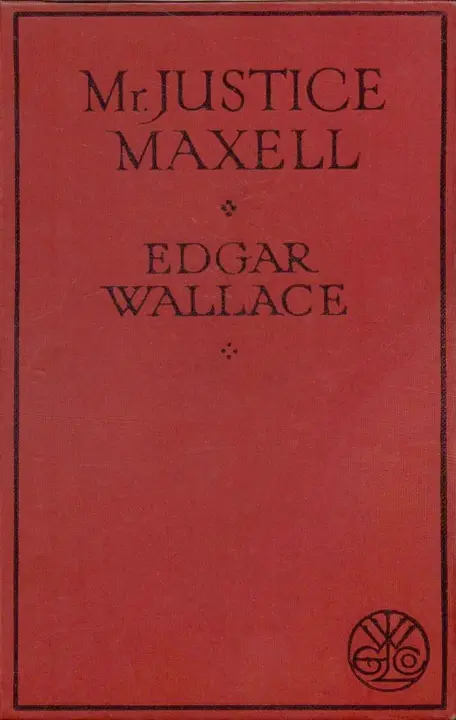
"Mr. Justice Maxell" by Edgar Wallace is a novel written in the early 20th century. The story introduces John Maxell, a King’s Counsel, who arrives in Tangier, Morocco, where the narrative quickly reveals a mix of personal ambition and financial entanglements involving dangerous enterprises and intriguing characters. The central theme revolves around the various nuances of trust and deception, primarily seen through the interactions between Maxell and his friend Cartwright, who is embroiled in suspicious schemes involving gold mining and an actress named Sadie O’Grady. The opening of the novel sets a vivid scene in Tangier, capturing the ambiance through detailed descriptions of setting and sounds. Maxell is depicted as a man grappling with unease both regarding his financial status and the ambitions of his old school friend, Cartwright, who is keen on uncovering a possible gold reef. As the dialogue unfolds, it hints at past connections, revealing undercurrents of tension between loyalty, greed, and moral dilemmas. The chapter concludes with a sense of impending drama, particularly surrounding O’Grady, whose life takes an unexpected turn as Cartwright’s motives become increasingly questionable. This establishes a foundation for exploring themes of ethics, ambition, and the consequences of one's choices throughout the narrative.
Introduction adapted from the source catalogue; source summaries may be automatically generated.
Free to read · English · 54,262 words · No account needed
MAKE TIME FOR A GOOD BOOK
On by default. Untick to stop anonymous reading totals. Each page counts after 10 seconds in view. How this works.
Anonymous counting is on unless you have switched it off.
“How far does your interest extend?” asked Maxell curiously. “You’re not the sort of person, I should imagine, who would take up the unfortunate poor as a hobby.”
“Not a something-for-nothing man, in fact,” laughed Cartwright. “I’ve been told that twice in twenty-four hours.”
“Who was the other person—the actress?”
Cartwright roared with laughter and slapped the other on the knee.
“You’re a good guesser,” he said. “No, I am not a something-for-nothing person. I’m one of those optimists who plant fir cones so that I shall have some good firewood for my old age. I don’t know what sort of a man Timothy will make, but, as I say, he shapes good, and anyway, you and I are in the same boat.”
“Except this,” said Maxell, “that from what you say, you aren’t particularly interested in your protégé, and you don’t really care whether he shapes good or shapes bad.”
“That’s true,” admitted Cartwright. “He’s an experiment.”
“My little girl is something more than that,” said Maxell quietly; “she’s the only living thing I have any real affection for—she is my dead brother’s child.”
“Your niece, eh? Well, that gives you an interest which I have not. I never had a niece and I should just hate to be called uncle, anyway.”
Their conversation was interrupted at this point by the arrival of a small man dressed in his best clothes. On his brow was a frown which was intended to be terrible, but was slightly amusing. Jose Ferreira had dressed and prepared himself for an interview which, as he had described to his friends, could not fail to be at once “terrifying and vital.” For, as he had said: “This man has sliced my life!”
He began his speech to Cartwright as he had rehearsed it.
“Estoy indignado——”
But Cartwright cut him short with an expression of mock fear. “Horroroso! You are indignant, are you? Well, come, little man, and tell me why you are indignant.”
“Señor,” said the man solemnly, “you have put upon me a humiliation and a shame which all my life I shall regret.”
The conversation was in Spanish, but Maxell was an excellent Spanish
scholar.
“What’s the trouble?” he asked, before Jose, still labouring under the sense of his wrongs, could get going again.
“Listen to him and discover,” mocked Cartwright. “I have taken from his incomparable company its joy and its gem.”
“In other words, the amiable Miss O’Grady,” said Maxell.
Your reading position is saved on this browser. Take it to another device with a library code. Reading pages adapt to text, rather than matching a printed edition.
Edgar Wallace
Edgar Wallace
Edgar Wallace
Edgar Wallace
BEHIND THE BOOK
This eBook is for the use of anyone anywhere in the United States and most other parts of the world at no cost and with almost no restrictions whatsoever. You may copy it, give it away or re-use it under the terms of the Project Gutenberg License included with this eBook or online at www.gutenberg.org. If you are not located in the United States, you will have to check the laws of the country where you are located before using this eBook. Read the source licence.
The original source file, including credits and licence, is retained by this library. Request an original-format copy at no charge. Please include the book title and Project Gutenberg identifier #60527.
KEEP YOUR CURIOSITY GOING
Coulson Kernahan

Maurice Baring
Frances Wright
Cécile Tormay

Frederic Jesup Stimson

W. H. P. (William Henry Pope) Jarvis