
The William Henry Letters
Abby Morton Diaz
THE CLASSIC COLLECTION · 1900
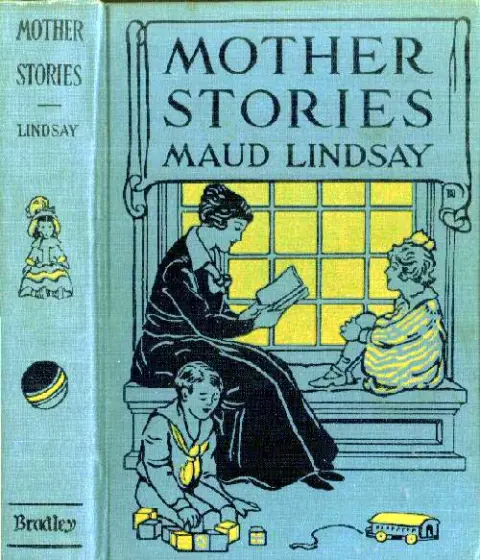
"Mother Stories" by Maud Lindsay is a collection of children's stories written in the early 20th century. This delightful anthology is aimed at young readers and their mothers, featuring simple tales that embody moral lessons inspired by Froebel's educational principles. The narratives are characterized by gentle themes of love, family, and the importance of kindness as they explore the adventures of children and animals in a wholesome, imaginative world. The opening of "Mother Stories" sets a charming tone for the collection, as it introduces a variety of characters and scenarios reflecting the joys and trials of childhood. The initial tale, "The Wind's Work," features a little boy named Jan who, driven by the anticipation of flying his kite, waits for the right breeze to come. His interactions with local residents—the Miller, the Baker, and the Washerwoman—illustrate a communal sense of longing for the wind to blow, culminating in a vivid celebration of nature’s power when the wind finally arrives. This opening portion not only captures the innocence and curiosity of childlike wonder but also establishes Lindsay's storytelling style, which combines vivid imagery with life lessons about patience and community.
Introduction adapted from the source catalogue; source summaries may be automatically generated.
Free to read · English · 24,685 words · No account needed
MAKE TIME FOR A GOOD BOOK
On by default. Untick to stop anonymous reading totals. Each page counts after 10 seconds in view. How this works.
Anonymous counting is on unless you have switched it off.
Grandmother's garden was a beautiful place,--more beautiful than all the shop windows in the city; for there was a flower or grass for every color in the rainbow, with great white lilies, standing up so straight and tall, to remind you that a whole rainbow of light was needed to make them so pure and white.
There were pinks and marigolds and princes' feathers, with bachelor's buttons and Johnny-jump-ups to keep them company. There were gay poppies and gaudy tulips, and large important peonies and fine Duchess roses in pink satin dresses.
There were soft velvet pansies and tall blue flags, and broad ribbon-grasses that the fairies might have used for sashes; and mint and thyme and balm and rosemary everywhere, to make the garden sweet; so it was no wonder that every year, the garden was full of visitors.
Nobody noticed these visitors but Grandmother and Lindsay.
Lindsay was a very small boy, and Grandmother was a very old lady; but they loved the same things, and always watched for these little visitors, who came in the early spring-time and stayed all summer with Grandmother.
Early, early in the spring, when the garden was bursting into bloom in the warm southern sunshine, Grandmother and Lindsay would sit in the arbor, where the vines crept over and over in a tangle of bloom, and listen to a serenade. Music, music everywhere! Over their heads, behind their backs, the little brown bees would fly, singing their song:--
"Hum, hum, hum!
Off and away!
To get some
Sweet honey to-day!"
while they found the golden honey cups, and filled their pockets with honey to store away in their waxen boxes at home.
One day, while Grandmother and Lindsay were watching, a little brown bee flew away with his treasure, and lighting on a rose, met with a cousin, a lovely yellow butterfly.
"I think they must be talking to each other," said Grandmother, softly. "They are cousins, because they belong to the great insect family, just as your papa and Uncle Bob and Aunt Emma and Cousin Rachel all belong to one family,--the Greys; and I think they must be talking about the honey that they both love so well."
"I wish I could talk to a butterfly," said Lindsay, longingly; and
Grandmother laughed.
"Play that I am a butterfly," she proposed. "What color shall I be?--a great yellow butterfly, with brown spots on my wings?"
So Grandmother played that she was a great yellow butterfly with brown spots on its wings, and she said to Lindsay:--
"Never in the world can you tell, little boy, what I used to be?"
"A baby butterfly," guessed Lindsay.
Your reading position is saved on this browser. Take it to another device with a library code. Reading pages adapt to text, rather than matching a printed edition.
BEHIND THE BOOK
This eBook is for the use of anyone anywhere in the United States and most other parts of the world at no cost and with almost no restrictions whatsoever. You may copy it, give it away or re-use it under the terms of the Project Gutenberg License included with this eBook or online at www.gutenberg.org. If you are not located in the United States, you will have to check the laws of the country where you are located before using this eBook. Read the source licence.
The original source file, including credits and licence, is retained by this library. Request an original-format copy at no charge. Please include the book title and Project Gutenberg identifier #15929.
KEEP YOUR CURIOSITY GOING
Abby Morton Diaz
Helen Hunt Jackson
Mary Frances Blaisdell
Stuart Dodgson Collingwood

Kate Douglas Smith Wiggin
Hesba Stretton