THE CLASSIC COLLECTION✦An outlaw’s diary: the CommuneCLASSIC FREE BOOKS
An outlaw’s diary: the Commune
Cécile Tormay
THE CLASSIC COLLECTION · 1926
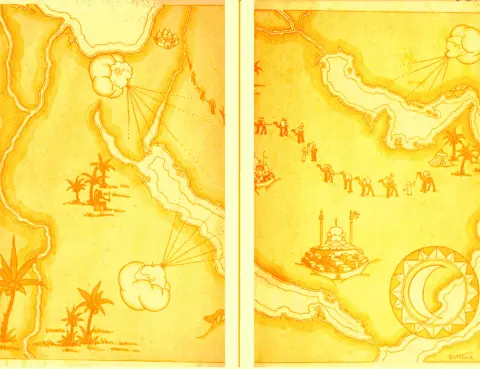
" Mohammed" by R. F. Dibble is a historical account written in the early 20th century. The book explores the life and times of the Prophet Mohammed, detailing the socio-political landscape of Arabia during the 7th century and the formative events surrounding the rise of Islam. The narrative begins with an in-depth exposition of the Arabian Peninsula, highlighting its geographical, cultural, and religious complexities, setting the stage for the emergence of a significant historical figure. The opening of the work immerses readers in the intricacies of pre-Islamic Arabia, depicting a land characterized by tribal divisions and a rich tapestry of beliefs. Dibble describes the environment that nurtured Mohammed's early years, establishing a backdrop of intrigue and contrast—between urban centers like Mecca and the nomadic Bedouins. The text details Mohammed's lineage and early upbringing as an orphan, emphasizing the remarkable circumstances surrounding his birth and early life. As the narrative progresses, it hints at the societal challenges he will face and the potential for his prophetic journey to reshape the spiritual landscape of the region, suggesting the reader's glimpse of his future role as a unifier and leader.
Introduction adapted from the source catalogue; source summaries may be automatically generated.
Free to read · English · 54,833 words · No account needed
MAKE TIME FOR A GOOD BOOK
On by default. Untick to stop anonymous reading totals. Each page counts after 10 seconds in view. How this works.
Anonymous counting is on unless you have switched it off.
Islam, the doctrine of “resignation to God,” was now started on its way; but mystery hovers over every stage of the journey. The various explanations that have been devised to account for its marvelously rapid development have commonly just enough plausibility to make them romantically misleading; for the charm of a half-truth lies in its Lethean amalgamation of realism and fancy: it displays neither the dulness of unadorned fact nor the superficiality of exotic fabrication. In recent times Mohammed and his era have inevitably been subjected to treatment according to principles derived from the “scientific method.” Now, while it is unquestionably true that a large amount of invaluable information has been accumulated thus, it is also true that the excessive use of this method has given rise to some definite dangers--dangers that are all the more alluring and deceptive because they bear the stamp of contemporary approval. For one thing, its adherents often lack the ability to apply the principle to their own mental processes: they sometimes manifest a bias as essentially unscientific as the fervent prayer of the most benighted Moslem. For another thing, its devotees frequently dispute among themselves over the validity of its countless ramifications with an enthusiasm unexcelled by political fanatics; and, for still another thing, the method itself is as much a product of conditions peculiar to the so-called Modern World as Islamism was a logical excrescence of the deplorable Dark Ages.
Although Mohammed’s parents died so early as to deprive the Freudians of the opportunity to dissect him in a manner compatible with the most cherished articles of their faith, other not wholly dissimilar schools of thought have not failed to wield their scalpels--oftentimes with very considerable effect. For example, those who look upon him as a largely self-conscious medium who was extraordinarily skillful and successful in employing the cabalistic devices used by mediums as a class, have much to warrant their belief. The evidence extant in support of this view, in fact, merits respect if not complete acceptance. For the whole business of Allah, and Gabriel, and the magical tablets--whose precious contents none but Mohammed might gaze upon, and he only at infrequent intervals--is, to say the least, very intriguing. The problem that fronts all mediums is this: how to produce their messages without arousing the suspicion that they themselves are the authors; and innumerable devices are used to attain this end. It has been suggested that the Prophet himself may have solved the problem by a subtly clever device--his known susceptibility to epileptic fits. Before giving vent to one of Allah’s inditements, he would snore, cover himself with a blanket, and remain thus until, drenched with sweat, he emerged and gave his message. One traditional account runs thus: “He fell to the ground like an inebriate, or one overcome by sleep; and in the coldest day his forehead would be bedewed with large drops of perspiration. Even his she-camel, if he chanced to become inspired while mounted on her, would be affected by a wild excitement, sitting down and rising up, now planting her legs rigidly, then throwing them about as if they would be parted from her.” In the earlier Koran, he is characterized as the “man in the blanket,” or the “man who is wrapped up.” For he fully appreciated the necessity of keeping his followers in a state of protracted mystification, and to that end he made use of many theatrical tricks. He would drum up a crowd with his ludicrous snortings and puffings until the resounding cry, “Inspiration hath descended on the Prophet!” assured him that he had a sufficiently large audience to warrant the ebullition of a new Sura. While in a room that was obviously empty, he declared that all the seats were occupied by angels; he cultivated a suave and benign expression; he flattered and astounded his adherents by telling them intimately personal facts about themselves which he had presumably acquired through private information; he took the most painstaking care of his person--painted his eyes and perfumed his entire body every day, wore his hair long and probably dyed it when it became gray, and there is reason to believe that he always wore a veil. Eventually, he so perfected his technique that he could throw a cataleptic fit and produce a message without any previous preparation. In the midst of a meal he would contort himself, disgorge a new injunction, and then calmly finish his dinner.
Your reading position is saved on this browser. Take it to another device with a library code. Reading pages adapt to text, rather than matching a printed edition.
BEHIND THE BOOK
This eBook is for the use of anyone anywhere in the United States and most other parts of the world at no cost and with almost no restrictions whatsoever. You may copy it, give it away or re-use it under the terms of the Project Gutenberg License included with this eBook or online at www.gutenberg.org. If you are not located in the United States, you will have to check the laws of the country where you are located before using this eBook. Read the source licence.
The original source file, including credits and licence, is retained by this library. Request an original-format copy at no charge. Please include the book title and Project Gutenberg identifier #73644.
KEEP YOUR CURIOSITY GOING
Cécile Tormay

Moritz Busch
John L. Ransom
Frances Wright
Cécile Tormay

Mabel Potter Daggett