THE CLASSIC COLLECTION✦Letters to Persons Who Are Engaged in Domestic ServiceCLASSIC FREE BOOKS
Letters to Persons Who Are Engaged in Domestic Service
Catharine Esther Beecher

THE CLASSIC COLLECTION · 1873
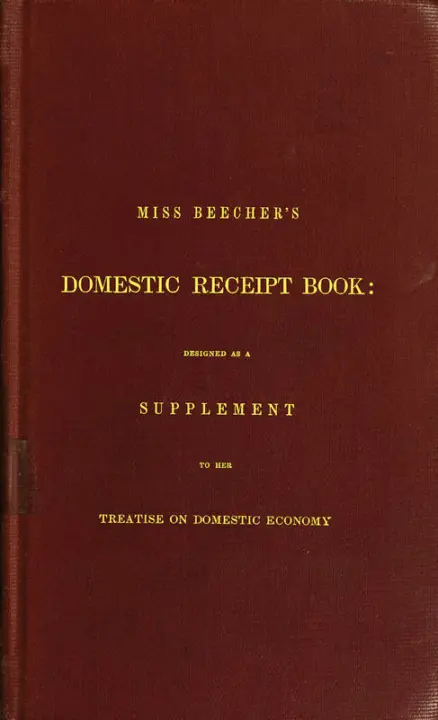
"Miss Beecher's Housekeeper and Healthkeeper" by Catharine Esther Beecher is a comprehensive guide on domestic management written in the late 19th century. The text serves as an extensive encyclopedia focusing on women's responsibilities as housekeepers, wives, and mothers, providing practical advice on economical cooking, health, and homemaking. The book includes over five hundred recipes aimed at promoting health and wellness through proper food preparation. The opening of the work outlines Beecher's intentions to offer valuable guidance to American homemakers, emphasizing the integration of health knowledge into daily household tasks. She expresses her desire to equip women with the knowledge to prepare economical yet healthful meals, share tested recipes, and uphold good domestic practices. Beecher shares her own experiences of recovery from ill health through adherence to the "laws of health," establishing a strong foundation for the importance of domestic labor as essential not just for sustaining a household but also for personal well-being and family education.
Introduction adapted from the source catalogue; source summaries may be automatically generated.
Free to read · English · 174,670 words · No account needed
MAKE TIME FOR A GOOD BOOK
On by default. Untick to stop anonymous reading totals. Each page counts after 10 seconds in view. How this works.
Anonymous counting is on unless you have switched it off.
Tar, to remove spots of, 120.
Taylor’s, Dr. George, movement cure, 207.
Tea, to make, 100;
cream for, 101;
the purchase of, 107;
for children, 230;
as a beverage, 231.
Teeth, laws of health for the, 457.
Temper, preservation of good, 274, et seq.
Theatres, regarding, 443.
Thinning fruit on trees, 356.
Third bread, 68.
Tight-lacing, the evils of, 247, et seq.
Time and property, right use of, 370, et seq.
Time, on apportioning, 375;
on saving, 376;
devoted by Jews to religion, 377.
Tin ware for kitchen, 346.
Toast and cider, 101.
Tobacco, the use of, 233.
Tomatoes, with meat-hash, 40;
pickled, 52;
excellent way of preparing, 54;
to cook, 62;
sirup, 102.
Tongues, to boil smoked, 44.
Tortures inflicted by fashion, 249.
Tough beef, how to boil, 43.
Training necessary for women, 127.
Transplanting, directions for, 351;
for trees, 352.
Trials of a housekeeper, 275, et seq.
Tripe, 42.
Turkeys, to boil, 45;
salad, 57.
Turkish stew, or pilaff, 32.
Turpentine, to remove spots of, 120.
Typhoid fever and the microscope, 161.
Tyranny of servants, 435.
Unbolted flour to be kept in kegs, 105.
Variety at meals, 219.
Variety of food necessary, 104.
Varnished articles, to remove stains on, 121.
Veal, season for use, 20;
divisions of, 20;
selection of, 20;
hash, 40;
boiled, 44;
roast, 47;
pot-pie of, 47;
broiled, 50;
veal cheese, 51;
broiled with eggs, 111.
Vegetable food, 217.
Vegetables—potatoes, 60;
sweet potatoes, green corn, succotash, salsify, or oyster plant,
egg plant, carrots, beets, 61;
parsnips, pumpkins, and squash, celery, radishes, onions, tomatoes,
cucumbers, cabbage, and cauliflower, 62;
asparagus, macaroni, 63.
Vegetables should not be boiled in soup, 35.
Velvet, directions for ironing, 119.
Venison or mutton hash, 41.
Ventilation, importance of, 150, et seq.
Vermicelli pudding, 81;
the purchase of, 105.
Vermin in animals, 307.
Waffles of unbolted flour, 72;
of rice, 73.
Waiting at table, 338.
Wall-paper, to cleanse, 123.
Walnut catsup, 56.
Walnuts, pickled, 53.
Ward cases, 196.
Warmed-over meats made into hash, 41.
Warming a home, 164.
Warm plates, 110.
Washing dishes, 344;
rules for, 345.
Washing, ironing, and cleansing, necessaries for, 112;
common mode of washing, 113;
flannels, bedding, calicoes, 114;
use of bran water, 114;
use of potato-water, 115;
to cleanse broadcloth, 115.
Wash-leather articles, to clean, 121.
Water-cure, the, 240.
Water-gruel, 102.
Water-melon rinds, to preserve, 94.
Wax, to remove spots of, 121.
Weekly apportionment of work, 287.
Well, to purify a, 123.
Wheat muffins, 72.
Whiten articles, to, 119.
White tea, and boys’ coffee, 101.
Whip-grafting, 355.
Whip syllabub, 97.
Wine jelly, 96.
Wine whey, 101.
Women, courtesy to, 264.
Wood, a cord and a load of, 324.
Wooden ware for kitchen, 347.
Wood-work of a house, 148.
Yeast, brewers’ or distillers', the best, hop and potato yeast,
hard yeast, 66.
Young children, management of, in the Orphan Asylum at Albany, 401;
effects of eating too often, 402;
the intellectual training of, 402;
habits of submission, 403;
self-denial, 404;
sensitiveness, 405;
unsteadiness in, and over-government, 406;
multiplication of rules, 407;
govern by rewards, avoid angry tones, 408;
moral habits, 410;
cultivation of habits of modesty, 411;
treatment of forbidden topics, 411;
purity of thought, 412;
warning to parents, 413.
Young girl, dressing properly a, 251.
Zymotic diseases, 161.
Your reading position is saved on this browser. Take it to another device with a library code. Reading pages adapt to text, rather than matching a printed edition.
Catharine Esther Beecher

Catharine Esther Beecher
Catharine Esther Beecher
Catharine Esther Beecher
BEHIND THE BOOK
This eBook is for the use of anyone anywhere in the United States and most other parts of the world at no cost and with almost no restrictions whatsoever. You may copy it, give it away or re-use it under the terms of the Project Gutenberg License included with this eBook or online at www.gutenberg.org. If you are not located in the United States, you will have to check the laws of the country where you are located before using this eBook. Read the source licence.
The original source file, including credits and licence, is retained by this library. Request an original-format copy at no charge. Please include the book title and Project Gutenberg identifier #55734.
KEEP YOUR CURIOSITY GOING

Charles G. (Charles Griffith) Ross
Hannah Webster Foster

Emily Lawless
Edwin Hamlin Carr

Charles De Lano Hine
Andrew Ure