Modern daughters
Alexander Black
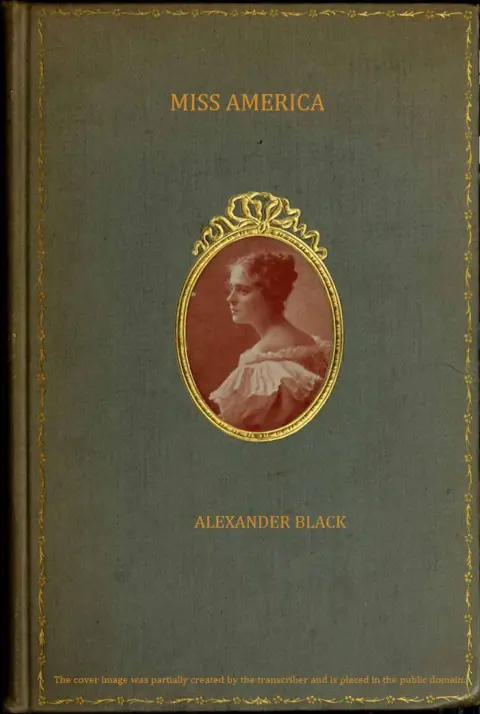
THE CLASSIC COLLECTION · 1898
"Miss America; Pen and Camera Sketches of the American Girl" by Alexander Black is a collection of sociological and artistic observations written in the late 19th century. The work aims to capture the essence of the American girl through both narrative reflections and photographic illustrations, exploring her role and perceived identity in society. The author skillfully discusses various archetypes of the American girl, while also delving into broader themes about femininity, beauty, and cultural expectations within the context of American life. The opening of the narrative sets the tone by acknowledging the challenge of defining the "American type" and highlights the complexities surrounding American femininity. Black discusses various perceptions of American women, from foreign observations to domestic interpretations, emphasizing the rich cultural tapestry that shapes their identities. He establishes a dialogue with the reader about the evolving nature of womanhood in America, introducing a character referred to as the Professor, who embodies modern, educated femininity. Their interactions reveal themes of independence, societal expectations, and the shifting landscape of gender roles, all while setting the stage for a deeper exploration of what it means to be an American girl in this transforming society.
Introduction adapted from the source catalogue; source summaries may be automatically generated.
Free to read · English · 32,486 words · No account needed
MAKE TIME FOR A GOOD BOOK
On by default. Untick to stop anonymous reading totals. Each page counts after 10 seconds in view. How this works.
Anonymous counting is on unless you have switched it off.
“Professor,” I said, helpless before her discovery of my glance, “woman is the only product of civilization which we might praise to excess, if we ever found the words, without critical resentment.”
“You always are either rampantly sentimental,” she said over the last button of her glove, “or remorsefully satirical.”
“I protest, Professor, that now I am neither. At this instant, Professor, you are reminding me anew of the infinite variety of woman. It may be that there is something in the raiment, but you, quite typically, I fancy, burst upon me in fresh phases, fresh flavors. A man is a mixture to be sure, a medicine, if you like, or a mixed drink. But a woman is a pousse café, never twice the same nectar, and one drains the glass delighted and confused.”
“I have no means of estimating your comparison,” returned the Professor, “for I never tasted a pousse café. I fancy it is degenerate.”
“Should you ever test my symbolism, Professor, you will, I think, admit that it is more accurate than Thackeray’s comparison of a woman’s heart with a lithographer’s stone. ‘What is once written there,’ he says, ‘never can be rubbed out.’ Now if Thackeray had known anything at all about lithographers’ stones, he would have known that they are used continuously for new writings until they have become too thin for service. Thackeray would have given woman more of the benefit of the doubt if he had called her heart a palimpsest. You sometimes can make out something more than the very last writing on a palimpsest.”
“I am afraid,” murmured the Professor, with a glance that puzzled me, “that you would not be able to read even that last writing.”
“Alas! Professor, I never have boasted any dexterity as an expert in
love’s handwriting.”
“You are a man,” she said briefly.
“Is there a last writing on your heart, Professor?”
“Yes,” she answered, a little startled, yet speaking quietly, “there is a first and a last in one, and the ink isn’t dry, either.”
“You don’t mean--”
“Yes, I do,” she added firmly; “I have been intending to tell you about
it.”
“You are--not going to be--married?”
“Yes.”
“Professor!” I had breath but for that one gasp. “And you never said a
word!”
“Yes, I did--to him.” Then, seeing my look, “I wanted to tease you a little; but I am going to tell you all about it--very soon.”
“I suppose,” I said, after a pause, “it is that fellow who was hurt at
Santiago?”
“The very same.”
Your reading position is saved on this browser. Take it to another device with a library code. Reading pages adapt to text, rather than matching a printed edition.
Alexander Black
Alexander Black
BEHIND THE BOOK
This eBook is for the use of anyone anywhere in the United States and most other parts of the world at no cost and with almost no restrictions whatsoever. You may copy it, give it away or re-use it under the terms of the Project Gutenberg License included with this eBook or online at www.gutenberg.org. If you are not located in the United States, you will have to check the laws of the country where you are located before using this eBook. Read the source licence.
The original source file, including credits and licence, is retained by this library. Request an original-format copy at no charge. Please include the book title and Project Gutenberg identifier #68869.
KEEP YOUR CURIOSITY GOING

Charles G. (Charles Griffith) Ross
Hannah Webster Foster

Emily Lawless
Edwin Hamlin Carr

Charles De Lano Hine
Andrew Ure