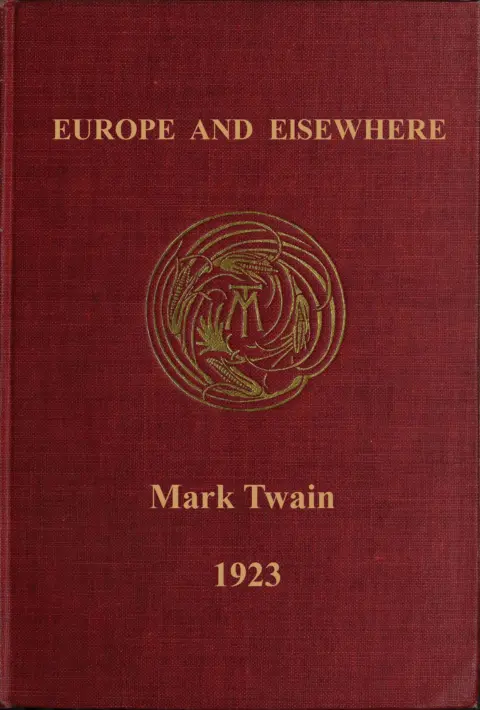
Europe and elsewhere
Mark Twain
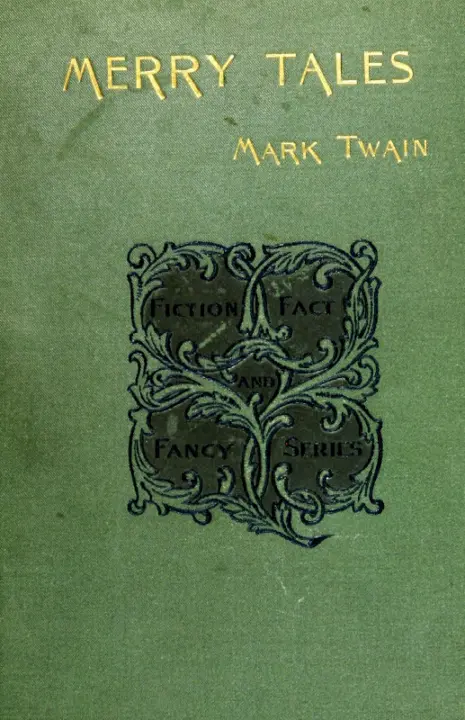
THE CLASSIC COLLECTION · 1892
"Merry Tales" by Mark Twain is a collection of humorous short stories written in the late 19th century. The stories encapsulate Twain's signature wit and insightful commentary on human nature, often populated by relatable characters caught in peculiar or absurd situations. This compilation promises to entertain readers with Twain's clever observations and comical storytelling style. The opening of "Merry Tales" provides an introduction to the collection's purpose and context within American literature. It sets the stage for a humorous narrative through the editor's note that emphasizes a desire for accessible, quality literature that reflects American life, particularly highlighting Twain as a quintessential American humorist. The initial story, "The Private History of a Campaign That Failed," introduces readers to a ragtag group of misfit soldiers, their initial excitement about war, and the ensuing comical misadventures that accompany their naive aspirations. Twain captures the absurdity and folly of the characters as they navigate the realities of military life, hinting at deeper themes tied to human folly and the irony of war.
Introduction adapted from the source catalogue; source summaries may be automatically generated.
Free to read · English · 38,132 words · No account needed
MAKE TIME FOR A GOOD BOOK
On by default. Untick to stop anonymous reading totals. Each page counts after 10 seconds in view. How this works.
Anonymous counting is on unless you have switched it off.
In accordance with instructions, I telegraphed to the Department, in cipher, the progress made, and also described the above ticket. We seemed to be in a strong enough position now to venture to throw off the mask as regarded Wicklow; so I sent for him. I also sent for and received back the letter written in sympathetic ink, the surgeon accompanying it with the information that thus far it had resisted his tests, but that there were others he could apply when I should be ready for him to do so.
Presently Wicklow entered. He had a somewhat worn and anxious look, but he was composed and easy, and if he suspected anything it did not appear in his face or manner. I allowed him to stand there a moment or two, then I said pleasantly,—
“My boy, why do you go to that old stable so much?”
He answered, with simple demeanor and without embarrassment,—
“Well, I hardly know, sir; there isn’t any particular reason, except that I like to be alone, and I amuse myself there.”
“You amuse yourself there, do you?”
“Yes, sir,” he replied, as innocently and simply as before.
“Is that all you do there?”
“Yes, sir,” he said, looking up with childlike wonderment in his big
soft eyes.
“You are sure?”
“Yes, sir, sure.”
After a pause, I said,—
“Wicklow, why do you write so much?”
“I? I do not write much, sir.”
“You don’t?”
“No, sir. Oh, if you mean scribbling, I do scribble some, for
amusement.”
“What do you do with your scribblings?”
“Nothing, sir—throw them away.”
“Never send them to anybody?”
“No, sir.”
I suddenly thrust before him the letter to the “Colonel.” He started slightly, but immediately composed himself. A slight tinge spread itself over his cheek.
“How came you to send this piece of scribbling, then?”
“I nev—never meant any harm, sir.”
“Never meant any harm! You betray the armament and condition of the post, and mean no harm by it?”
He hung his head and was silent.
“Come, speak up, and stop lying. Whom was this letter intended for?”
He showed signs of distress, now; but quickly collected himself, and replied, in a tone of deep earnestness,—
“I will tell you the truth, sir—the whole truth. The letter was never intended for anybody at all. I wrote it only to amuse myself. I see the error and foolishness of it, now,—but it is the only offence, sir, upon my honor.”
“Ah, I am glad of that. It is dangerous to be writing such letters. I hope you are sure this is the only one you wrote?”
“Yes, sir, perfectly sure.”
Your reading position is saved on this browser. Take it to another device with a library code. Reading pages adapt to text, rather than matching a printed edition.
BEHIND THE BOOK
This eBook is for the use of anyone anywhere in the United States and most other parts of the world at no cost and with almost no restrictions whatsoever. You may copy it, give it away or re-use it under the terms of the Project Gutenberg License included with this eBook or online at www.gutenberg.org. If you are not located in the United States, you will have to check the laws of the country where you are located before using this eBook. Read the source licence.
The original source file, including credits and licence, is retained by this library. Request an original-format copy at no charge. Please include the book title and Project Gutenberg identifier #60900.
KEEP YOUR CURIOSITY GOING
Cécile Tormay

Moritz Busch
Coulson Kernahan
John L. Ransom

Maurice Baring
Frances Wright