THE CLASSIC COLLECTION✦Impressions of great naturalistsCLASSIC FREE BOOKS
Impressions of great naturalists
Henry Fairfield Osborn
THE CLASSIC COLLECTION · 1915
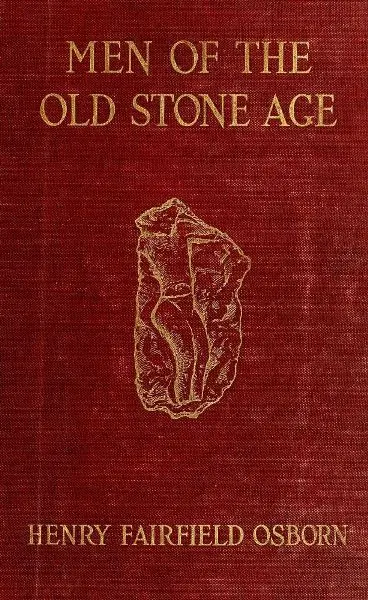
"Men of the Old Stone Age: Their Environment, Life and Art" by Henry Fairfield Osborn is a scientific publication written in the early 20th century. This work dives into the prehistoric human cultures of the Paleolithic era, focusing on their environment, lifestyle, and artistic expressions. Osborn aims to synthesize findings from various disciplines, including geology, paleontology, anthropology, and archaeology, to provide a comprehensive view of human evolution during this fascinating period. The opening of this volume establishes the author’s journey through the regions associated with early humans, guided by prominent archaeologists. Osborn reflects on the rich history of human habitation in Europe, stressing the depth of human evolution and the significant archaeological finds located in the area. He highlights the importance of interdisciplinary research to understand the relationship between early humans, their environment, and their cultural advancements, setting the stage for a detailed historical account of the Old Stone Age in subsequent chapters.
Introduction adapted from the source catalogue; source summaries may be automatically generated.
Free to read · English · 149,606 words · No account needed
MAKE TIME FOR A GOOD BOOK
On by default. Untick to stop anonymous reading totals. Each page counts after 10 seconds in view. How this works.
Anonymous counting is on unless you have switched it off.
[AK] Named in honor of the reigning Prince of Monaco, whose generous gifts and personal interest made the adequate exploration of these grottos possible.
[AL] This correlation agrees in the main with that of Schmidt in his Diluviale Vorzeit Deutschlands.(10)
[AM] Obermaier,(19) R. Martin.(20)
[AN] Denotes very frequent occurrence of a typical form.
[AO] Denotes very frequent occurrence of a typical form.
[AP] Denotes very frequent occurrence of a typical form.
[AQ] Breuil,(34) Schmidt.(35)
[AR] The writer had the privilege of visiting all these caverns in the company either of Professor Emile Cartailhac, or of the Abbé Breuil.
[AS] Despite Schwalbe's statement, the supraorbital ridges in this skull appear to form a complete bridge. Doctor Hrdlička regards the related Předmost skull as distinctly showing Neanderthaloid affinity.
[AT] Obermaier,(45) R. Martin.(46)
[AU] From notes by Doctor Robert H. Lowie (Nov. 16, 1914) of the American Museum of Natural History on the opinions of Marett (Anthropology) and of James.
[AV] After Obermaier,(10) R. Martin,(11) and others.
[AW] This custom is observed again in Azilian times in the burials at Ofnet on the Danube (see page 475).
[AX] The whole history of these successive discoveries, beginning with the finding of an engraved bone, in 1834, in the grotto of Chaffaud, and concluding with the discoveries of Lalanne, and of Bégouen, in 1912, is summarized in the admirable little handbook by Salomon Reinach.(23) This convenient volume also includes outline tracings of the more important drawings and sculptures found in western Europe up to the present time.
[AY] Only a few drawings from this cavern have as yet been published, such as the famous mammoth of Combarelles; the entire work is in the hands of Breuil.
[AZ] The stations of Castillo, of Pasiega, and of Altamira were visited by the writer, under the guidance of Doctor Hugo Obermaier, in August, 1912.
[BA] Letter of October 23, 1912.
[BB] J. Bayer(34) has lately expressed the opinion that the industry of the open 'loess' stations of Munzingen, Aggsbach, and Gobelsburg is not really of Magdalenian age, but represents an atypical Aurignacian.
[BC] Lucretius, On the Nature of Things, metrical version by J. M. Good. Bohn's Classical Library, London, 1890.
[BD] Bossuet, Jacques Bénigne, Discours sur l'Histoire universelle (first published in 1681), pp. 9, 10. Edition conforme à celle de 1700, troisième et dernière édition revue par l'auteur. Paris, Librairie de Firmin Didot Frères, 1845.
[BE] The Satires, Epistles and Ars Poetica of Horace, the Latin Text with Conington's Translation, pp. 29, 31. George Bell & Sons, London, 1904.
[BF] Æschylus, Prometheus Bound. Elizabeth Barrett Browning, Poetical Works of Elizabeth Barrett Browning, pp. 148, 149. Oxford edition, 1906. Henry Frowde, London, Edinburgh, Glasgow, New York, and Toronto.
[BG] Kobelt, W., Die Verbreitung der Tierwelt, pp. 403-7. C. H.
Tauchnitz, Leipsic, 1902.
Your reading position is saved on this browser. Take it to another device with a library code. Reading pages adapt to text, rather than matching a printed edition.
BEHIND THE BOOK
This eBook is for the use of anyone anywhere in the United States and most other parts of the world at no cost and with almost no restrictions whatsoever. You may copy it, give it away or re-use it under the terms of the Project Gutenberg License included with this eBook or online at www.gutenberg.org. If you are not located in the United States, you will have to check the laws of the country where you are located before using this eBook. Read the source licence.
The original source file, including credits and licence, is retained by this library. Request an original-format copy at no charge. Please include the book title and Project Gutenberg identifier #43820.
KEEP YOUR CURIOSITY GOING
Cécile Tormay

Moritz Busch
John L. Ransom
Frances Wright
Cécile Tormay

Mabel Potter Daggett