THE CLASSIC COLLECTION✦Impressions of great naturalistsCLASSIC FREE BOOKS
Impressions of great naturalists
Henry Fairfield Osborn
THE CLASSIC COLLECTION · 1915
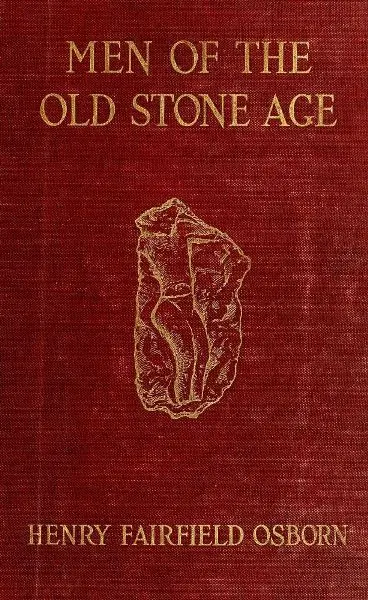
"Men of the Old Stone Age: Their Environment, Life and Art" by Henry Fairfield Osborn is a scientific publication written in the early 20th century. This work dives into the prehistoric human cultures of the Paleolithic era, focusing on their environment, lifestyle, and artistic expressions. Osborn aims to synthesize findings from various disciplines, including geology, paleontology, anthropology, and archaeology, to provide a comprehensive view of human evolution during this fascinating period. The opening of this volume establishes the author’s journey through the regions associated with early humans, guided by prominent archaeologists. Osborn reflects on the rich history of human habitation in Europe, stressing the depth of human evolution and the significant archaeological finds located in the area. He highlights the importance of interdisciplinary research to understand the relationship between early humans, their environment, and their cultural advancements, setting the stage for a detailed historical account of the Old Stone Age in subsequent chapters.
Introduction adapted from the source catalogue; source summaries may be automatically generated.
Free to read · English · 149,606 words · No account needed
MAKE TIME FOR A GOOD BOOK
On by default. Untick to stop anonymous reading totals. Each page counts after 10 seconds in view. How this works.
Anonymous counting is on unless you have switched it off.
Vache, Grotte de la, 435, 437, 471
Valle, 435, 466, 471, 474
Venosa, 167
Villejuif, 30, 167, 176
Volgu, 331, 339, 345
Völklinshofen, 284, 314
Vulpes, 469;
see Fox
Warm fauna, see Faune chaude
Weimar, 167
Wierschowie, 245, 248, 331
Wildcat, Felis catus, 43, 63, 95, 287, 498
Wildhaus, 314, 435
Wildkirchli, =200=, 201, 245, 247, 256
Wildscheuer, 286, 314, 370, 435, 442, 444
Willendorf, 30, 279, 311-315, 322, 395
Winterlingen, 435
Wisent, see Bison
Wolf, 43, 44, 71, 95, 147, 165, 187, 206, 264, 265, 287, 288, 333, 343, 348, =356=, 366, 441, 447, 468, 498; see Canis suessi and Cyon alpinus fossilis
Wolvercote, 167
Wolverene, glutton, 44, 46, 71, =193=, 287, 289, 348, 370, 447, 468, 498;
see Gulo luscus
Würm, see Glacial Epoch
Wüste Scheuer, 471
Zonhoven, 471, 474
Zuffenhausen, 314
[A] The folding map at the end of the volume exhibits the entire extent of
the author's tour.
[B] Lucretius was born 95 B. C. His poem was completed before 53 B. C. In the opening lines of Book III he attributes all his philosophy and science to the Greeks. See Appendix, Note I.
[C] Lucretius, On the Nature of Things, metrical version by J. M. Good. Bohn's Classical Library, London, 1890.
[D] Horace was born 65 B. C., and his Satires are attributed to the years 35-29 B. C. See Appendix, Note II.
[E] Æschylus was born 525 B. C. See Appendix, Note III.
[F] Georges Louis Leclerc Buffon (b. 1707, d. 1788). For reviews of Buffon's opinions and theories see Osborn, 1894.1, pp. 130-9; also Butler, 1911.1, pp. 74-172.
[G] Jean Baptiste Pierre Antoine de Monet, known as the Chevalier de Lamarck (b. 1744, d. 1829). For a summary of the views of Lamarck see Osborn, 1894.1, pp. 152-181; also Butler, 1911.1, pp. 235-314, an excellent presentation of Lamarck's opinions.
[H] References are indicated by numbers only throughout the text. At the close of each chapter is a list giving the author, date, and reference number for every citation. A full list of all the works cited, including those from which illustrations have been taken, together with complete references, will be found in the bibliography at the end of the book.
[I] The best reference works on the history of French and German Palæolithic Archæology are: Cartailhac,(12) La France Préhistorique; Déchelette,(13) Manuel d'Archéologie, T. 1; Reinach,(14) Catalogue du Musée de St.-Germain: Alluvions et Cavernes; Schmidt,(15) Die diluviale Vorzeit Deutschlands; Avebury,(16) Prehistoric Times.
[J] The Cannstatt skull and Cannstatt race are now regarded as Neolithic, and therefore not contemporary with the mammoth or the cave-bear.
[K] Note that lists and tables of races, cultural stages, faunæ, etc., in this volume are given not in chronological but in stratigraphic order, beginning with the most recent at the top and ending with the oldest at the bottom.
[L] This table is a modification of that of Obermaier in his Mensch der Vorzeit.(38) To each period of the chronologic reckoning should be added the 1900 years of our era.
Your reading position is saved on this browser. Take it to another device with a library code. Reading pages adapt to text, rather than matching a printed edition.
BEHIND THE BOOK
This eBook is for the use of anyone anywhere in the United States and most other parts of the world at no cost and with almost no restrictions whatsoever. You may copy it, give it away or re-use it under the terms of the Project Gutenberg License included with this eBook or online at www.gutenberg.org. If you are not located in the United States, you will have to check the laws of the country where you are located before using this eBook. Read the source licence.
The original source file, including credits and licence, is retained by this library. Request an original-format copy at no charge. Please include the book title and Project Gutenberg identifier #43820.
KEEP YOUR CURIOSITY GOING
Cécile Tormay

Moritz Busch
John L. Ransom
Frances Wright
Cécile Tormay

Mabel Potter Daggett