THE CLASSIC COLLECTION✦Impressions of great naturalistsCLASSIC FREE BOOKS
Impressions of great naturalists
Henry Fairfield Osborn
THE CLASSIC COLLECTION · 1915
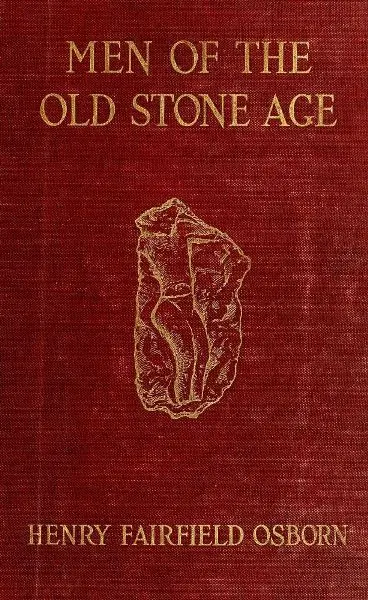
"Men of the Old Stone Age: Their Environment, Life and Art" by Henry Fairfield Osborn is a scientific publication written in the early 20th century. This work dives into the prehistoric human cultures of the Paleolithic era, focusing on their environment, lifestyle, and artistic expressions. Osborn aims to synthesize findings from various disciplines, including geology, paleontology, anthropology, and archaeology, to provide a comprehensive view of human evolution during this fascinating period. The opening of this volume establishes the author’s journey through the regions associated with early humans, guided by prominent archaeologists. Osborn reflects on the rich history of human habitation in Europe, stressing the depth of human evolution and the significant archaeological finds located in the area. He highlights the importance of interdisciplinary research to understand the relationship between early humans, their environment, and their cultural advancements, setting the stage for a detailed historical account of the Old Stone Age in subsequent chapters.
Introduction adapted from the source catalogue; source summaries may be automatically generated.
Free to read · English · 149,606 words · No account needed
MAKE TIME FOR A GOOD BOOK
On by default. Untick to stop anonymous reading totals. Each page counts after 10 seconds in view. How this works.
Anonymous counting is on unless you have switched it off.
All these steps indicate the possession of certain generic faculties of mind similar to our own. That this mind of the Upper Palæolithic races was of a kind capable of a high degree of education we entertain no doubt whatever because of the very advanced order of brain which is developed in the higher members of these ancient races; in fact, it may be fairly assumed from experiences in the education of existing races of much lower brain capacity, such as the Eskimo or Fuegian. The emergence of such a mind from the mode of life of the Old Stone Age is one of the greatest mysteries of psychology and of history.
The rise and fall of cultures and of industries, which is at this very day the outstanding feature of the history of western Europe, was fully typified in the very ancient contests with stone weapons which were waged along the borders of the Somme, the Marne, the Seine, and the Danube. No doubt, each invasion, each conquest, each substitution of an industry or a culture had within it the impelling contest of the spirit and will of man, the intelligence directing various industrial and warlike implements, the superiority either of force or of mind.
(=1=) Cartailhac, 1903.1, pp. 330, 331.
(=2=) Déchelette, 1908.1, vol. I, pp. 314-320.
(=3=) Op. cit., p. 320.
(=4=) Op. cit., pp. 505-510.
(=5=) Breuil, 1912.6, pp. 2-6.
(=6=) Ibid., 1912.7, pp. 232, 233.
(=7=) Ibid., 1912.6, p. 20.
(=8=) Koken, 1912.1, pp. 172, 173, 176-178, 180, 181, 201.
(=9=) Schmidt, 1912.1, p. 40.
(=10=) Breuil, 1912.7, p. 225.
(=11=) Op. cit., p. 233.
(=12=) Schmidt, 1912.1, p. 41.
(=13=) Schliz, 1912.1, pp. 242-244.
(=14=) Op. cit., p. 252.
(=15=) Boule, 1913.1, p. 210.
(=16=) Dupont, 1871.1.
(=17=) Fischer, 1913.1, p. 356.
(=18=) Breuil, 1912.5.
(=19=) Ibid., 1912.7, pp. 235, 236.
(=20=) Obermaier, 1912.1, pp. 467-469.
(=21=) Salmon, 1898.1.
(=22=) Munro, 1912.1, pp. 275-277.
(=23=) Déchelette, 1908.1, vol. I, p. 326.
(=24=) Breuil, 1912.5, p. 560.
(=25=) Ripley, 1899.1, p. 121.
Lucretius's conception[BC] of the gradual development of human culture undoubtedly came from Greek sources beginning with Empedocles. His indebtedness is beautifully expressed in the opening lines of Book III of his De Rerum Natura:
Your reading position is saved on this browser. Take it to another device with a library code. Reading pages adapt to text, rather than matching a printed edition.
BEHIND THE BOOK
This eBook is for the use of anyone anywhere in the United States and most other parts of the world at no cost and with almost no restrictions whatsoever. You may copy it, give it away or re-use it under the terms of the Project Gutenberg License included with this eBook or online at www.gutenberg.org. If you are not located in the United States, you will have to check the laws of the country where you are located before using this eBook. Read the source licence.
The original source file, including credits and licence, is retained by this library. Request an original-format copy at no charge. Please include the book title and Project Gutenberg identifier #43820.
KEEP YOUR CURIOSITY GOING
Cécile Tormay

Moritz Busch
John L. Ransom
Frances Wright
Cécile Tormay

Mabel Potter Daggett