THE CLASSIC COLLECTION✦An outlaw’s diary: the CommuneCLASSIC FREE BOOKS
An outlaw’s diary: the Commune
Cécile Tormay
THE CLASSIC COLLECTION · 1920
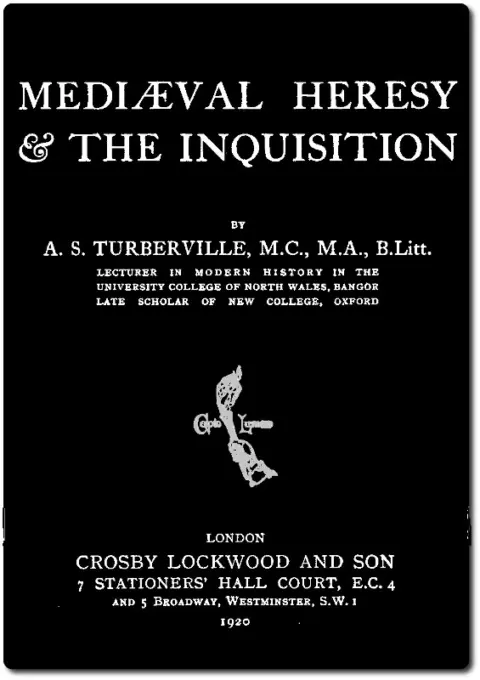
"Mediæval Heresy & the Inquisition" by Arthur Stanley Turberville is a historical account written in the early 20th century. The work explores the complex relationship between various heretical movements that emerged in the Middle Ages and the Church's response to them through the Inquisition. With a focus primarily on the origins of heresy and the nature of ecclesiastical power, it seeks to provide insight into the doctrinal conflicts and social conditions that fueled these movements. The opening of the book sets the stage by describing the historical context of the Middle Ages, establishing a nuanced perspective on what is often referred to as the "Ages of Faith." Turberville asserts that this title does not reflect the whole truth, as various heresies arose from psychological, social, and intellectual tensions within society. He delves into the concept of the "Civitas Dei," emphasizing the intertwined relationship of church and state, and addresses the roots of heresy stemming from clerical abuses and public dissatisfaction. By laying this groundwork, the author suggests that the Inquisition's emergence was a societal response to the perceived threats posed by heretical teachings, highlighting the complexities of faith and authority during this turbulent period.
Introduction adapted from the source catalogue; source summaries may be automatically generated.
Free to read · English · 89,610 words · No account needed
MAKE TIME FOR A GOOD BOOK
On by default. Untick to stop anonymous reading totals. Each page counts after 10 seconds in view. How this works.
Anonymous counting is on unless you have switched it off.
Leo X, Pope, as patron of Aristotelianism, 70
Leo the Isaurian, 22
Lessines, Gilles de, in correspondence with Albertus Magnus, 65-6
Lessing, his Nathan der Weise, 73
Lewis the Bavarian, his conflict with John XXII, 45, 79
Liège, mob and heretics in, anno 1145, 130
Locke, on religious toleration, 235
Lollards, extent of their influence, 93-4, 103
Lombard, Peter, 57, 85
Lombardy, Dolcino in, 48
Inquisition in, 150, 153, 167-8
Lorraine, Inquisition in, 159
Louis the Great of Hungary, 174
Louis IX, King of France, 151, 163
Luciferans, see Brethren of the Free Spirit
Lucius III, Pope, 133, 211-12, 226
Lully, Raymond, his crusade against Islam, 70
in conflict with Eymeric, 71
Luther, his indebtedness to Hus, 103, 234
otherwise mentioned, 89, 92, 106, 166
Lutheranism, soil prepared for, in Germany, 49, 51
Magdeburg, Albert, Archbishop of, 153
Maifreda, devotee of Guglielma, 46
Mainz, Pragmatic Sanction of, 103
Maistre, Joseph de, on tolerance, 237
defends Spanish Inquisition, 240
Malleus Maleficarum, by Sprenger, 113
Manichæism, revival of ancient, 22, 32
its different forms, 24, 27
in Roman empire, 126-7
otherwise, see Catharism
Marca, Giacomo della, his crusade in Slavonia, 174
Marguerite la Porète, her execution, 163
Marriage, Catharan views concerning, 27
views of Conrad Schmidt concerning, 52-3
Marsh, Adam, 35
Marsiglio of Padua, arguments of his Defensor Pacis, 45, 53, 73,
82-4, 86-7, 97
Martin V, Pope, 103
Martin of Tours and Priscillian, 128
Martyr, Peter, as inquisitor in Italy, 167
Mary, the Virgin, Catharan views concerning, 14, 25
See also Immaculate Conception
Maximus, Emperor, and Priscillian, 127-8
Melfi, Constitutions of, 150-1
Mendicant orders, see under Dominicans, Franciscans
Metempsychosis, Catharan belief in, 26
Milan, Guglielmites in, 46
Dolcino in, 47
Peter Martyr in, 167
Mill, John Stuart, his views on religious toleration, 238
Minorites, see Franciscans
Missionary character of inquisitors, 188-90, 219, 239-40
Mithraism, 123
Moneta, on Waldensianism, 19
Montfort, Simon de, in Albigensian Crusade, 138
Montségur, fall of, 160
Moors, see Saracens
Moral offences, when triable by Inquisition, 187-8
Naples, Inquisition in, 168
Narbonne, Spiritual Franciscans in, 43
Arabian philosophy in, 62
Nationality, force of, in religious matters, 2-3, 78-80, 94-5, 103, 177
Navarre, Inquisition in, 159
Negative heretic, treatment of, 185
Neoplatonism, 55-6, 59, 123
Nicaea, Council of, 125
Nicholas d’Abbeville, inquisitor in Languedoc, 160, 226 n.
Nicholas III, Pope, 42, 44
Nicholas V, Pope, 164, 169
Niem, Dietrich, and Conciliar movement, 11, 97-8
Nifo, Augustino, Paduan Averrhoïst, 70
Nominalism, its tendencies towards Tritheism or Unitarianism, 7, 234 and doctrine of Transubstantiation, 91, 92, 95
Norbert, Saint, Archbishop of Magdeburg, 14, 38
Ockham, William of, in controversy against John XXII, 45, 53, 79 his arguments in favour of General Councils, 81-2, 97 otherwise mentioned, 91
Olivi, Pierre Jean, 41
Orcagna, his delineation of Averrhoës, 72
Ordeal, used for trial of heresy, 141
Ortlieb of Strassburg, 49
Orvieto, death of Siger of Brabant at, 69
Oxford, University of, 6
Padua, centre of Italian Averrhoïsm, 69-70
Pallavicino, Uberto da, 168
Pantheism, and Realism, 7, 91, 234
in Germany, 49
Paramo, Ludovico à, on origin of Inquisition, 188
on death penalty for heresy, 223
on nature of heresy, 237
Paris, University of, Averrhoïsm in, 56, 63
controversies in, 64, 69
its part in Conciliar movement, 96-7
otherwise mentioned, 6, 35, 50, 85, 164-5
Parlement de Paris, its jurisdiction over heresy, 164-5
Parma, Segarelli in, 47
Inquisition in, 168
Your reading position is saved on this browser. Take it to another device with a library code. Reading pages adapt to text, rather than matching a printed edition.
BEHIND THE BOOK
This eBook is for the use of anyone anywhere in the United States and most other parts of the world at no cost and with almost no restrictions whatsoever. You may copy it, give it away or re-use it under the terms of the Project Gutenberg License included with this eBook or online at www.gutenberg.org. If you are not located in the United States, you will have to check the laws of the country where you are located before using this eBook. Read the source licence.
The original source file, including credits and licence, is retained by this library. Request an original-format copy at no charge. Please include the book title and Project Gutenberg identifier #46149.
KEEP YOUR CURIOSITY GOING
Cécile Tormay

Moritz Busch
John L. Ransom
Frances Wright
Cécile Tormay

Mabel Potter Daggett