THE CLASSIC COLLECTION✦An outlaw’s diary: the CommuneCLASSIC FREE BOOKS
An outlaw’s diary: the Commune
Cécile Tormay
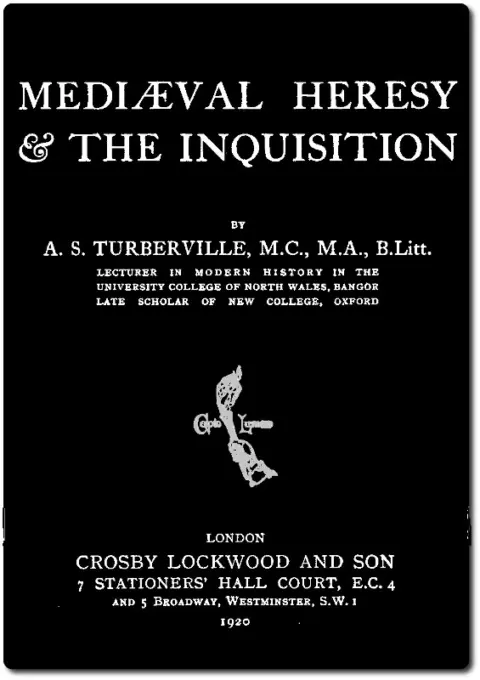
THE CLASSIC COLLECTION · 1920
"Mediæval Heresy & the Inquisition" by Arthur Stanley Turberville is a historical account written in the early 20th century. The work explores the complex relationship between various heretical movements that emerged in the Middle Ages and the Church's response to them through the Inquisition. With a focus primarily on the origins of heresy and the nature of ecclesiastical power, it seeks to provide insight into the doctrinal conflicts and social conditions that fueled these movements. The opening of the book sets the stage by describing the historical context of the Middle Ages, establishing a nuanced perspective on what is often referred to as the "Ages of Faith." Turberville asserts that this title does not reflect the whole truth, as various heresies arose from psychological, social, and intellectual tensions within society. He delves into the concept of the "Civitas Dei," emphasizing the intertwined relationship of church and state, and addresses the roots of heresy stemming from clerical abuses and public dissatisfaction. By laying this groundwork, the author suggests that the Inquisition's emergence was a societal response to the perceived threats posed by heretical teachings, highlighting the complexities of faith and authority during this turbulent period.
Introduction adapted from the source catalogue; source summaries may be automatically generated.
Free to read · English · 89,610 words · No account needed
MAKE TIME FOR A GOOD BOOK
On by default. Untick to stop anonymous reading totals. Each page counts after 10 seconds in view. How this works.
Anonymous counting is on unless you have switched it off.
De unitate intellectus contra Averroïstas, of Aquinas, 66
Denuntiatio, judicial system of, 141, 144
Diffamatio, judicial system of, 143, 190-3
Disabilities, civil, of heretics, 217
Dolcino, Fra, 12, 47-8, 214, 231
Dominic, Saint, 38-9, 137, 145, 208-9
Dominicans, in University of Paris, 56, 64
rivalry with Franciscans, 65, 232
use by Gregory IX against heretics, 140
areas allotted to, for prosecution of heresy, 159
Donatists, 14, 125, 127, 229
Duns Scotus, 91
Eccelin da Romano, 168
Eckhart, Master, 49, 53
Edward I and Boniface VIII, 79
Edward II and Templars, 176-7
Elias of Cortona, 39
Empire and Papacy, their relations, 1-3, 13, 42, 45, 72, 79, 84, 152
Endura, Catharan suicide, 27, 29
England and Inquisition, see British Isles
Eon de l’Etoile, 12, 15, 17, 231
Episcopal Courts, see Bishops
Erasmus, 72, 166
Eriugena, John Scotus, 57, 229, 233
Eugenius IV, Pope, 51, 103, 118
Evidence, rules of, in Inquisition, 195-8
Excommunication, of heretics, 217, 224 for secular rulers neglecting their duties against heretics, 156-7
Extortion, inquisitorial, 210-14
Eymeric, Nicholas, inquisitor of Aragon, on authorship of
The Everlasting Gospel, 36
relations with Raymond Lully, 71
complaints of poverty of Aragonese Inquisition, 173
his ideals as inquisitor, 179
on use of advocates, 198-9
on use of torture, 203-4
on fines in Inquisition, 210, 214
on eleventh hour repentances, 219
his Directorium Inquisitorum, 244-5
Fabiano, inquisitor, 174
Fabri, citizen of Carcassonne, prosecuted posthumously, 160
Familiars, inquisitorial officials, 180-1
Fautors of heretics, treatment of, 187
Ferdinand the Catholic, of Aragon, 172
Ferrer, inquisitor in Languedoc, 159
Fines, exaction of, by Inquisition, 210-11
Fiore, see Joachim of Flora
Fitzralph, Archbishop of Armagh, on doctrine of poverty, 84
Flagellants, why considered heretics, 5, 231
spread of the mania, 51-3, 105, 166, 242
Flagellation, inquisitorial penance, 208-9
Flanders, Tanchelm in, 14
Catharism in, 22
Flagellants in, 51, 53
Robert le Bugre in, 162-3
Florence, Peter Martyr in, 167
France, northern, Inquisition in, 151, 159, 162-5
Francis of Assisi, Saint, 8, 38-48 (passim), 53
Franciscans, influence of their founder, 38
of Elias of Cortona, 39
the Conventuals, 39, 41, 43, 79
the Spirituals, 41-4, 48-53 (passim), 77-84 (passim), 231
rivalry with Dominicans, 56, 65, 146-8, 159, 232
used by Gregory IX against heretics, 146-8
areas allotted to them for prosecution of heresy, 159
Fraticelli, in Languedoc, 45, 214
in Germany, 48-9
Frederick I, Barbarossa, Emperor, relations of Church and State
under, 2
his treatment of heretics, 133, 150, 157
Frederick II, Emperor, and Averrhoïsts, 62 and The Three Impostors, 72 his Constitutions against heresy, 149-56, 166, 169, 220 question of his responsibility for the stake, 151-2 orders destruction of heretics’ houses, 218
Gaunt, John of, 93
Geoffrey d’Ablis, inquisitor in Languedoc, 202
Gerard of Abbeville, opponent of Mendicants in University of Paris, 65
Germany, Catharism in, 22
Flagellants in, 51-3
Illuminism in, 47
Inquisition in, 50, 151, 157, 165-166, 218
Gerson, Jean, moderate reformer, 11, 234
on Averrhoës, 72
on General Councils, 96-8, 102
Ghazali, or Algazel, opponent of Arabian Aristotelianism, 60
Gherardo da Borgo San Donnino, reputed author of
The Everlasting Gospel, 36
Ghibellines and heresy, 168
Goslar, execution of heretics at, 129
Grace, time of, in inquisitorial practice, 191
Gratian, on witchcraft, 112
on death penalty for heretics, 131
on torture, 201
Greece, infected by Catharism, 22
Gregory VII, Pope, and heretics of Cambrai, 130
Your reading position is saved on this browser. Take it to another device with a library code. Reading pages adapt to text, rather than matching a printed edition.
BEHIND THE BOOK
This eBook is for the use of anyone anywhere in the United States and most other parts of the world at no cost and with almost no restrictions whatsoever. You may copy it, give it away or re-use it under the terms of the Project Gutenberg License included with this eBook or online at www.gutenberg.org. If you are not located in the United States, you will have to check the laws of the country where you are located before using this eBook. Read the source licence.
The original source file, including credits and licence, is retained by this library. Request an original-format copy at no charge. Please include the book title and Project Gutenberg identifier #46149.
KEEP YOUR CURIOSITY GOING
Cécile Tormay

Moritz Busch
John L. Ransom
Frances Wright
Cécile Tormay

Mabel Potter Daggett