THE CLASSIC COLLECTION✦An outlaw’s diary: the CommuneCLASSIC FREE BOOKS
An outlaw’s diary: the Commune
Cécile Tormay
THE CLASSIC COLLECTION · 1920
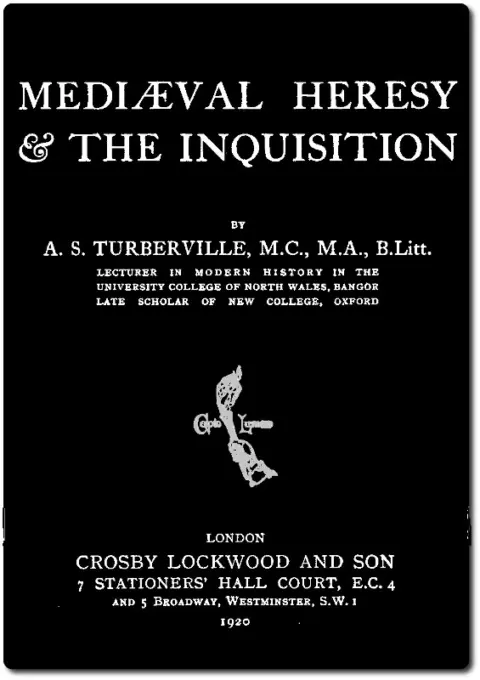
"Mediæval Heresy & the Inquisition" by Arthur Stanley Turberville is a historical account written in the early 20th century. The work explores the complex relationship between various heretical movements that emerged in the Middle Ages and the Church's response to them through the Inquisition. With a focus primarily on the origins of heresy and the nature of ecclesiastical power, it seeks to provide insight into the doctrinal conflicts and social conditions that fueled these movements. The opening of the book sets the stage by describing the historical context of the Middle Ages, establishing a nuanced perspective on what is often referred to as the "Ages of Faith." Turberville asserts that this title does not reflect the whole truth, as various heresies arose from psychological, social, and intellectual tensions within society. He delves into the concept of the "Civitas Dei," emphasizing the intertwined relationship of church and state, and addresses the roots of heresy stemming from clerical abuses and public dissatisfaction. By laying this groundwork, the author suggests that the Inquisition's emergence was a societal response to the perceived threats posed by heretical teachings, highlighting the complexities of faith and authority during this turbulent period.
Introduction adapted from the source catalogue; source summaries may be automatically generated.
Free to read · English · 89,610 words · No account needed
MAKE TIME FOR A GOOD BOOK
On by default. Untick to stop anonymous reading totals. Each page counts after 10 seconds in view. How this works.
Anonymous counting is on unless you have switched it off.
[125] Goldast, op. cit., vol. ii, Opera Omnia de Potestate Ecclesiastica & Politica, G. Ockham, esp. Dialogus, pp. 822-30. The chief conclusions of Ockham are summarized on pp. 396-7; also in S. Riezler, Die literarischen Widersacher der Päpste zur Zeit Ludwig des Baiers (1874), pp. 258-71. But see generally pp. 241-77.
[126] See Poole, op. cit., p. 277, note.
[127] Defensor Pacis, Lib. I, cap. xviii; in Goldast, op. cit.,
vol. ii, pp. 86-9.
[128] Ibid., Lib. II, cap. viii, p. 212.
[129] Defensor Pacis, Lib. II, cap. ix, p. 213.
[130] Ibid., cap. x, pp. 216-19, esp. p. 217. ‘Nemo quantumcunque peccans contra disciplinas speculativas aut operativas quascunque punitur vel arcetur in hoc seculo praecise inquantum-hujusmodi, sed inquantum peccat contra praeceptum humanae legis.’
[131] Ibid., Lib. I, cap. xii, pp. 169-71.
[132] Workman, op. cit., vol. i. ‘Wyclif has been called the Morning Star of the Reformation, but the author of the Defensor Pacis might more justly claim the title.’ Cf., on modernity of Marsiglio’s thought, B. Labanca, Marsilio da Padova (Padua, 1882), pp. 219 et seq.
[133] Fitzralph’s treatise, De Pauperie Salvatoris, is printed as an appendix to Wycliffe’s De Dominio Divino (Wyclif Society, 1890), pp. 259-476.
[134] For this whole subject, see Lea, vol. iii, pp. 590-4.
[135] Ibid., pp. 596-9.
[136] See supra, pp. 68, 75.
[137] De Dominio Divino (Wyclif Society, 1890), p. 33. ‘Ideo Deus non mediate per regimen vasallorum subserviencium, ut reges ceteri, dominatur, cum immediate et per se facit, sustentat, et gubernat omne quod possidet, juvatque ad perficiendum opera secundum usus alios quos requirit.’
[138] See Poole, op. cit., p. 293.
[139] See Workman, op. cit., vol. i, pp. 173-8.
[140] See Fasciculi Zizaniorum Magistri Johannis Wyclif (Rolls series, ed. W. W. Shirley, 1858), pp. 280-1.
[141] Wycliffe’s De Potestate Pape (Wyclif Society, ed. J. Loserth,
1907), p. 84.
[142] De Civili Dominio (Wyclif Society, ed. R. L. Poole, 1885), vol. i, pp. 335-42; also pp. 265-74, ch. xxxvii. See also Select English Works (ed. T. Arnold, 1869-71), vol. iii, pp. 216-17.
[143] See De Potestate Pape, pp. 84, 238 et seq., 378-9.
[144] Ibid., pp. 145-6, 154-5. This idea is either explicitly or implicitly in all Wycliffe’s later teachings.
[145] Ibid., pp. 120 et seq., 148, 212, 266 et seq. The whole book is indeed on this theme. Wycliffe does not scruple to call a bad pope ‘horribilius monstrum.’ Cf. Fasciculi Zizaniorum, p. 278.
[146] De Potestate Pape, p. 272.
[147] Fasciculi Zizaniorum, p. 278.
[148] Ibid., p. 279; D. Wilkins, Concilia M. Britanniae et Hiberniae (1737). vol. iii, p. 157.
[149] Works of Thomas Cranmer (ed. J. E. Cox, Parker Society), vol. ii, Misc. Writings, p. 119.
[150] See Wilkins, vol. iii, p. 350; Chronicon H. Knighton (Rolls series, ed. J. R. Lumby, 1889-95), vol. ii, p. 152.
[151] Ibid.
[152] See Fasciculi Zizaniorum, p. 278, from Epistola Willelmi Cantuariensis super condemnatione haeresum Wycclyff in synodo. See also extract from a sermon by Wycliffe on this subject, ibid., introd., pp. lxiv-lxv.
Your reading position is saved on this browser. Take it to another device with a library code. Reading pages adapt to text, rather than matching a printed edition.
BEHIND THE BOOK
This eBook is for the use of anyone anywhere in the United States and most other parts of the world at no cost and with almost no restrictions whatsoever. You may copy it, give it away or re-use it under the terms of the Project Gutenberg License included with this eBook or online at www.gutenberg.org. If you are not located in the United States, you will have to check the laws of the country where you are located before using this eBook. Read the source licence.
The original source file, including credits and licence, is retained by this library. Request an original-format copy at no charge. Please include the book title and Project Gutenberg identifier #46149.
KEEP YOUR CURIOSITY GOING
Cécile Tormay

Moritz Busch
John L. Ransom
Frances Wright
Cécile Tormay

Mabel Potter Daggett