THE CLASSIC COLLECTION✦The hermit of Turkey HollowCLASSIC FREE BOOKS
The hermit of Turkey Hollow
Arthur Cheney Train
THE CLASSIC COLLECTION · 1905
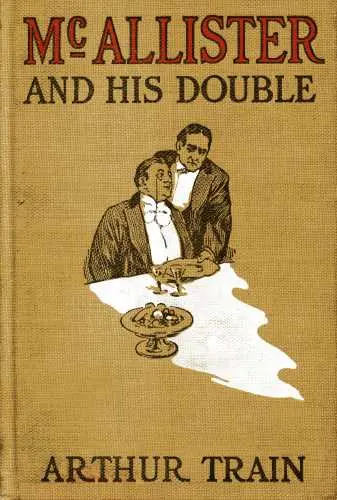
"McAllister and His Double" by Arthur Cheney Train is a novel written in the early 20th century. The story centers around the main character, McAllister, a clubman who faces an unexpected and tumultuous Christmas when he becomes mistaken for a criminal named Fatty Welch. The narrative explores themes of identity, social class, and fate in a comically embroiled twist of events. The opening of the book introduces McAllister as a somewhat disgruntled clubman who is stuck at his club during the Christmas season, longing for company and feeling irritated by the festive atmosphere surrounding him. His evening takes a dramatic turn when he finds himself in a runaway cab with a dangerous criminal and is soon arrested, believing he is merely a victim of circumstance. McAllister grapples with being mistakenly identified as a notorious thief, leading to a series of unfortunate yet humorous encounters with the police and his former valet, Wilkins. This sets the stage for an engaging exploration of mistaken identity and the chaos that ensues as McAllister seeks to clear his name, discovering both the absurdity of his situation and the inherent struggles of those living on the fringes of society.
Introduction adapted from the source catalogue; source summaries may be automatically generated.
Free to read · English · 63,595 words · No account needed
MAKE TIME FOR A GOOD BOOK
On by default. Untick to stop anonymous reading totals. Each page counts after 10 seconds in view. How this works.
Anonymous counting is on unless you have switched it off.
"Don't you want to go home?" he exclaimed.
The woman laughed a hollow, mirthless laugh.
"Annie an' me 'ave st'y'd 'ere all the evenin' just to be with Jim. 'E's awful sick. An' 'e'll 'ave to st'y 'ere all d'y to-morrer. Do we want to go 'ome!"
Her husband dashed his shirt-sleeve across his eyes.
"Don't Nell," he muttered. "I ain't sick. I can work. You go 'ome with
the kid."
McAllister thrust a handful of bank-notes toward her.
"Where does old Pondel live?" he inquired of the bobby.
"Out in Kew somewheres," replied the officer.
The woman was staring blankly at the money. Suddenly she dropped the little girl and began to sob. Jim broke into a fit of harsh coughing. The cabman climbed up the ladder. The temperature of the vault seemed insufferable to McAllister.
"I suppose you'll go home if Pondel says so?" he suggested.
"Just watch us!" growled Aggam.
"Take that child home, anyhow, and put it to bed," ordered the clubman. "I'll be back in an hour or so."
As he climbed up through the scuttle into the sweet, soft moonlight, and started to enter the hansom, the bobby held out his hand.
"Excuse me, sir. I 'ope you'll pardon the liberty, but, would you mind, I've got a brother in America--Smith's the naime--'e lives in a plaice called Manitoba. Do you 'appen to know 'im?"
"I'm sorry," replied our friend, grasping the other's hand. "I never ran
across him."
"Where to now?" asked the cabby.
"To Kew," replied McAllister.
They swung out of the square, leaving the bobby standing in the shadow
of Pondel's.
"I'll look out for 'em while you're gone," called the latter
encouragingly.
They crossed Bond Street, followed Grosvenor Street into Park Lane, and plunging round Hyde Park corner, past the statue to England's greatest soldier, they entered Kingsbridge. McAllister, all awake from his recent experience, saw things that he had never observed before--bedraggled flower-girls in gaudy hats, with heart-rending faces; drunken laborers staggering along upon the arms of sad-featured women; young girls, slender, painted, strolling with an affectation of light-heartedness along the glittering sidewalks. On they jogged, past narrow streets where, amid the flare of torches, the entire population of the neighborhood swarmed, bargained, swore, and quarrelled; where little children rolled under the costers' carts, fighting for scraps and decaying vegetables; and where their passage was obstructed by the throngs of miserable humanity for whom this was their only park, their only club. It being Saturday night, the butchers were selling off their remnants of meat, and their shrill cries could be heard for blocks. Several times the horse shied to avoid trampling upon some old hag who, clutching her wretched purchase to her breast, hurried homeward before a drunken lout should snatch it from her. McAllister had never imagined the like. It was with a sigh of relief that they left the Hammersmith Road behind and at last reached the residential districts. In about an hour they found themselves in Kew. A cool breeze from the country fanned his cheek. On either hand trim little villas, with smooth lawns, lined the road, and the moonlit air was fragrant with the smell of damp grass, violets, and heliotrope. Here and there could be heard the tinkle of a cottage piano, and the laughter of belated merry-makers on the verandas.
Your reading position is saved on this browser. Take it to another device with a library code. Reading pages adapt to text, rather than matching a printed edition.
Arthur Cheney Train
Arthur Cheney Train
Arthur Cheney Train
Arthur Cheney Train
BEHIND THE BOOK
This eBook is for the use of anyone anywhere in the United States and most other parts of the world at no cost and with almost no restrictions whatsoever. You may copy it, give it away or re-use it under the terms of the Project Gutenberg License included with this eBook or online at www.gutenberg.org. If you are not located in the United States, you will have to check the laws of the country where you are located before using this eBook. Read the source licence.
The original source file, including credits and licence, is retained by this library. Request an original-format copy at no charge. Please include the book title and Project Gutenberg identifier #34597.
KEEP YOUR CURIOSITY GOING
Coulson Kernahan

Maurice Baring
Frances Wright
Cécile Tormay

Frederic Jesup Stimson

W. H. P. (William Henry Pope) Jarvis