THE CLASSIC COLLECTION✦The hermit of Turkey HollowCLASSIC FREE BOOKS
The hermit of Turkey Hollow
Arthur Cheney Train
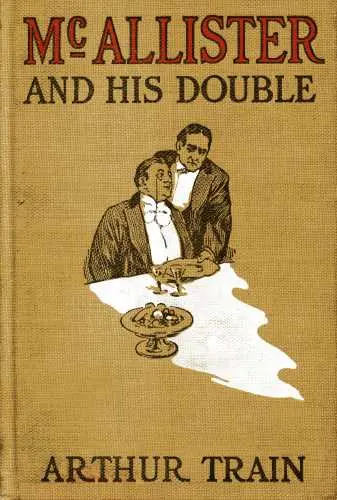
THE CLASSIC COLLECTION · 1905
"McAllister and His Double" by Arthur Cheney Train is a novel written in the early 20th century. The story centers around the main character, McAllister, a clubman who faces an unexpected and tumultuous Christmas when he becomes mistaken for a criminal named Fatty Welch. The narrative explores themes of identity, social class, and fate in a comically embroiled twist of events. The opening of the book introduces McAllister as a somewhat disgruntled clubman who is stuck at his club during the Christmas season, longing for company and feeling irritated by the festive atmosphere surrounding him. His evening takes a dramatic turn when he finds himself in a runaway cab with a dangerous criminal and is soon arrested, believing he is merely a victim of circumstance. McAllister grapples with being mistakenly identified as a notorious thief, leading to a series of unfortunate yet humorous encounters with the police and his former valet, Wilkins. This sets the stage for an engaging exploration of mistaken identity and the chaos that ensues as McAllister seeks to clear his name, discovering both the absurdity of his situation and the inherent struggles of those living on the fringes of society.
Introduction adapted from the source catalogue; source summaries may be automatically generated.
Free to read · English · 63,595 words · No account needed
MAKE TIME FOR A GOOD BOOK
On by default. Untick to stop anonymous reading totals. Each page counts after 10 seconds in view. How this works.
Anonymous counting is on unless you have switched it off.
At the sound of the wheels a woman came slowly out of the side door and watched their approach. She had the pale, sickly countenance of the wife of the inland Maine farmer, and her limp dress ill concealed the angularity of her form. Her eyes showed that she had passed a sleepless night. McAllister leaped out and lifted Abby down. The woman neither spoke to nor kissed the child, but clutched her tightly in her arms. Then she nodded to the new-comers.
"I'm obliged to ye, Deacon Brewer," she said. "Is this the man who sent the telegram? Won't ye come in and set down?"
"Oh, yes," cried Abby ecstatically. "Get out, Mr. Wilkins! I want to show you the black horse, and all the hens."
"I must be gettin' back," muttered the Deacon.
"Could you let us have a bite of breakfast?" inquired McAllister. "My train doesn't go until twelve o'clock." To return to Bangor at this particular time did not suit him.
"Such as it is," replied Miss Higgins.
"Could you arrange to call out for me in an hour or so?" asked
McAllister.
"I reckon I kin," said the Deacon with some reluctance. "I'll hev ter
charge ye fifty cents."
"Of course," said McAllister.
Wilkins took down the parcels, and the Deacon drove slowly away.
"I'll scrape somethin' together in a few minutes," said Miss Higgins. "How much was that telegram?"
"Oh, that's all right!" said the abashed clubman.
"No, it ain't. Money's money. Was it ez much ez a quarter?"
McAllister acknowledged the amount.
"I thought so," commented Miss Higgins. "It was wuth it." She had the money all ready and handed it to McAllister.
Etiquette seemed to demand its acceptance.
"Did you say your name was McAllister? Who's this man?"
"His name is Wilkins."
"Well," said Aunt Abby, "one of ye might split up that log, if ye don't mind, while I get the breakfast."
She turned into the house.
McAllister looked doubtfully at the wood-pile.
"Let Mr. Wilkins chop the wood!" shouted Abby; "I want to show you the
ba-an."
"Wilkins," said McAllister, "wood-chopping is an art sanctified in this
country by tradition."
"Very good, sir," answered Wilkins.
Abby grasped McAllister's hand and tugged him joyfully over the poverty-stricken farm. They visited the orchard, the pig-sty, the hen-house, admired the horse that had been a girl, and ended at the water's edge.
"We ketch salmon here in the spring," explained Abby; "and smelts."
Your reading position is saved on this browser. Take it to another device with a library code. Reading pages adapt to text, rather than matching a printed edition.
Arthur Cheney Train
Arthur Cheney Train
Arthur Cheney Train
Arthur Cheney Train
BEHIND THE BOOK
This eBook is for the use of anyone anywhere in the United States and most other parts of the world at no cost and with almost no restrictions whatsoever. You may copy it, give it away or re-use it under the terms of the Project Gutenberg License included with this eBook or online at www.gutenberg.org. If you are not located in the United States, you will have to check the laws of the country where you are located before using this eBook. Read the source licence.
The original source file, including credits and licence, is retained by this library. Request an original-format copy at no charge. Please include the book title and Project Gutenberg identifier #34597.
KEEP YOUR CURIOSITY GOING
Coulson Kernahan

Maurice Baring
Frances Wright
Cécile Tormay

Frederic Jesup Stimson

W. H. P. (William Henry Pope) Jarvis