THE CLASSIC COLLECTION✦Hardscrabble; or, the fall of Chicago: a tale of Indian warfareCLASSIC FREE BOOKS
Hardscrabble; or, the fall of Chicago: a tale of Indian warfare
Major (John) Richardson
THE CLASSIC COLLECTION · 1851
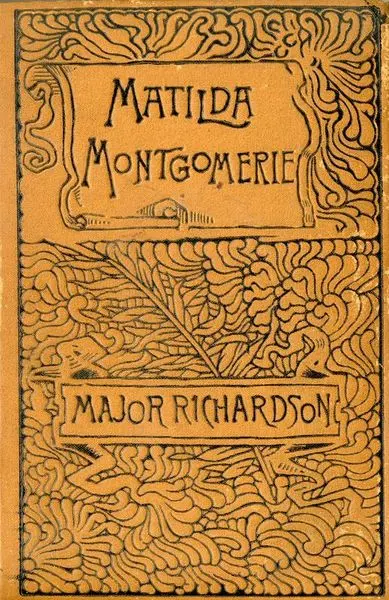
"Matilda Montgomerie; Or, The Prophecy Fulfilled" by Major Richardson is a historical novel written in the late 19th century. This book serves as a sequel to the earlier work "Wacousta" and unfolds during the tumultuous period of the War of 1812 in America. The narrative centers around significant characters including Matilda and the revered Native American leader Tecumseh, exploring themes of conflict, loyalty, and cultural exchanges amidst war. At the start of the narrative, the author describes the picturesque setting of Amherstburg at the onset of the War of 1812, highlighting its serene beauty juxtaposed with the impending chaos of conflict. The atmosphere shifts when various factions—British officers, Native American warriors, and American forces—begin to gather, signaling a blend of excitement and tension as they anticipate military action. The arrival of Tecumseh, along with a contingent of Indigenous warriors, sets the stage for strategic alliances and conflicts that will unfold, while multiple layers of character dynamics begin to emerge in the backdrop of war preparations. This opening portion establishes the backdrop for a story steeped in historical fidelity and emotional complexity, suggesting a rich exploration of the characters' interwoven fates.
Introduction adapted from the source catalogue; source summaries may be automatically generated.
Free to read · English · 138,068 words · No account needed
MAKE TIME FOR A GOOD BOOK
On by default. Untick to stop anonymous reading totals. Each page counts after 10 seconds in view. How this works.
Anonymous counting is on unless you have switched it off.
"Let him alone for that," returned he whom our readers have doubtless recognised for Henry Grantham. "I will match his punning against your cunning any day."
"The truth is, he is fishing to discover our motive for being here, and to find out if we are in any way connected with the disappearance of his rifles."
During this conversation apart, the Yankee had carelessly approached his canoe, and was affecting to make some alteration in the disposition of the sail. The officers, the younger especially, keeping a sharp look-out upon his movements, followed at some little distance, until they, at length, stood on the extreme verge of the sands. Their near approach seemed to render Desborough impatient.
"I expect, officers," he said, with a hastiness that, at any other moment, would have called down immediate reproof, if not chastisement, "you will only be losin' time here for nothin'; about a mile beyond Hartley's there'll be plenty of pattridges at this hour, and I am jist goin to start myself for a little shootin' in the Sandusky river."
"Than I presume," said Grantham, with a smile, "you are well provided with silver bullets, Desborough; for, in the hurry of departure, you seem likely to forget the only medium through which leaden ones can be made available--not a rifle or a shot-gun do I see."
The man fixed his eyes for a moment, with a penetrating expression, on the youth, as if he would have sought a meaning deeper than the words implied. His reading seemed to satisfy him that all was right.
"What," he observed, with a leer, half cunning, half insolent, "if I
have hid my rifle near the Sandusky swamp, the last time I hunted
there?"
"In that case," observed the laughing Middlemore, to whom the opportunity was irresistible, "you are going out on a wild goose chase indeed. Your prospects for a good hunt, as you call it, cannot be said to be sure as a gun; for in regard to the latter, you may depend some one has discovered and rifled it before this."
"You seem to have laid in a store of provisions for this trip,
Desborough," remarked Henry Grantham; "how long do you purpose being
absent?"
"I guess three or four days," was the sullen reply.
"Three or four days! why your bag contains"--and the officer partly raised a corner of the sail, "provisions for a week, or, at least, for two for half that period."
The manner in which the two was emphasised did not escape the attention of the settler. He was visibly disconcerted, nor was he at all reassured when the younger officer proceeded:
Your reading position is saved on this browser. Take it to another device with a library code. Reading pages adapt to text, rather than matching a printed edition.
Major (John) Richardson
Major (John) Richardson
Major (John) Richardson
Major (John) Richardson
BEHIND THE BOOK
This eBook is for the use of anyone anywhere in the United States and most other parts of the world at no cost and with almost no restrictions whatsoever. You may copy it, give it away or re-use it under the terms of the Project Gutenberg License included with this eBook or online at www.gutenberg.org. If you are not located in the United States, you will have to check the laws of the country where you are located before using this eBook. Read the source licence.
The original source file, including credits and licence, is retained by this library. Request an original-format copy at no charge. Please include the book title and Project Gutenberg identifier #39758.
KEEP YOUR CURIOSITY GOING
Cécile Tormay

Moritz Busch
Coulson Kernahan
John L. Ransom

Maurice Baring
Frances Wright