THE CLASSIC COLLECTION✦Hardscrabble; or, the fall of Chicago: a tale of Indian warfareCLASSIC FREE BOOKS
Hardscrabble; or, the fall of Chicago: a tale of Indian warfare
Major (John) Richardson
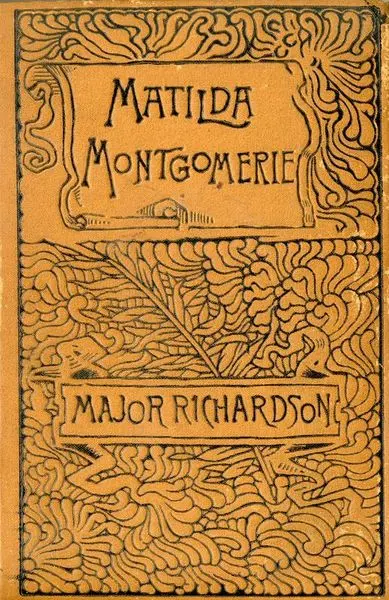
THE CLASSIC COLLECTION · 1851
"Matilda Montgomerie; Or, The Prophecy Fulfilled" by Major Richardson is a historical novel written in the late 19th century. This book serves as a sequel to the earlier work "Wacousta" and unfolds during the tumultuous period of the War of 1812 in America. The narrative centers around significant characters including Matilda and the revered Native American leader Tecumseh, exploring themes of conflict, loyalty, and cultural exchanges amidst war. At the start of the narrative, the author describes the picturesque setting of Amherstburg at the onset of the War of 1812, highlighting its serene beauty juxtaposed with the impending chaos of conflict. The atmosphere shifts when various factions—British officers, Native American warriors, and American forces—begin to gather, signaling a blend of excitement and tension as they anticipate military action. The arrival of Tecumseh, along with a contingent of Indigenous warriors, sets the stage for strategic alliances and conflicts that will unfold, while multiple layers of character dynamics begin to emerge in the backdrop of war preparations. This opening portion establishes the backdrop for a story steeped in historical fidelity and emotional complexity, suggesting a rich exploration of the characters' interwoven fates.
Introduction adapted from the source catalogue; source summaries may be automatically generated.
Free to read · English · 138,068 words · No account needed
MAKE TIME FOR A GOOD BOOK
On by default. Untick to stop anonymous reading totals. Each page counts after 10 seconds in view. How this works.
Anonymous counting is on unless you have switched it off.
"Nay, nay, De Courcy," remarked Captain Granville, "you must not judge of the American officers of the line by that standard; as, for example, Major Montgomerie and the person just alluded to. Last winter," he continued, "there was a continued interchange of hospitalities between the two posts, and, had you been here to participate in them, you would have admitted that among the officers of Detroit, there were many very superior men indeed."
"Pleasant ball, that last they gave," said Lieutenant Villiers, with a malicious laugh, and fixing his eyes on the Captain of Grenadiers.
"The devil take the ball," impatiently retorted Cranstoun, who did not seem to relish the allusion; "don't talk about it now, man."
"What was it, Villiers? do pray tell us. Something good, I am sure from Cranstoun's manner," eagerly asked the aid-de-camp, his curiosity excited by the general titter that followed the remark.
"Shall I tell him, Cranstoun?" asked Villiers, in the same bantering
tone.
"Don't bother me," petulantly returned the other, as, thrusting his long legs under the table and turning his back upon the questioner, he joined, or affected to join, in a conversation that was passing, in a low tone, at his end of the room.
"I must premise," began Villiers, addressing himself to the attentively listening De Courcy, "that such is the mania for dancing in this country scarcely any obstacle is sufficient to deter a Canadian lady, particularly a French Canadian, from indulging in her favorite amusement. It is, therefore, by no means unusual to see women drawn in sleighs over drifting masses of ice, with chasms occasionally occurring of from fifteen to twenty feet--and that at a moment when, driven by wind and current, the huge fragments are impelled over each other with a roar that can only be likened to continuous thunder, forming, in various directions, hillocks from which the sun's rays are reflected in a thousand fantastic shades and shapes. On these occasions the sleighs, or carioles, are drawn, not as otherwise customary, by the fast-trotting little horses of the country, but by expert natives whose mode of transportation is as follows: A strong rope is fastened to the extremity of the shafts, and into this the French Canadian, buried to the chin in his blanket coat, and provided with a long pole terminating in an iron hook, harnesses himself, by first drawing the loop of the cord over the back of his neck, and then passing it under his arms. In this manner does he traverse the floating ice, stepping from mass to mass with a rapidity that affords no time for the detached fragment to sink under the weight with which it is temporarily laden. As the iron-shod runners obey the slightest impulsion, the draught is light; and the only fatigue encountered is in the act of bringing the detached bodies together. Wherever an opening intervenes, the Canadian throws forward his pole, and, securing the pointed hook in some projection of the floating ice, drags it towards that on the extreme verge of which he stands. In like manner he passes on to the next, when the same operation remains to be performed, until the passage is fully effected. Sometimes it happens that a chasm of more than ordinary extent occurs, in which case the pole is unavailable, and then his only alternative is to wait patiently until some distant mass, moving in a direction to fill up the interstice, arrives within his reach. In the meanwhile the ice on which he stands sinks slowly and gradually, until sometimes it quite disappears beneath the surface of the water."
Your reading position is saved on this browser. Take it to another device with a library code. Reading pages adapt to text, rather than matching a printed edition.
Major (John) Richardson
Major (John) Richardson
Major (John) Richardson
Major (John) Richardson
BEHIND THE BOOK
This eBook is for the use of anyone anywhere in the United States and most other parts of the world at no cost and with almost no restrictions whatsoever. You may copy it, give it away or re-use it under the terms of the Project Gutenberg License included with this eBook or online at www.gutenberg.org. If you are not located in the United States, you will have to check the laws of the country where you are located before using this eBook. Read the source licence.
The original source file, including credits and licence, is retained by this library. Request an original-format copy at no charge. Please include the book title and Project Gutenberg identifier #39758.
KEEP YOUR CURIOSITY GOING
Cécile Tormay

Moritz Busch
Coulson Kernahan
John L. Ransom

Maurice Baring
Frances Wright