THE CLASSIC COLLECTION✦Hardscrabble; or, the fall of Chicago: a tale of Indian warfareCLASSIC FREE BOOKS
Hardscrabble; or, the fall of Chicago: a tale of Indian warfare
Major (John) Richardson
THE CLASSIC COLLECTION · 1851
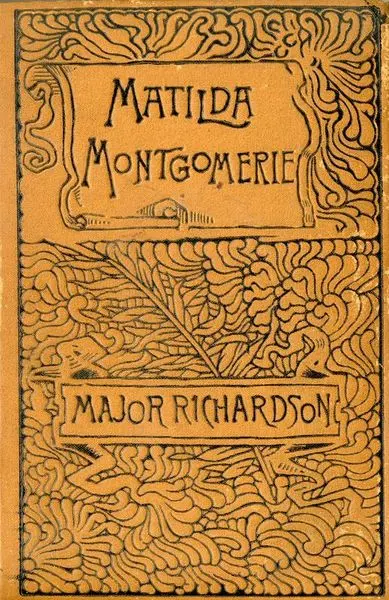
"Matilda Montgomerie; Or, The Prophecy Fulfilled" by Major Richardson is a historical novel written in the late 19th century. This book serves as a sequel to the earlier work "Wacousta" and unfolds during the tumultuous period of the War of 1812 in America. The narrative centers around significant characters including Matilda and the revered Native American leader Tecumseh, exploring themes of conflict, loyalty, and cultural exchanges amidst war. At the start of the narrative, the author describes the picturesque setting of Amherstburg at the onset of the War of 1812, highlighting its serene beauty juxtaposed with the impending chaos of conflict. The atmosphere shifts when various factions—British officers, Native American warriors, and American forces—begin to gather, signaling a blend of excitement and tension as they anticipate military action. The arrival of Tecumseh, along with a contingent of Indigenous warriors, sets the stage for strategic alliances and conflicts that will unfold, while multiple layers of character dynamics begin to emerge in the backdrop of war preparations. This opening portion establishes the backdrop for a story steeped in historical fidelity and emotional complexity, suggesting a rich exploration of the characters' interwoven fates.
Introduction adapted from the source catalogue; source summaries may be automatically generated.
Free to read · English · 138,068 words · No account needed
MAKE TIME FOR A GOOD BOOK
On by default. Untick to stop anonymous reading totals. Each page counts after 10 seconds in view. How this works.
Anonymous counting is on unless you have switched it off.
"Matilda," he said, after a few moments of silence, "by all the love you once bore me, I conjure you to answer me one question while there is time."
"Fool," returned the American, "I never loved you. A soul like mine feels passion but once. Hitherto I have played a part, but the drama approaches to a close, and disguise of plot is no longer necessary. Gerald Grantham, you have been my dupe. You came a convenient puppet to my hands, and such I used you until the snapped wire proclaimed you no longer serviceable--no further."
Shame, anguish, mortification, all the most humiliating sensations natural to man--for a moment assailed the breast of the unfortunate and guilty Grantham, rendering him insensible even to the greater evil which awaited him. In the bitterness of his agony, he struck his clenched hand against his forehead, uttering curses upon himself for his weakness, in one breath, and calling upon his God, in the next, to pardon him for his crime.
"This is good," said Matilda. "To see you writhe thus, under the wound inflicted upon your vanity, is some small atonement for the base violation of your oath; yet what question would you ask, the solution of which can so much import one about to figure on the scaffold for a crime he has not even had the courage to commit?"
The taunting manner in which the concluding part of the sentence was conveyed, had the effect of restoring Gerald in some degree to himself, and he said with considerable firmness:
"What I ask is of yourself--namely, the relationship, if any, you bear to those who lie within the mound, on which I beheld you kneeling on the night of your first attempt on Colonel Forrester's life?"
"The very recollection of that ill-timed intrusion would prevent me from satisfying your curiosity, did not something whisper to me that, in so doing, I shall add another pang to those you already experience," returned the American, with bitter sarcasm.
"You are right," said Gerald hurriedly. "My miseries need but the assurance of your connexion with those mouldering bones to be indeed complete."
"Then," said Matilda eagerly, and half raising her head, "your cup of misery may yet admit of increase. My mother and my father's mother both sleep within that grave."
"How knew you this?" demanded Gerald quickly. "Instinct could not have guided you to the spot, and by your own admission you were taken from the place of your home while yet a mere child."
"Not instinct, but my father Desborough, pointed out the spot, as he had long previously acquainted me with the history of my birth."
"One question more--your grandmother's name?"
Your reading position is saved on this browser. Take it to another device with a library code. Reading pages adapt to text, rather than matching a printed edition.
Major (John) Richardson
Major (John) Richardson
Major (John) Richardson
Major (John) Richardson
BEHIND THE BOOK
This eBook is for the use of anyone anywhere in the United States and most other parts of the world at no cost and with almost no restrictions whatsoever. You may copy it, give it away or re-use it under the terms of the Project Gutenberg License included with this eBook or online at www.gutenberg.org. If you are not located in the United States, you will have to check the laws of the country where you are located before using this eBook. Read the source licence.
The original source file, including credits and licence, is retained by this library. Request an original-format copy at no charge. Please include the book title and Project Gutenberg identifier #39758.
KEEP YOUR CURIOSITY GOING
Cécile Tormay

Moritz Busch
Coulson Kernahan
John L. Ransom

Maurice Baring
Frances Wright