THE CLASSIC COLLECTION✦Hardscrabble; or, the fall of Chicago: a tale of Indian warfareCLASSIC FREE BOOKS
Hardscrabble; or, the fall of Chicago: a tale of Indian warfare
Major (John) Richardson
THE CLASSIC COLLECTION · 1851
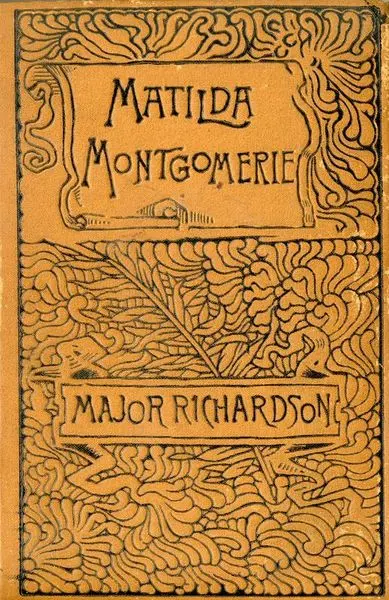
"Matilda Montgomerie; Or, The Prophecy Fulfilled" by Major Richardson is a historical novel written in the late 19th century. This book serves as a sequel to the earlier work "Wacousta" and unfolds during the tumultuous period of the War of 1812 in America. The narrative centers around significant characters including Matilda and the revered Native American leader Tecumseh, exploring themes of conflict, loyalty, and cultural exchanges amidst war. At the start of the narrative, the author describes the picturesque setting of Amherstburg at the onset of the War of 1812, highlighting its serene beauty juxtaposed with the impending chaos of conflict. The atmosphere shifts when various factions—British officers, Native American warriors, and American forces—begin to gather, signaling a blend of excitement and tension as they anticipate military action. The arrival of Tecumseh, along with a contingent of Indigenous warriors, sets the stage for strategic alliances and conflicts that will unfold, while multiple layers of character dynamics begin to emerge in the backdrop of war preparations. This opening portion establishes the backdrop for a story steeped in historical fidelity and emotional complexity, suggesting a rich exploration of the characters' interwoven fates.
Introduction adapted from the source catalogue; source summaries may be automatically generated.
Free to read · English · 138,068 words · No account needed
MAKE TIME FOR A GOOD BOOK
On by default. Untick to stop anonymous reading totals. Each page counts after 10 seconds in view. How this works.
Anonymous counting is on unless you have switched it off.
Every eye was turned with an expression of deep astonishment on the speaker, and thence upon the form of the hitherto scarcely noticed militia officer; who, with his head sunk sullenly upon his chest, and an eye now and then raised stealthily to surrounding objects, made no attempt to refute, or even to express surprise at, the singular accusation of his captor.
"This is strong language to apply to a captive enemy, and that enemy apparently an officer," gravely remarked the general; "yet I cannot believe Mr. Grantham to be wholly without grounds for his assertion."
Before Grantham could reply, a voice in the crowd exclaimed, as if the utterer had been thrown off his guard, "What--Phil!"
On the mention of this name, the younger prisoner looked suddenly up from the earth on which his gaze had been riveted, and cast a rapid glance around him.
"Nay, nay, my young friend, do not, as I see you are, feel hurt at my observation," resumed the general, extending his hand to Gerald Grantham; "I confess I did at one moment imagine that you had been rash in your assertion, but from what has this instant occurred, it is evident your prisoner is known to others as well as to yourself. No doubt we shall have everything explained in due season. By the bye, of what nature is your wound? slight, I should say, from the indifference with which you treat it."
"Slight, General--far slighter," he continued, coloring, "than the wound that was sought to be affixed to my fair name in my absence."
All looked at the speaker, and at each other with surprise, for, as yet, there could have been no communication to him of the doubts which had been entertained.
"Who is it of you all, gentlemen," pursued the young man, with the same composedness of voice and manner, and turning particularly to the officers of the forty-first regiment, who were grouped around their chief, "Who is it, I ask, on whom has devolved the enviable duty of reporting me as capable of violating my faith as a subject, and my honor as an officer?"
There was no reply, although the same looks of surprise were interchanged; but, as he continued to glance his eye around the circle, it encountered, either by accident or design, that of Captain Molineux, on whose rather confused countenance the gaze of Henry Grantham was at that moment bent with an expression of much meaning.
"No one answers," continued the youth; "then the sting has been harmless. But I crave your pardon, General--I am claiming an exemption from censure which may not be conceded by all. Commodore, how shall I dispose of my prisoners?"
Your reading position is saved on this browser. Take it to another device with a library code. Reading pages adapt to text, rather than matching a printed edition.
Major (John) Richardson
Major (John) Richardson
Major (John) Richardson
Major (John) Richardson
BEHIND THE BOOK
This eBook is for the use of anyone anywhere in the United States and most other parts of the world at no cost and with almost no restrictions whatsoever. You may copy it, give it away or re-use it under the terms of the Project Gutenberg License included with this eBook or online at www.gutenberg.org. If you are not located in the United States, you will have to check the laws of the country where you are located before using this eBook. Read the source licence.
The original source file, including credits and licence, is retained by this library. Request an original-format copy at no charge. Please include the book title and Project Gutenberg identifier #39758.
KEEP YOUR CURIOSITY GOING
Cécile Tormay

Moritz Busch
Coulson Kernahan
John L. Ransom

Maurice Baring
Frances Wright