THE CLASSIC COLLECTION✦Hardscrabble; or, the fall of Chicago: a tale of Indian warfareCLASSIC FREE BOOKS
Hardscrabble; or, the fall of Chicago: a tale of Indian warfare
Major (John) Richardson
THE CLASSIC COLLECTION · 1851
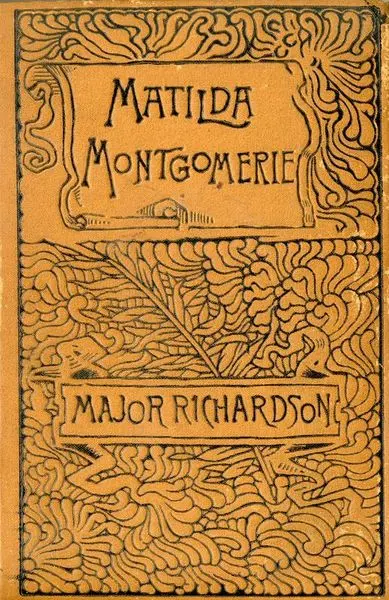
"Matilda Montgomerie; Or, The Prophecy Fulfilled" by Major Richardson is a historical novel written in the late 19th century. This book serves as a sequel to the earlier work "Wacousta" and unfolds during the tumultuous period of the War of 1812 in America. The narrative centers around significant characters including Matilda and the revered Native American leader Tecumseh, exploring themes of conflict, loyalty, and cultural exchanges amidst war. At the start of the narrative, the author describes the picturesque setting of Amherstburg at the onset of the War of 1812, highlighting its serene beauty juxtaposed with the impending chaos of conflict. The atmosphere shifts when various factions—British officers, Native American warriors, and American forces—begin to gather, signaling a blend of excitement and tension as they anticipate military action. The arrival of Tecumseh, along with a contingent of Indigenous warriors, sets the stage for strategic alliances and conflicts that will unfold, while multiple layers of character dynamics begin to emerge in the backdrop of war preparations. This opening portion establishes the backdrop for a story steeped in historical fidelity and emotional complexity, suggesting a rich exploration of the characters' interwoven fates.
Introduction adapted from the source catalogue; source summaries may be automatically generated.
Free to read · English · 138,068 words · No account needed
MAKE TIME FOR A GOOD BOOK
On by default. Untick to stop anonymous reading totals. Each page counts after 10 seconds in view. How this works.
Anonymous counting is on unless you have switched it off.
Several of these pic-nics had taken place among the party at Detroit, confined, with one or two exceptions, to the officers of the garrison, and the family of Colonel D'Egville, with their American inmates; and it was proposed by the former, that a final one should be given a few days prior to the embarkation in Gerald Grantham's new command, which lay waiting in the river for the purpose--the Major remaining as hitherto at home, under the guardianship of the benevolent Mrs. D'Egville, whose habits of retirement disinclined her to out-door amusement.
Hitherto their excursions had been principally directed to some of the smaller islands, which abound in the river nearer Amherstburgh, and where game being found in abundance, the skill of the officers had more immediate opportunity for display; but on this excursion, at the casual suggestion of Miss Montgomerie, Hog Island was selected as the scene of their day's amusement. Thither, therefore, the boat which contained the party now proceeded, the ladies costumed in a manner to thread the mazes of the wood, and the gentlemen in equally appropriate gear, as sportsmen, their guns and fishing rods being by no means omitted in the catalogue of orders entrusted to their servants. In the stern of the boat--the trustworthy coxswain on this occasion--sat old Sambo, whose skill in the conduct of a helm was acknowledged to be little inferior to his dexterity in the use of a paddle, and whose authoritative voice, as he issued his commands in broken English to the boatmen, added, in no small degree, to the exhilaration of the party.
To reach Hog Island, it was necessary to pass by the tannery and cottage already described, which, latter, it will be remembered, had been the scene of a singular adventure to our hero and his servant on the night of their reconnoitering the coast, in obedience to the order of the Commodore. By the extraordinary and almost romantic incidents of that night, the imagination of Gerald had been deeply impressed, and on retiring to his rude couch within the battery he had fully made up his mind to explore further into the mysterious affair, with as little delay as possible after the expected fall of the American fortress. In the hurry, confusion, and excitement, of that event however, his original intention was forgotten; or, rather so far delayed, that it was not until the third or fourth day of his establishment in the town, that it occurred to him to institute inquiry. He had accordingly repaired thither, but finding the house carefully shut up, and totally uninhabited, had contented himself with questioning the tanner and his family, in regard to its late inmates, reserving to a future opportunity the attempt to make himself personally acquainted with all that it contained. From this man he learnt, that, the house had once been the property of an aged Canadian, at whose death (supposed to have been occasioned by violence,) it had passed into the hands of an American, who led a roving and adventurous life, being frequently away for months together, and then returning with a canoe, but never continuing for more than a night or two. That latterly it had been wholly deserted by its owner, in consequence of which it had been taken possession of, and used as quarters by the officers of the American guard, stationed at this part of the town, for the protection of the boats, and as a check upon the incursions of the Indians. In all this statement, there was every appearance of truth, but in no part of it did Gerald find wherewith to elucidate what he himself had witnessed. He described the costume, and questioned of the mysterious figure, but the only reply he obtained from the independent tanner, when he admitted to him that he had been so near a visitor on that occasion, and had seen what he described, was an expressed regret that he had not been "wide awake when any Brittainer ventured to set foot upon his grounds, otherwise, tarnation seize him with all due respect, if he wouldn't a stuck an ounce o' lead in his liver as quickly as he would tan a hide," a patriotic sentiment in which it may be supposed our hero in no way coincided. With the tanner's assurance, however, that no living thing was there at this moment, Gerald was fain to content himself for the present, fully resolving to return at another time with Sambo, and effect a forcible entrance into a place, with which were connected such striking recollections. He had, however, been too much interested and occupied elsewhere, to find time to devote to the purpose.
Your reading position is saved on this browser. Take it to another device with a library code. Reading pages adapt to text, rather than matching a printed edition.
Major (John) Richardson
Major (John) Richardson
Major (John) Richardson
Major (John) Richardson
BEHIND THE BOOK
This eBook is for the use of anyone anywhere in the United States and most other parts of the world at no cost and with almost no restrictions whatsoever. You may copy it, give it away or re-use it under the terms of the Project Gutenberg License included with this eBook or online at www.gutenberg.org. If you are not located in the United States, you will have to check the laws of the country where you are located before using this eBook. Read the source licence.
The original source file, including credits and licence, is retained by this library. Request an original-format copy at no charge. Please include the book title and Project Gutenberg identifier #39758.
KEEP YOUR CURIOSITY GOING
Cécile Tormay

Moritz Busch
Coulson Kernahan
John L. Ransom

Maurice Baring
Frances Wright