THE CLASSIC COLLECTION✦Hardscrabble; or, the fall of Chicago: a tale of Indian warfareCLASSIC FREE BOOKS
Hardscrabble; or, the fall of Chicago: a tale of Indian warfare
Major (John) Richardson
THE CLASSIC COLLECTION · 1851
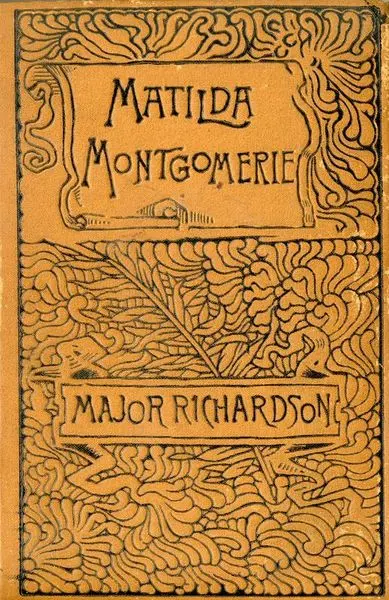
"Matilda Montgomerie; Or, The Prophecy Fulfilled" by Major Richardson is a historical novel written in the late 19th century. This book serves as a sequel to the earlier work "Wacousta" and unfolds during the tumultuous period of the War of 1812 in America. The narrative centers around significant characters including Matilda and the revered Native American leader Tecumseh, exploring themes of conflict, loyalty, and cultural exchanges amidst war. At the start of the narrative, the author describes the picturesque setting of Amherstburg at the onset of the War of 1812, highlighting its serene beauty juxtaposed with the impending chaos of conflict. The atmosphere shifts when various factions—British officers, Native American warriors, and American forces—begin to gather, signaling a blend of excitement and tension as they anticipate military action. The arrival of Tecumseh, along with a contingent of Indigenous warriors, sets the stage for strategic alliances and conflicts that will unfold, while multiple layers of character dynamics begin to emerge in the backdrop of war preparations. This opening portion establishes the backdrop for a story steeped in historical fidelity and emotional complexity, suggesting a rich exploration of the characters' interwoven fates.
Introduction adapted from the source catalogue; source summaries may be automatically generated.
Free to read · English · 138,068 words · No account needed
MAKE TIME FOR A GOOD BOOK
On by default. Untick to stop anonymous reading totals. Each page counts after 10 seconds in view. How this works.
Anonymous counting is on unless you have switched it off.
"Fate him merit, Massa Henry!" muttered the aged and privileged negro, with something like anger in his tones, as he returned the knife to the Indian, "he dam 'serter from a king! No, no he nebber deserb a die like dis. He ought to hab a rope roun him neck and die him lying tief like a dog."
"I guess, however, our friend Jeremiah has got clean slick off," said Villiers, imitating the tone and language of that individual, "and he, I take it, is by far the more formidable of the two. I expect that, before he dies, he will give one of us a long shot yet, in revenge for the fall of young hopeful."
"Traitorous and revengeful scoundrel!" aspirated Henry Grantham, as the recollection of the manner of his father's death came over his mind. "It is, at least, some consolation to think his villainy has in part met its reward. I confess, I exult in the death of young Desborough, less even because a dangerous enemy has been removed, than because in his fall the heart of the father will be racked in its only assailable point. I trust I am not naturally cruel, yet do I hope the image of his slain partner in infamy may ever after revisit his memory, and remind him of his crime."
An exclamation of the Indians now drew the attention of the officers to a boat that came in sight, in the direction in which that of Gerald Grantham had long since disappeared, and as she drew nearer, a white flag floating in the stern, became gradually distinguishable. Expressions of surprise passed among the officers, by whom various motives were assigned as the cause of the return of the flag of truce, for that it was their own boat no one doubted, especially as, on approaching sufficiently near, the blue uniform of the officer who steered the boat was visible to the naked eye. On a yet nearer approach, however, it was perceived that the individual in question wore not the uniform of the British navy, but that of an officer of the American line, the same precisely, indeed, as that of Major Montgomerie. It was further remarked that there was no lady in the boat, and that, independently of the crew, there was besides the officer already named, merely one individual, dressed in the non-commissioned uniform, who seemed to serve as his orderly. Full evidence being now had that this was a flag sent from the American fort, which had, in all probability, missed Gerald by descending one channel of the river formed by Turkey Island, while the latter had ascended by the other, the aid-de-camp, De Courcy, hastened to acquaint General Brock with the circumstance, and to receive his orders. By the time the American reached the landing-place, the youth had returned, accompanying a superior officer of the staff. Both descended the flight of steps leading to the river, when, having saluted the officer, after a moment or two of conversation, they proceeded to blindfold him. This precaution having been taken, the American was then handed over the gun-wale of the boat, and assisted up the flight of steps by the two British officers on whose arms he leaned. As they passed through the crowd, on their way to the fort, the ears of the stranger were assailed by loud yells from the bands of Indians, who, with looks of intense curiosity and interest, gazed on the passing, and to them in some degree inexplicable, scene. Startling as was the fierce cry, the officer pursued his course without moving a muscle of his fine and manly form, beyond what was necessary to the action in which he was engaged. It was a position that demanded all his collectedness and courage, and he seemed as though he had previously made up his mind not to be deficient in either. Perhaps it was well that he had been temporarily deprived of sight, for could he have beheld the numerous tomahawks that were raised towards him in pantomimic representation of what they would have done had they been permitted, the view would in no way have assisted his self-possession. The entrance to the fort once gained by the little party, the clamor began to subside, and the Indians, by whom they had been followed, returned to the bank of the river to satisfy their curiosity with a view of those who had been left in the boat, to which, as a security against all possible outrage, a sergeant's command had meanwhile been despatched.
Your reading position is saved on this browser. Take it to another device with a library code. Reading pages adapt to text, rather than matching a printed edition.
Major (John) Richardson
Major (John) Richardson
Major (John) Richardson
Major (John) Richardson
BEHIND THE BOOK
This eBook is for the use of anyone anywhere in the United States and most other parts of the world at no cost and with almost no restrictions whatsoever. You may copy it, give it away or re-use it under the terms of the Project Gutenberg License included with this eBook or online at www.gutenberg.org. If you are not located in the United States, you will have to check the laws of the country where you are located before using this eBook. Read the source licence.
The original source file, including credits and licence, is retained by this library. Request an original-format copy at no charge. Please include the book title and Project Gutenberg identifier #39758.
KEEP YOUR CURIOSITY GOING
Cécile Tormay

Moritz Busch
Coulson Kernahan
John L. Ransom

Maurice Baring
Frances Wright