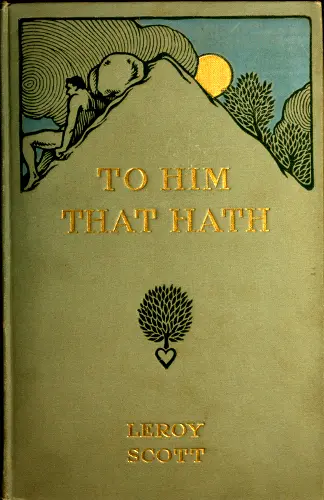
To Him That Hath
Leroy Scott
THE CLASSIC COLLECTION · 1917
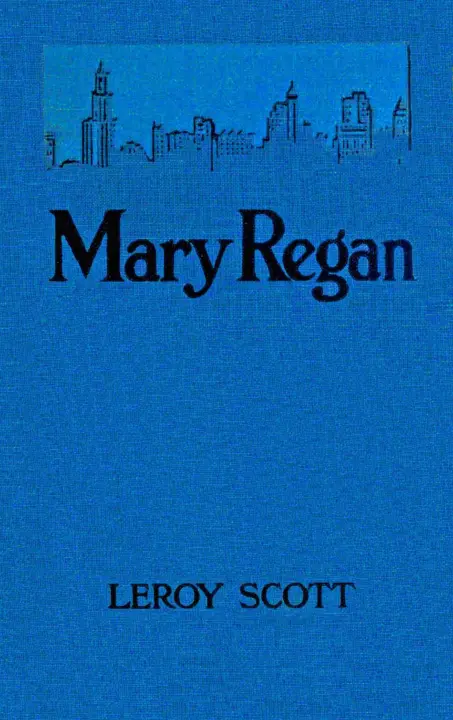
"Mary Regan" by Leroy Scott is a novel written in the early 20th century. The story revolves around the complex relationship between the protagonist, Robert Clifford, and Mary Regan, who has just returned to New York after a self-imposed hiatus. The narrative is set against the backdrop of the glittering yet treacherous world of Broadway and its social intricacies, hinting at themes of love, identity, and manipulation. At the start of the story, Robert Clifford is waiting at the Grand Alcazar restaurant, reflecting on his unresolved feelings for Mary Regan and the six-month silence that followed their emotionally charged farewell. The opening chapter vividly depicts the bustling atmosphere of the restaurant and introduces a variety of characters that represent the dual nature of society. As Clifford contemplates his relationship with Mary, he is suddenly faced with her unexpected reappearance, accompanied by lawyer Peter Loveman. This moment ignites a cascade of emotions and questions for Clifford about Mary’s true intentions and the potential dangers she might be entangled in within her new circle. The scene sets the stage for a gripping exploration of their past, Mary's past associations with crime, and the complexities of modern relationships in a world rife with deception and intrigue.
Introduction adapted from the source catalogue; source summaries may be automatically generated.
Free to read · English · 90,269 words · No account needed
MAKE TIME FOR A GOOD BOOK
On by default. Untick to stop anonymous reading totals. Each page counts after 10 seconds in view. How this works.
Anonymous counting is on unless you have switched it off.
The drowsy elevator boy carried Clifford to the eleventh floor, and Clifford rang Loveman’s bell. After a moment the door was opened by Loveman’s Japanese butler, to whom Clifford, after stepping in, gave his card. The little Oriental, showing no slightest surprise at a call at such an hour, disappeared noiselessly through a door; and reappeared after a brief delay and held the door open as a sign that Clifford was to enter.
Clifford stepped through the doorway and found himself in the large richly furnished library of Peter Loveman. Loveman, in a rope-girdled dressing-gown and with his tonsured head looking very much a jolly little monk, crossed the room with smiling hospitality. In a deep, tapestried chair, wearing a dinner jacket, sat the square figure of Bradley.
“This is a surprise, Clifford!” cried Loveman, taking his hand. “And a pleasure, too,--also a relief: dropping in on a pair of grouches, just as they were getting ready to murder each other to drive dull care away. You there, you other grouch,”--to Bradley,--“say good-evening to our relief expedition.”
Bradley, without rising, nodded curtly. Clifford gave back a similar
greeting.
“Off with your overcoat, Clifford,” the little man said briskly, “and make yourself comfortable.”
“I’ll keep it on, Loveman. I can only stay a few minutes.”
“Well, anyhow, sit down,” and Loveman pushed him into a chair and gestured toward a little table on which stood bottles and glasses and siphons. “All the ingredients here of the Fountain of Perpetual Youth: what’ll you have--high-ball, cocktail, liqueur--or shall I have Oni bring you a split of champagne?”
“Thanks, I’m not drinking to-night.”
“Smoke, then?” offering cigars and cigarettes.
“No, thank you.”
“Say, you’re making a host look dam’ inhospitable,” humorously complained the little man. “How about a little whist? I’ll run the dummy. Bradley there loves it: he’s acting vice-chairman of the Daughters of Brooklyn Memorial and Bridge Associ--”
“Cut it out!” growled Bradley. “Ask him what he wants.”
“Pardon him, Clifford: Bradley’s a gentleman of no social parts. But since he has mentioned the point--is there anything special you came for?”
“I came to talk,” said Clifford.
“Talk--good! Talking’s my trade!” Loveman drew up a chair, so that the three of them formed a square, the table of bottles filling the fourth side. “Let ’er go--guest has the opening speech.”
“I suppose, Clifford, that this is where you’d like to have me make a quick exit,” said Bradley--and he crossed his legs, folded his arms, bit upon his invariable big cigar, and gave Clifford a challenging look.
Your reading position is saved on this browser. Take it to another device with a library code. Reading pages adapt to text, rather than matching a printed edition.
BEHIND THE BOOK
This eBook is for the use of anyone anywhere in the United States and most other parts of the world at no cost and with almost no restrictions whatsoever. You may copy it, give it away or re-use it under the terms of the Project Gutenberg License included with this eBook or online at www.gutenberg.org. If you are not located in the United States, you will have to check the laws of the country where you are located before using this eBook. Read the source licence.
The original source file, including credits and licence, is retained by this library. Request an original-format copy at no charge. Please include the book title and Project Gutenberg identifier #71337.
KEEP YOUR CURIOSITY GOING
Coulson Kernahan

Maurice Baring
Frances Wright
Cécile Tormay

Frederic Jesup Stimson

W. H. P. (William Henry Pope) Jarvis