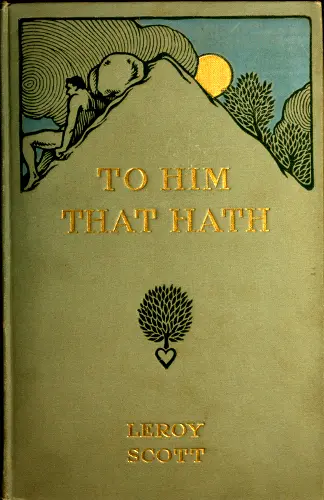
To Him That Hath
Leroy Scott
THE CLASSIC COLLECTION · 1917
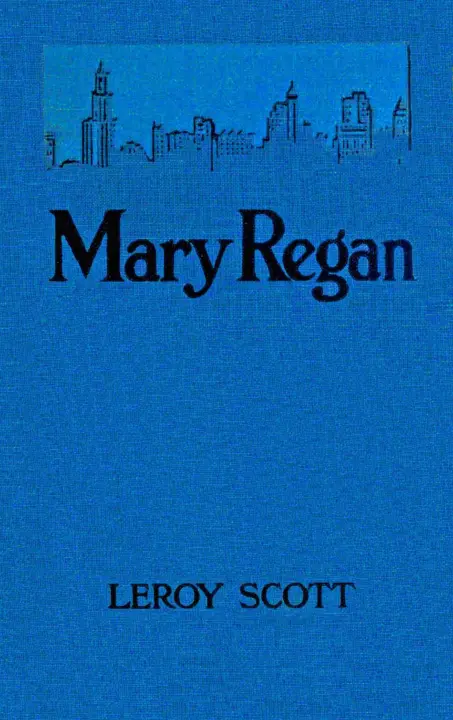
"Mary Regan" by Leroy Scott is a novel written in the early 20th century. The story revolves around the complex relationship between the protagonist, Robert Clifford, and Mary Regan, who has just returned to New York after a self-imposed hiatus. The narrative is set against the backdrop of the glittering yet treacherous world of Broadway and its social intricacies, hinting at themes of love, identity, and manipulation. At the start of the story, Robert Clifford is waiting at the Grand Alcazar restaurant, reflecting on his unresolved feelings for Mary Regan and the six-month silence that followed their emotionally charged farewell. The opening chapter vividly depicts the bustling atmosphere of the restaurant and introduces a variety of characters that represent the dual nature of society. As Clifford contemplates his relationship with Mary, he is suddenly faced with her unexpected reappearance, accompanied by lawyer Peter Loveman. This moment ignites a cascade of emotions and questions for Clifford about Mary’s true intentions and the potential dangers she might be entangled in within her new circle. The scene sets the stage for a gripping exploration of their past, Mary's past associations with crime, and the complexities of modern relationships in a world rife with deception and intrigue.
Introduction adapted from the source catalogue; source summaries may be automatically generated.
Free to read · English · 90,269 words · No account needed
MAKE TIME FOR A GOOD BOOK
On by default. Untick to stop anonymous reading totals. Each page counts after 10 seconds in view. How this works.
Anonymous counting is on unless you have switched it off.
Clifford caught Hilton by the wrist, and gave the arm a twist that made the man drop sidewise to one knee and groan. “You are all going, and, Hilton, you go first,”--and he thrust him through the door. He turned to Nan Burdette, and the star of the long-faded “Orange Blossoms.” “If you two want to avoid trouble,” he said shortly, “you’ll follow Mr. Hilton right out.”
They glowered at Clifford, but started to obey. “See here,” hiccoughed young Morton, “’f my frien’s go, I go too,”--and he swayed toward the door.
But Clifford sharply closed the door upon the pair, blocked Jack’s way, and laid a detaining hand upon Jack’s shoulder. “Stay with me, Jack,” he said, “and we’ll have that little old drink together.”
“Don’ wan’ drink with you. Goin’ with m’ frien’s.”
A stubborn, vicious look had come into Jack’s face, a look that Clifford knew meant trouble. “Just one little old drink, Jack, and then you can go with your friends.”
Jack regarded Clifford’s impeding figure, and grinned cunningly. “All ri’--jus’ one drink.”
“He’s already had too damned much,” growled the elder Morton.
Clifford gave the father an imperative, knowing look, pushed Jack down into his chair, and pressed a button. “Send Monsieur Le Bain,” he said to the answering waiter; and to Jack: “I’m going to order the drinks, Jack, and we’re going to switch to high-balls--and we’re going to see if this dump has some Scotch that’s really Scotch.”
As Le Bain appeared, Clifford stepped quickly to the door, spoke in a low voice, and returned to the table. Presently Le Bain himself entered with three glasses which he set down in careful order before the men, and then withdrew.
“Here’s how,” said Clifford, and sipped his glass. Jack tossed his down and rose unsteadily.
“Now, guess I’ll go find m’ frien’s,” he declared.
“Not yet, Jack,”--and Clifford pushed him again back into place. “There’s going to be one more round, and it’s on you. I gave Le Bain the order.”
Mr. Morton, not touching his glass, sharply watched the two. Jack grinned cunningly at Clifford; then his face became vacuous, heavy; and then he slumped forward, and head and shoulders lay inertly among the wine-glasses and the dishes of the interrupted supper.
“What’s happened to him?” the father asked sharply.
“Doped.”
“Doped? What for?”
Your reading position is saved on this browser. Take it to another device with a library code. Reading pages adapt to text, rather than matching a printed edition.
BEHIND THE BOOK
This eBook is for the use of anyone anywhere in the United States and most other parts of the world at no cost and with almost no restrictions whatsoever. You may copy it, give it away or re-use it under the terms of the Project Gutenberg License included with this eBook or online at www.gutenberg.org. If you are not located in the United States, you will have to check the laws of the country where you are located before using this eBook. Read the source licence.
The original source file, including credits and licence, is retained by this library. Request an original-format copy at no charge. Please include the book title and Project Gutenberg identifier #71337.
KEEP YOUR CURIOSITY GOING
Coulson Kernahan

Maurice Baring
Frances Wright
Cécile Tormay

Frederic Jesup Stimson

W. H. P. (William Henry Pope) Jarvis