THE CLASSIC COLLECTION✦Lost DiariesCLASSIC FREE BOOKS
Lost Diaries
Maurice Baring
THE CLASSIC COLLECTION · 1912
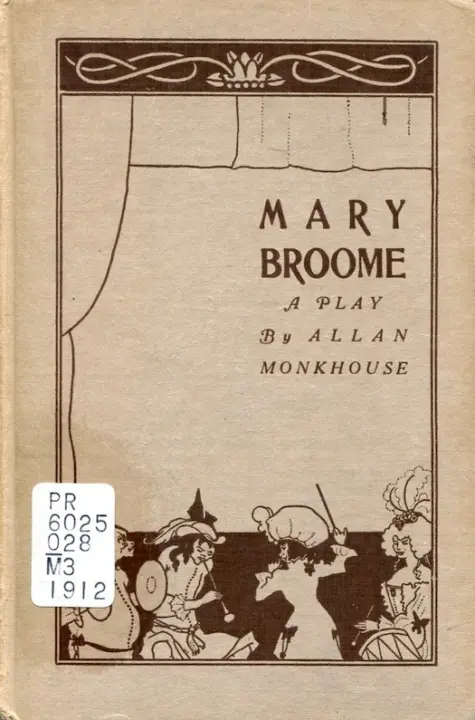
"Mary Broome: A Comedy, in Four Acts" by Allan Monkhouse is a play written in the early 20th century. The story revolves around Mary Broome, a housemaid whose life takes a dramatic turn when the son of her employer becomes embroiled in an unexpected romantic entanglement with her. The play delves into themes of class, responsibility, and societal expectations, highlighting the contrasts between the lives of the upper middle class and their servants. At the start of the play, we are introduced to the various characters in the setting of a suburban home, preparing for an upcoming wedding. As preparations unfold, tension arises as Edgar Timbrell expresses his concerns about his best man, Leonard, who is depicted as charming yet irresponsible. The dynamics between the characters, particularly between Mary and Leonard, unfold in a way that hints at deeper issues, as Mary later confronts Leonard about his plans and intentions, leading to a moment of honesty that challenges societal norms regarding class and familial duty. The opening sets the stage for a complex exploration of these social themes as the characters navigate their relationships and the implications of their actions.
Introduction adapted from the source catalogue; source summaries may be automatically generated.
Free to read · English · 19,355 words · No account needed
MAKE TIME FOR A GOOD BOOK
On by default. Untick to stop anonymous reading totals. Each page counts after 10 seconds in view. How this works.
Anonymous counting is on unless you have switched it off.
[Rather poor lodgings. MARY, neatly but very plainly dressed, is sewing at a child's garment. LEONARD sprawls on the sofa smoking cheap cigarettes. He is carelessly dressed to the point of slovenliness and a little anxiety begins to shew through his calmness which is generally maintained. It is afternoon. Two or three months have elapsed.]
LEONARD. I don't think it's that the old man's mean. He's got on the high horse and doesn't know how to get down.
MARY. We oughtn't to take the money from your mother. It's very hard
for her.
LEONARD. Oh! but it only means that she gives them rice pudding instead of gooseberry tart. It'll do them good. I expect the old man sees the difference and pretends he doesn't. And Edgar will be furious.
MARY. If little Leonard had a brother and they were like you and your brother--I couldn't bear that.
LEONARD. It's a long way off, old lady.
MARY. Thing's aren't a long way off if you think they might come.
LEONARD. Don't worry, now. Don't worry.
MARY. I'm a great deal happier than you. I've got him.
LEONARD. Well, haven't I?
MARY. No, you haven't. Not like me.
LEONARD. You don't think I'm such a bad father, do you?
MARY. I don't know. You're funny with him and I like to see you
together but--
LEONARD. Well?
MARY. You keep spending the money.
LEONARD. But, Mary, you don't know how much more I could spend if I
had it.
MARY. And, so clever as you are, you don't make any--I mean don't make
much.
LEONARD. You see, in my trade, the better you are the more wretchedly
you get paid.
MARY. You keep telling me that.
LEONARD. And you don't believe it?
MARY. Yes, I do. I think you mean it. I don't think it can be quite true. I think you could get more money if you tried. You're clever enough to write the way they want.
LEONARD. What do you care for most in the world--barring the baby?
MARY. [Considering.] I don't think there's anything. Oh! I beg your pardon. Of course there's you.
LEONARD. Never mind me. Could you believe that I care more about writing my own way than for anything?
MARY. I suppose it's good to care for something but that seems
selfish.
LEONARD. You're beginning to feel a bit of resentment. You don't hate
me yet, do you?
MARY. No, of course not.
LEONARD. I shouldn't blame you. You're a wonderfully even-tempered person. I sometimes wonder whether I'm right about that streak of wildness in you. Do you think you could do strange things--what shall I say--wicked things?
MARY. I've done one wicked thing.
Your reading position is saved on this browser. Take it to another device with a library code. Reading pages adapt to text, rather than matching a printed edition.
BEHIND THE BOOK
This eBook is for the use of anyone anywhere in the United States and most other parts of the world at no cost and with almost no restrictions whatsoever. You may copy it, give it away or re-use it under the terms of the Project Gutenberg License included with this eBook or online at www.gutenberg.org. If you are not located in the United States, you will have to check the laws of the country where you are located before using this eBook. Read the source licence.
The original source file, including credits and licence, is retained by this library. Request an original-format copy at no charge. Please include the book title and Project Gutenberg identifier #46298.
KEEP YOUR CURIOSITY GOING
Maurice Baring
W. B. (William Butler) Yeats
Edward Martyn

John Brougham & Charlotte Brontë
Marguerite Merington
Leonid Andreyev