THE CLASSIC COLLECTION✦Lost DiariesCLASSIC FREE BOOKS
Lost Diaries
Maurice Baring
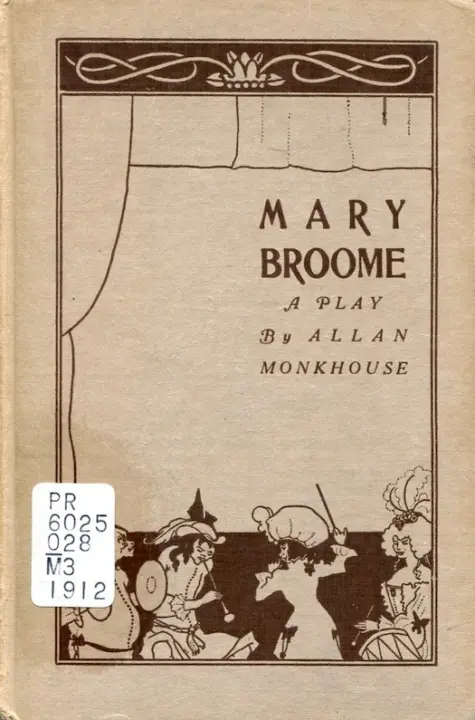
THE CLASSIC COLLECTION · 1912
"Mary Broome: A Comedy, in Four Acts" by Allan Monkhouse is a play written in the early 20th century. The story revolves around Mary Broome, a housemaid whose life takes a dramatic turn when the son of her employer becomes embroiled in an unexpected romantic entanglement with her. The play delves into themes of class, responsibility, and societal expectations, highlighting the contrasts between the lives of the upper middle class and their servants. At the start of the play, we are introduced to the various characters in the setting of a suburban home, preparing for an upcoming wedding. As preparations unfold, tension arises as Edgar Timbrell expresses his concerns about his best man, Leonard, who is depicted as charming yet irresponsible. The dynamics between the characters, particularly between Mary and Leonard, unfold in a way that hints at deeper issues, as Mary later confronts Leonard about his plans and intentions, leading to a moment of honesty that challenges societal norms regarding class and familial duty. The opening sets the stage for a complex exploration of these social themes as the characters navigate their relationships and the implications of their actions.
Introduction adapted from the source catalogue; source summaries may be automatically generated.
Free to read · English · 19,355 words · No account needed
MAKE TIME FOR A GOOD BOOK
On by default. Untick to stop anonymous reading totals. Each page counts after 10 seconds in view. How this works.
Anonymous counting is on unless you have switched it off.
MARY. I will say this. He has always spoken beautifully about her.
LEONARD. Bravo! Mary. Stand up for me.
TIMBRELL. I don't wish to act hastily--I have tried hard to control
myself--
LEONARD. Oh! be natural, sir. Be natural.
TIMBRELL. Go down on your knees, sir, and beg your Mother's pardon.
LEONARD. Certainly, if she wishes it.
MRS. TIMBRELL. I do not wish it.
TIMBRELL. Do you realise what he said about you?
MRS. TIMBRELL. He's very clever. No doubt there's some truth in it.
TIMBRELL. Some truth? Some truth? Do you mean to say--I don't understand you. I don't like to ask you what you mean--I--
PENDLETON. Now, Timbrell, I think we'd better leave it here. [To MRS. PENDLETON.] Don't you think so, Maria?
MRS. PENDLETON. I should want to carry it a little further in her
place.
MRS. TIMBRELL. [Having quite recovered.] Would anybody like to ask
me any questions?
PENDLETON. [Shocked.] Questions?
MRS. TIMBRELL. About my early life. [She gives a sad little laugh.]
PENDLETON. Questions! My dear madam--
TIMBRELL. This is painful. This is quite impossible. [To his wife.] I cannot understand you. I suppose you are trying to screen him.
MARY. He always speaks of his mother beautifully.
LEONARD. And why shouldn't I when I admire her immensely? Why can't you people be natural and let me be natural? I say there's a strange, mysterious, incalculable being behind her placid mask and you want to make out I mean something beastly. How have you stood it all these years, mother? And they never seem to have found you out.
MRS. TIMBRELL. Do you think I've found myself out?
LEONARD. You've found the other people out and that's very much the
same thing. I tell you what--you ought to come and live with me and
Mary.
MRS. TIMBRELL. Nonsense.
LEONARD. It would be tremendously fine if you did that. After all these years--it would be magnificent.
EDGAR. Is this to go on?
TIMBRELL. No. I'm exceedingly sorry, Pendleton, that you and Mrs. Pendleton should be in such a scene. [To LEONARD.] I'll ask you to leave the house. Mary may stay if she pleases.
LEONARD. But I want my dinner.
TIMBRELL. You can get your dinner at home.
LEONARD. Mary?
MARY. There's not much. I'll go with you.
PENDLETON. Now look here, Timbrell--
TIMBRELL. Not a word. [To LEONARD.] And I've something to say to you
before you go.
LEONARD. I'm afraid it's something nasty.
TIMBRELL. Yes, sir. It's something nasty. I've been making you an allowance at the rate of three hundred a year. It will stop at once.
LEONARD. [Alarmed.] Here! You can't do that.
TIMBRELL. Can't I? I will.
Your reading position is saved on this browser. Take it to another device with a library code. Reading pages adapt to text, rather than matching a printed edition.
BEHIND THE BOOK
This eBook is for the use of anyone anywhere in the United States and most other parts of the world at no cost and with almost no restrictions whatsoever. You may copy it, give it away or re-use it under the terms of the Project Gutenberg License included with this eBook or online at www.gutenberg.org. If you are not located in the United States, you will have to check the laws of the country where you are located before using this eBook. Read the source licence.
The original source file, including credits and licence, is retained by this library. Request an original-format copy at no charge. Please include the book title and Project Gutenberg identifier #46298.
KEEP YOUR CURIOSITY GOING
Maurice Baring
W. B. (William Butler) Yeats
Edward Martyn

John Brougham & Charlotte Brontë
Marguerite Merington
Leonid Andreyev