
Life of Edwin Forrest, the American Tragedian. Volume 2 (of 2)
William Rounseville Alger & Horatio, Jr. Alger
THE CLASSIC COLLECTION · 1899
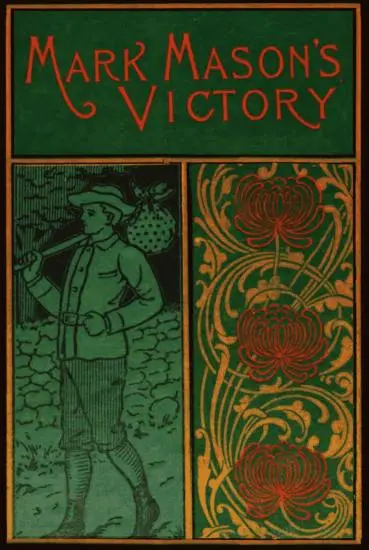
"Mark Mason's Victory: The Trials and Triumphs of a Telegraph Boy" by Horatio Alger, Jr. is a novel written in the late 19th century. It follows the life of a young telegraph boy named Mark Mason as he navigates the challenges of poverty and the ambitions that come with youth. The story likely explores themes of perseverance, integrity, and the social dynamics of the time, specifically focusing on how Mark seeks to improve his family's circumstances while maintaining his moral compass. The opening of the novel introduces Mark Mason in New York City, where he encounters his wealthy relatives from Syracuse, Uncle Solon and his cousin Edgar Talbot. Despite their cool demeanor towards him and his mother, Mark remains undeterred, demonstrating his pride and showing his determination to rise above their disdain. In this first chapter, Mark's interactions highlight the stark contrast between his humble beginnings and the affluent lifestyle of his relatives, setting the stage for the conflicts and adventures that will unfold as he strives for success amidst adversity. This early setup hints at Mark's character development and foreshadows the challenges he will face in his pursuit of a better life.
Introduction adapted from the source catalogue; source summaries may be automatically generated.
Free to read · English · 62,520 words · No account needed
MAKE TIME FOR A GOOD BOOK
On by default. Untick to stop anonymous reading totals. Each page counts after 10 seconds in view. How this works.
Anonymous counting is on unless you have switched it off.
Mark took a seat on the sofa and awaited the arrival of the lady.
He did not have long to wait. The door opened, but the lady he expected did not appear. Instead, a young man entered whom Mark instantly recognized as the person who had left the Fifth Avenue stage under suspicious circumstances on the day when the old lady was robbed of her pocketbook.
Mark started and wondered if the recognition was mutual. It did not
appear to be.
"You're the jeweler's boy, I believe?" said the newcomer languidly.
"I came from Henry Swan."
"Exactly, and you have brought two diamond rings with you?"
"Yes."
"All right! You can show them to me."
Mark's suspicions were aroused and he felt that he had need of all his shrewdness. He was very glad now that the diamonds were paste and the rings of little value.
"Excuse me," he said, "but I was told to deliver the rings to Mrs.
Philip Montgomery.
"Yes, that's all right. Mrs. Montgomery is my aunt."
"I should like to see her," persisted Mark.
"Come, boy, you're too fresh. It'll be all the same if you hand the
rings to me."
"I don't think so. Isn't Mrs. Montgomery at home?"
"Yes, but she has a severe headache and cannot see you at present."
"Then perhaps I had better call again."
"No you don't. I am a gentleman and won't permit you to insult me."
"What do you want to do?"
"To take the rings up to my aunt. If she likes them, or either of them, she will send you down a check."
Mark reflected a moment. Remembering that the rings were not valuable,
he decided to show them.
"Here are the rings!" he said, producing them from his pocket.
The young man opened the small caskets, and his eyes lighted up with satisfaction when he saw the glittering rings.
"What is the price?" he asked, looking up.
"That ring is three hundred and fifty dollars, the other is four
hundred."
"Seven hundred and fifty together."
"Yes."
"I will show them to my aunt. Perhaps she may decide to keep both."
"You won't be long?" asked Mark, as the young man left the room.
"No, I'll be back as soon as my aunt decides."
Left alone Mark began to think over the situation. His recognition of his unprincipled acquaintance of the Fifth Avenue stage convinced him that some fraudulent scheme was being carried out. Mrs. Montgomery was probably a confederate of the young man who had just left the room.
"Is he going up-stairs or down?" thought Mark.
Your reading position is saved on this browser. Take it to another device with a library code. Reading pages adapt to text, rather than matching a printed edition.
William Rounseville Alger & Horatio, Jr. Alger

William Rounseville Alger & Horatio, Jr. Alger

Horatio, Jr. Alger

Horatio, Jr. Alger
BEHIND THE BOOK
This eBook is for the use of anyone anywhere in the United States and most other parts of the world at no cost and with almost no restrictions whatsoever. You may copy it, give it away or re-use it under the terms of the Project Gutenberg License included with this eBook or online at www.gutenberg.org. If you are not located in the United States, you will have to check the laws of the country where you are located before using this eBook. Read the source licence.
The original source file, including credits and licence, is retained by this library. Request an original-format copy at no charge. Please include the book title and Project Gutenberg identifier #34499.
KEEP YOUR CURIOSITY GOING
Cécile Tormay

Moritz Busch
Coulson Kernahan
John L. Ransom

Maurice Baring
Frances Wright