
Life of Edwin Forrest, the American Tragedian. Volume 2 (of 2)
William Rounseville Alger & Horatio, Jr. Alger
THE CLASSIC COLLECTION · 1899
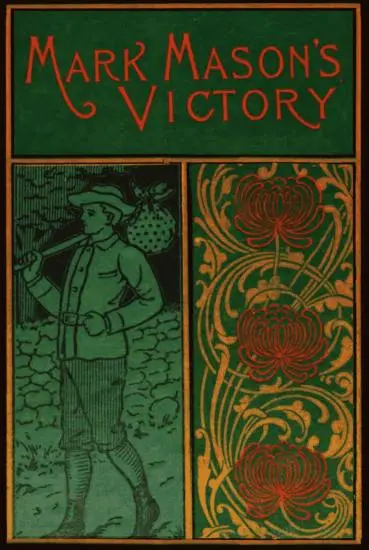
"Mark Mason's Victory: The Trials and Triumphs of a Telegraph Boy" by Horatio Alger, Jr. is a novel written in the late 19th century. It follows the life of a young telegraph boy named Mark Mason as he navigates the challenges of poverty and the ambitions that come with youth. The story likely explores themes of perseverance, integrity, and the social dynamics of the time, specifically focusing on how Mark seeks to improve his family's circumstances while maintaining his moral compass. The opening of the novel introduces Mark Mason in New York City, where he encounters his wealthy relatives from Syracuse, Uncle Solon and his cousin Edgar Talbot. Despite their cool demeanor towards him and his mother, Mark remains undeterred, demonstrating his pride and showing his determination to rise above their disdain. In this first chapter, Mark's interactions highlight the stark contrast between his humble beginnings and the affluent lifestyle of his relatives, setting the stage for the conflicts and adventures that will unfold as he strives for success amidst adversity. This early setup hints at Mark's character development and foreshadows the challenges he will face in his pursuit of a better life.
Introduction adapted from the source catalogue; source summaries may be automatically generated.
Free to read · English · 62,520 words · No account needed
MAKE TIME FOR A GOOD BOOK
On by default. Untick to stop anonymous reading totals. Each page counts after 10 seconds in view. How this works.
Anonymous counting is on unless you have switched it off.
Edgar had received his week's pay in the afternoon, and was well provided. He flattered himself he could play better than Schuyler, and thought it would be very agreeable to win money in that way. Schuyler managed to let him win.
"Really," he said with pretended annoyance, "I am afraid you are more
than a match for me."
"Perhaps I was lucky," said Edgar, elated.
"At any rate I will try again. Let us call it two dollars."
"Very well," assented Edgar.
Somehow this game was won by his opponent by five points. Edgar was annoyed, for this took a dollar from his pocket, and it had been arranged that the loser should pay for the use of the tables.
It was an accident, however, and he kept on. At the close of the evening
he was without a cent.
"I have been unlucky," he said, trying to hide his mortification. "I have lost all the money I had with me."
"That is too bad. Here, give me a memorandum for two dollars, and I will hand you back that amount. Some time when you are in funds you can pay me."
"Thank you!" said Edgar in a tone of relief.
"You are really a better player than I am," went on Schuyler, "but the
balls happened to run in my favor. Another evening I shall be the
loser."
This was the first of Edgar's acquaintance with Schuyler Hamilton, but it was by no means the last. They got into the way of meeting nearly every night and Edgar ran more and more into Schuyler's debt. However, Hamilton was very easy with him. He accepted memorandums of indebtedness, which somehow seemed a very easy way of paying debts. Edgar did not reflect that a day of reckoning must come at last.
At last Hamilton Schuyler thought it time to bring matters to a crisis.
"Do you know how much you are owing me, Edgar?" he said one evening.
"No," answered Edgar uneasily.
"Seventy-five dollars!"
"It can't be!" exclaimed Edgar, incredulous.
"These things increase faster than you think for," said Schuyler
carelessly.
"I suppose you'll let it run," remarked Edgar with a troubled look.
"I should be glad to do so, my dear boy, but I need the money. I was hit rather hard at the races yesterday, and the long and short of it is, that you will have to pay me."
"I can't pay you," said Edgar doggedly.
Schuyler frowned.
"What do you mean by that?" he demanded sternly.
"I mean exactly what I say. I haven't got any money. I only get five dollars a week, and I can't spare any of that."
Your reading position is saved on this browser. Take it to another device with a library code. Reading pages adapt to text, rather than matching a printed edition.
William Rounseville Alger & Horatio, Jr. Alger

William Rounseville Alger & Horatio, Jr. Alger

Horatio, Jr. Alger

Horatio, Jr. Alger
BEHIND THE BOOK
This eBook is for the use of anyone anywhere in the United States and most other parts of the world at no cost and with almost no restrictions whatsoever. You may copy it, give it away or re-use it under the terms of the Project Gutenberg License included with this eBook or online at www.gutenberg.org. If you are not located in the United States, you will have to check the laws of the country where you are located before using this eBook. Read the source licence.
The original source file, including credits and licence, is retained by this library. Request an original-format copy at no charge. Please include the book title and Project Gutenberg identifier #34499.
KEEP YOUR CURIOSITY GOING
Cécile Tormay

Moritz Busch
Coulson Kernahan
John L. Ransom

Maurice Baring
Frances Wright