
Life of Edwin Forrest, the American Tragedian. Volume 2 (of 2)
William Rounseville Alger & Horatio, Jr. Alger
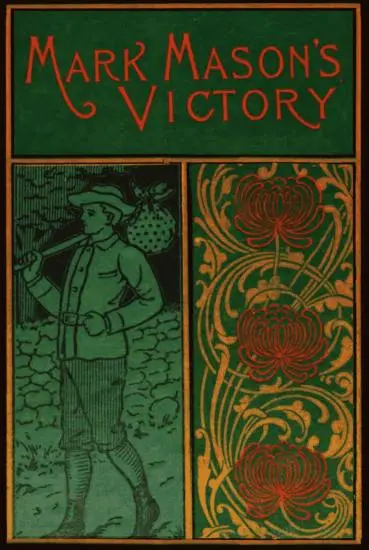
THE CLASSIC COLLECTION · 1899
"Mark Mason's Victory: The Trials and Triumphs of a Telegraph Boy" by Horatio Alger, Jr. is a novel written in the late 19th century. It follows the life of a young telegraph boy named Mark Mason as he navigates the challenges of poverty and the ambitions that come with youth. The story likely explores themes of perseverance, integrity, and the social dynamics of the time, specifically focusing on how Mark seeks to improve his family's circumstances while maintaining his moral compass. The opening of the novel introduces Mark Mason in New York City, where he encounters his wealthy relatives from Syracuse, Uncle Solon and his cousin Edgar Talbot. Despite their cool demeanor towards him and his mother, Mark remains undeterred, demonstrating his pride and showing his determination to rise above their disdain. In this first chapter, Mark's interactions highlight the stark contrast between his humble beginnings and the affluent lifestyle of his relatives, setting the stage for the conflicts and adventures that will unfold as he strives for success amidst adversity. This early setup hints at Mark's character development and foreshadows the challenges he will face in his pursuit of a better life.
Introduction adapted from the source catalogue; source summaries may be automatically generated.
Free to read · English · 62,520 words · No account needed
MAKE TIME FOR A GOOD BOOK
On by default. Untick to stop anonymous reading totals. Each page counts after 10 seconds in view. How this works.
Anonymous counting is on unless you have switched it off.
"Would you be willing to change places with him, be locked up all day, live on bread and water, and sleep on the hard floor?"
"Well, he's done it, and now you might let him out and set him to work."
"I have already said that I would let him out when he got down on his knees and begged my pardon."
"And have I got to do his work till he begs your pardon? I say, that
ain't fair."
"I begin to think, Oscar, you are very lazy. I'll tell you what you may do. When you are dressed you may go to the door of the attic room and ask Philip if he is ready to apologize to me. If he says yes, I'll go up and receive his apology, and then he can come down and go to work."
"All right, pa, I'll do it. I guess he's got enough by this time."
Five minutes later Oscar was at Philip's door. He had forgotten to bring up the key which his father had taken down-stairs the evening previous.
He put his mouth to the keyhole, first rapping at the door to command
attention.
"I say, you Phil!" he called out.
There was no answer.
Oscar rapped again.
"Philip Lillis!" he called.
For reasons which we understand, though Oscar didn't, there was no
response.
Oscar became angry, and began to pound vigorously at the door.
"There, if he doesn't hear that he must be deaf!" he said to himself.
"I say, do you want to be let out?"
No answer.
"He hears me, and won't answer out of pure spite," reflected Oscar
indignantly.
He continued to pound.
"Look here, you young beggar," he cried, "if you don't answer me I'll get pa to bring up the horsewhip and flog you within an inch of your life. There won't be any bar-room loafers to save you this time."
Even this threat seemed to produce no effect, and Oscar, quite out of temper, descended the stairs.
"Well," said Mr. Sprague, "what does he say?"
"What does he say? He won't say anything."
"Perhaps he didn't hear you," suggested Mr. Sprague.
"If he didn't he must be as deaf as a post."
"Slickening, is he?"
"That's about the size of it."
"Well, we can cure him of that."
"I'll tell you what to do, pa. I'll get the horsewhip and you can give him a good thrashing. I told him you would. There won't be any one to interfere up there."
"That's true. Go and get the whip, Oscar."
Your reading position is saved on this browser. Take it to another device with a library code. Reading pages adapt to text, rather than matching a printed edition.
William Rounseville Alger & Horatio, Jr. Alger

William Rounseville Alger & Horatio, Jr. Alger

Horatio, Jr. Alger

Horatio, Jr. Alger
BEHIND THE BOOK
This eBook is for the use of anyone anywhere in the United States and most other parts of the world at no cost and with almost no restrictions whatsoever. You may copy it, give it away or re-use it under the terms of the Project Gutenberg License included with this eBook or online at www.gutenberg.org. If you are not located in the United States, you will have to check the laws of the country where you are located before using this eBook. Read the source licence.
The original source file, including credits and licence, is retained by this library. Request an original-format copy at no charge. Please include the book title and Project Gutenberg identifier #34499.
KEEP YOUR CURIOSITY GOING
Cécile Tormay

Moritz Busch
Coulson Kernahan
John L. Ransom

Maurice Baring
Frances Wright